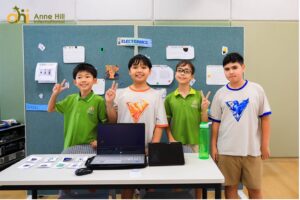



Learn how AHI helps students build confidence in Mandarin through language practice, cultural activities and support from teachers and families.
In an increasingly digitally connected world, language remains essential for human connection and culture. Ranked the world’s second most powerful language, Mandarin Chinese features on the Power Language Index (Chan, 2016). The language opens doors across business, culture and international opportunities. At Anne Hill International School (AHI), learning Mandarin goes beyond memorising vocabulary and writing Chinese characters. AHI’s structured Mandarin lessons include elements of interactive activities and practical communication which help students develop their language skills while discovering the culture behind the language.
Learning Mandarin as an Additional Language
At AHI, students come from different language backgrounds and have varying levels of Mandarin proficiency. Some are already familiar with the language, others are complete beginners. Ms Ren and Ms Yazhuo, AHI Mandarin teachers, take a step-by-step approach, adapting their lessons to help students build on what they know and develop their listening, speaking, reading and writing skills at their own pace. By connecting classroom learning with everyday situations, they help students understand how they can use Mandarin beyond the classroom.
Learn more: Holistic Education: Proven Practices from Anne Hill International School
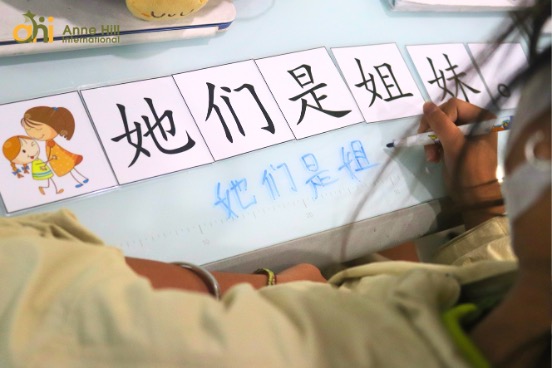
Photo: An AHI student practising writing Chinese characters during a Mandarin lesson.
Learning Mandarin at AHI Primary
In Primary Mandarin lessons, Ms Ren makes use of nursery rhymes, interactive games and situational activities inspired by traditional Chinese festivals. Students have opportunities to truly experience Mandarin in different ways. Her approach covers listening, speaking, reading, writing and Pinyin, alongside everyday conversational language and simplified Chinese characters.
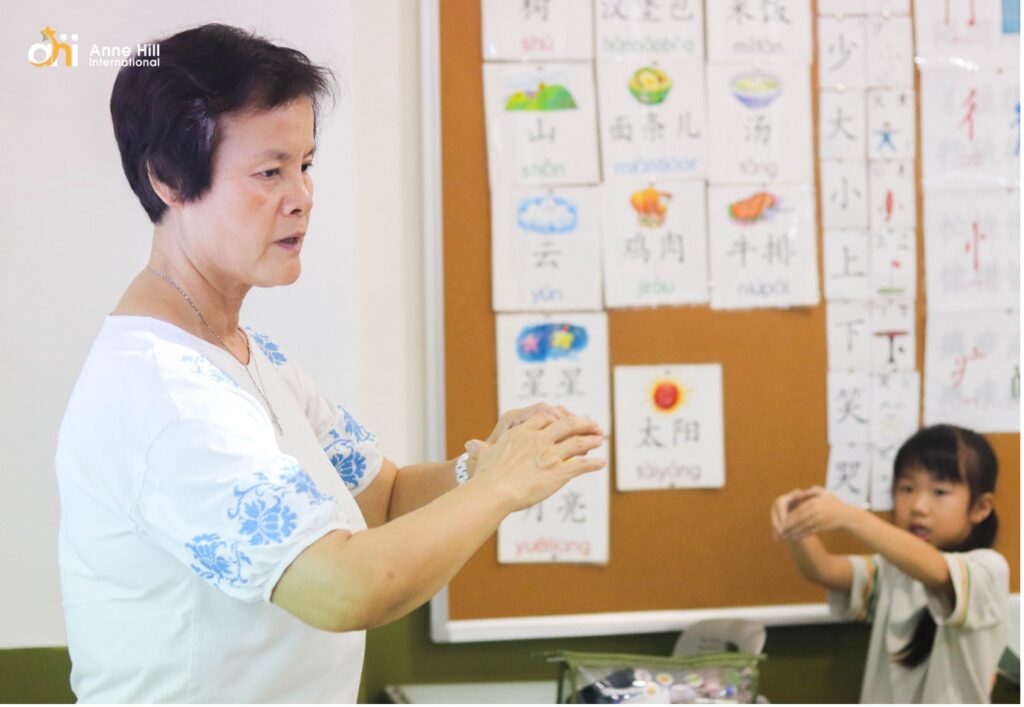
Photo: Ms Ren and AHI Primary students exploring Mandarin through interactive activities and language games.
For Primary students, the four tones can be difficult to distinguish at first. The same Pinyin syllable can have different meanings depending on its tone. For example, mā, má, mǎ and mà represent different words. Ms Ren uses visual and auditory exercises, hand gestures and rhythmic games to help students recognise the differences. By comparing tones to going up and down hills, students connect pitch with movement and rhythm, making pronunciation practice more memorable.
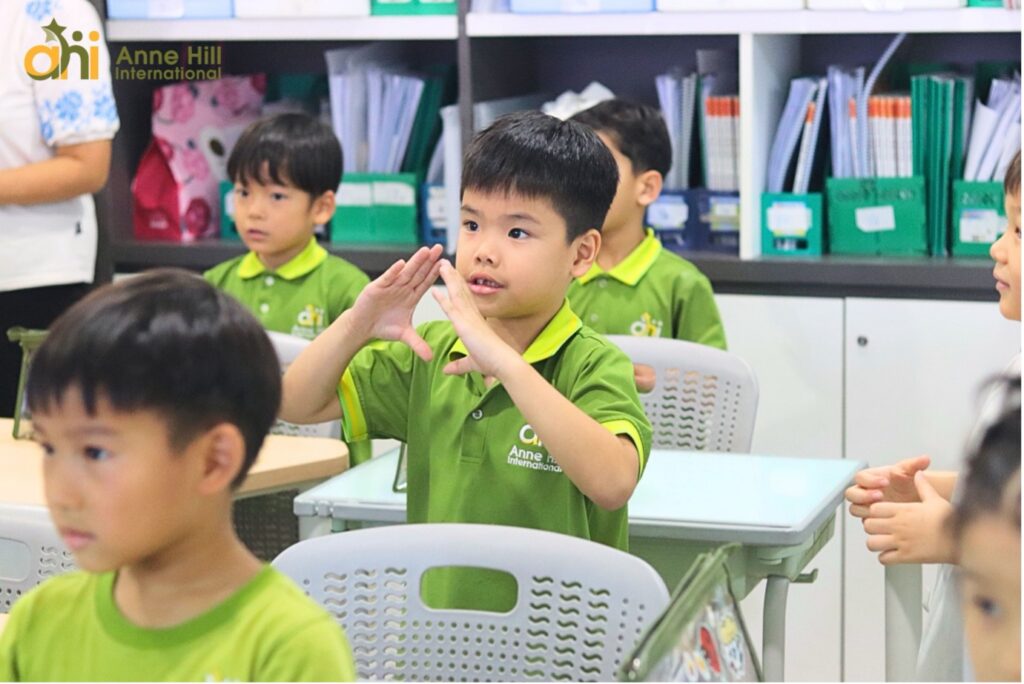
Photo: Primary students practising Mandarin pronunciation through hand gestures.
Chinese characters can be equally challenging for beginners. Rather than memorising each character in isolation, Ms Ren introduces basic strokes and radicals to help students recognise patterns. For example, the water radical (氵) appears in 海 (hǎi, sea), 浪 (làng, wave), 河 (hé, river) and 洗 (xǐ, wash). Recognising these connections helps students understand how characters are related, making them easier to learn.
Ms Ren also sees the value of learning through play when students sing along to nursery rhymes or enthusiastically practice bargaining in a simulated traditional marketplace. These experiences help children encounter Mandarin along with its culture, making the language more accessible and enjoyable.
Learning Mandarin at AHI Secondary
In Secondary, Ms Yazhuo’s approach is a balance of structured learning, interactive activities and real-life application. She starts by helping students build a strong foundation before introducing more complex language and communication tasks. Beginners start with pronunciation, basic vocabulary, Chinese characters and simple everyday conversations. As their confidence grows, students practice using what they have learnt through pair work, question-and-answer activities and practical situations.
Although activities may differ across age groups, the goal remains the same: to help students move beyond memorising individual words and gain the confidence to use Mandarin more independently.
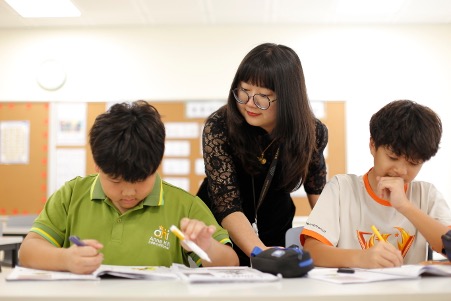
Photo: Ms Yazhuo guiding students through a Mandarin lesson in the Secondary classroom.
For beginners, Ms Yazhuo focuses on building a strong foundation in pronunciation, basic vocabulary, Chinese characters and simple everyday communication. As students become more confident, she gradually introduces more complex language and practical communication tasks.
Students often find Chinese characters the most challenging part of learning Mandarin. To help them build confidence, Ms Yazhuo starts with basic strokes before introducing more complex character structures. By the end of the term, most students who had started learning Mandarin at AHI from scratch could follow the correct stroke order.
Ms Yazhuo reminds parents that learning Mandarin takes time, particularly for beginners who are getting used to a new pronunciation and writing system. As she explains, “Progress may not always seem fast at the beginning, but every small step is important.” With a strong foundation and consistent practice, students gradually become more confident in listening, speaking, reading and writing.
Celebrating Small Steps
Progress looks different for every student, and confidence grows through opportunities to practice, make mistakes and try again. Ms Ren recalls Fumika, a student now in Year 6, who once fidgeted nervously with the hem of her clothes before lessons and could barely whisper her own name. This year, Fumika stood on stage at AHI’s 2026 Mid-Autumn Festival performance, confidently introducing the programme to the entire school in Chinese. For Ms Ren, witnessing this transformation filled her heart with an overwhelming sense of achievement.

Photo: Fumika (left) introducing the 2026 Mid-Autumn Festival programme in Chinese.
Supporting Mandarin Learning at Home
Parents can support their children’s Mandarin learning through simple activities at home, even when they do not speak Mandarin fluently. They could ask their child to share a new word they learnt at school, practice it together or listen to a Mandarin song. Simple stories and school materials offer further opportunities to revisit and actively recall what they have learnt. Showing an interest in their children’s learning, setting aside time for short practice sessions and praising their efforts can help keep them motivated.

Photo: A parent and child practising Mandarin together through a fun learning activity at home. (Source: Pexels)
At AHI, students continue to develop their Mandarin through practical communication and Chinese cultural activities. With encouragement from teachers and families, they can progress at their own pace and find more opportunities to use the language beyond the classroom.
Book a School Tour to discover AHI’s learning environment:

References
- Chan, K. (2016, December 2). These are the most powerful languages in the world. World Economic Forum.
https://www.weforum.org/stories/arts-and-culture/these-are-the-most-powerful-languages-in-the-world/