


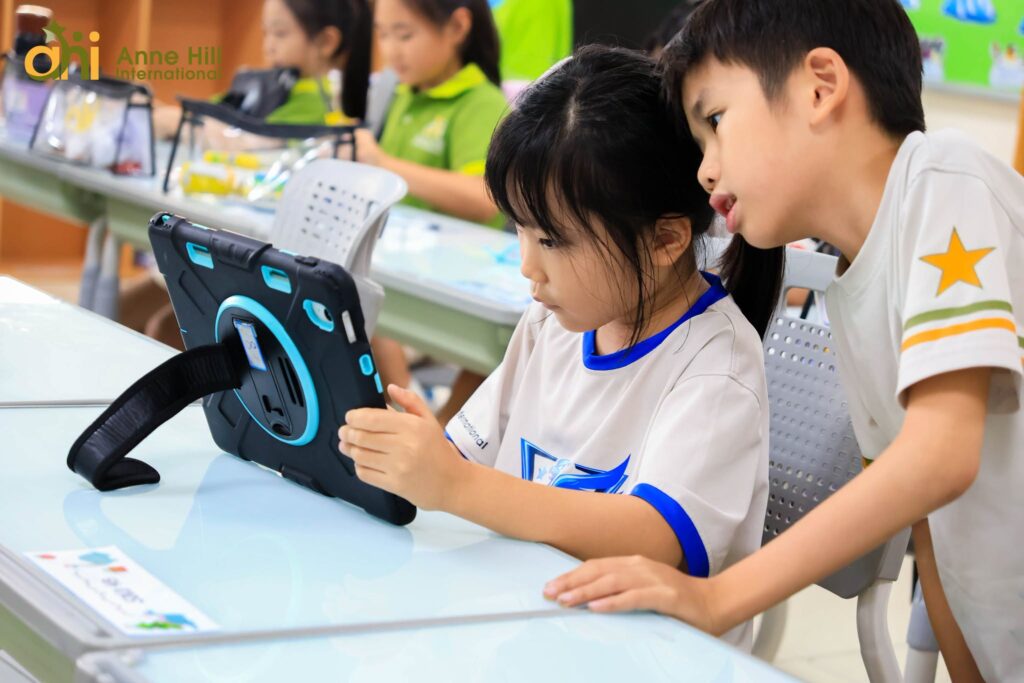
In this digital age, children can ask AI to explain a concept, support their problem-solving skills or generate an answer within seconds. With information always at their fingertips, an important question arises for parents: what should children still learn to do for themselves?
Rather than keeping technology out of the classroom, the focus should be on helping children use it wisely while building the skills they need to think independently, work with others and respond to change. This article explores how critical thinking, communication, collaboration and adaptability can develop alongside AI literacy, and how families can nurture them at home.
What Can AI Do for Children’s Learning Today?
Artificial intelligence (AI) refers to technology that can perform tasks that typically require aspects of human intelligence, such as understanding language, generating content, solving problems and recognising patterns. As for AI in education, these capabilities can support learning by helping children access explanations, generate ideas, practice skills and receive feedback. (Mark Warschauer, Zawacki-Richter et al., 2019)
Not long ago, a child who wanted to understand a difficult concept might have searched through a textbook, asked a teacher or worked through the problem themselves. Today, they can turn to an AI chatbot for an explanation within seconds.
A study by the Institute of Digital Media and Child Development found that 80% of students surveyed use AI to explain ideas when they are confused, while 70% use it to generate ideas and 60% use it to summarise texts (Children and Screens, 2026). To look more closely at our younger children, Hashem et al. (2025) found that 22% of children aged 8–12 had used a generative AI tool, with usage rising from 15% among 8-year-olds to 27% among 12-year-olds. These findings suggest that children are beginning to encounter generative AI early in their education journey (National Literacy Trust, 2025). Students commonly use AI to explain concepts, summarise academic material and structure ideas (Stephenson & Armstrong, 2026).
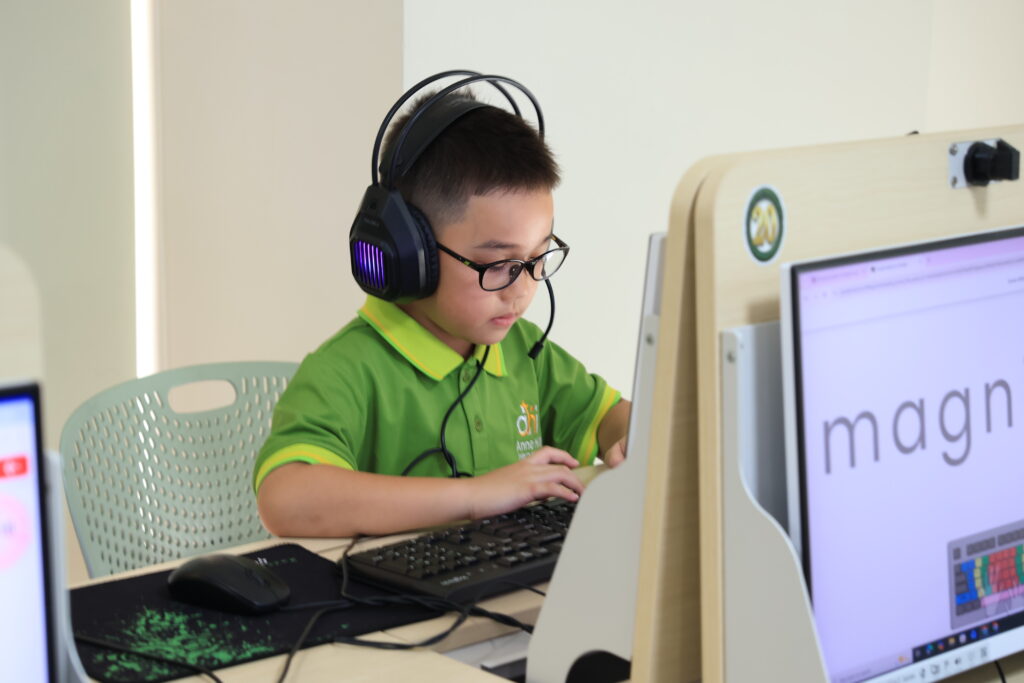
ICT classes give students opportunities to develop digital literacy and build the skills to navigate technology thoughtfully and responsibly.
This changes more than how quickly children can find information. An AI-generated answer may be useful, but receiving an answer does not necessarily mean understanding it. Children need to consider whether information is accurate, relevant or appropriate before accepting it.
This is where AI literacy becomes important. Alongside knowing how to use AI tools, children need the judgement to question and evaluate what they receive from them. Digital literacy gives them the foundation to navigate digital information thoughtfully and responsibly.
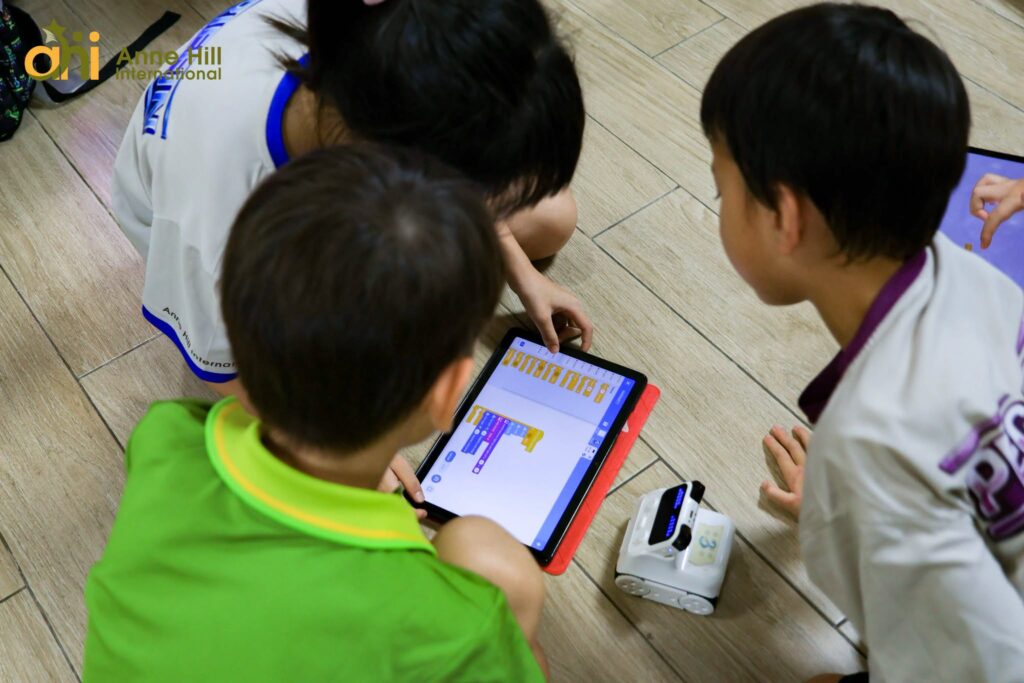
Through robotics, students explore technology hands-on, applying their ideas and problem-solving skills to real-world challenges.
The Essential Skills Every Child Needs to Develop
As AI makes information easier to access, children need abundant opportunities to develop the skills that allow them to make sense of it.
Critical thinking begins with questioning. Children need to consider how they know something is correct and whether there is evidence to support it. These skills can be strengthened through opportunities that encourage independent thinking and active problem-solving.
At Anne Hill International School (AHI), this extends beyond formal lessons. In our After-School Activities (ASAs) and Co-Curricular Activities (CCAs) programmes, such as Chess Club, students have space to plan, consider different strategies and make decisions through matches, puzzles and challenges, developing critical thinking, patience and resilience. Book Club also gives children opportunities to explore books, write, review, role-play and share their ideas, developing communication, storytelling and creativity.
Communication and Collaboration
Communication and collaboration allow children to explain their thinking, listen to different perspectives and work towards solutions with others. These experiences also develop problem-solving skills, particularly when there is no single correct answer.
At AHI, we provide opportunities to develop these skills AI can’t replace. For example, the Montessori experience in the AHI Early Years focuses on self-directed activities, hands-on learning and purposeful exploration. Children engage in five key areas of learning: Practical Life, Sensorial, Language, Mathematics and Culture.
Together, these areas encourage children to make decisions, explore ideas and work through challenges independently, building their ability to think through situations, consider different approaches and find solutions.
Creativity and innovation require children to explore possibilities, make connections and develop their own ideas. AI can generate suggestions, but children still need to decide what is meaningful, appropriate or worth pursuing.
Within the AHI Secondary Curriculum, Design & Technology gives students chances to identify real-world problems, create prototypes and refine solutions through an iterative design process. These experiences give children space to make choices, test ideas and learn from mistakes.
Adaptability is equally important as technology and ways of working continue to change. Children need to be comfortable learning, adjusting and trying new approaches rather than depending on one tool or method.
At AHI, assemblies provide opportunities for students to encounter different cultures and perspectives. The United Nations Day assembly, for example, encourages students to become adaptable communicators as they learn about different countries and consider perspectives beyond their own.
Learn more:
How Assemblies at AHI Help Promote Intercultural Learning
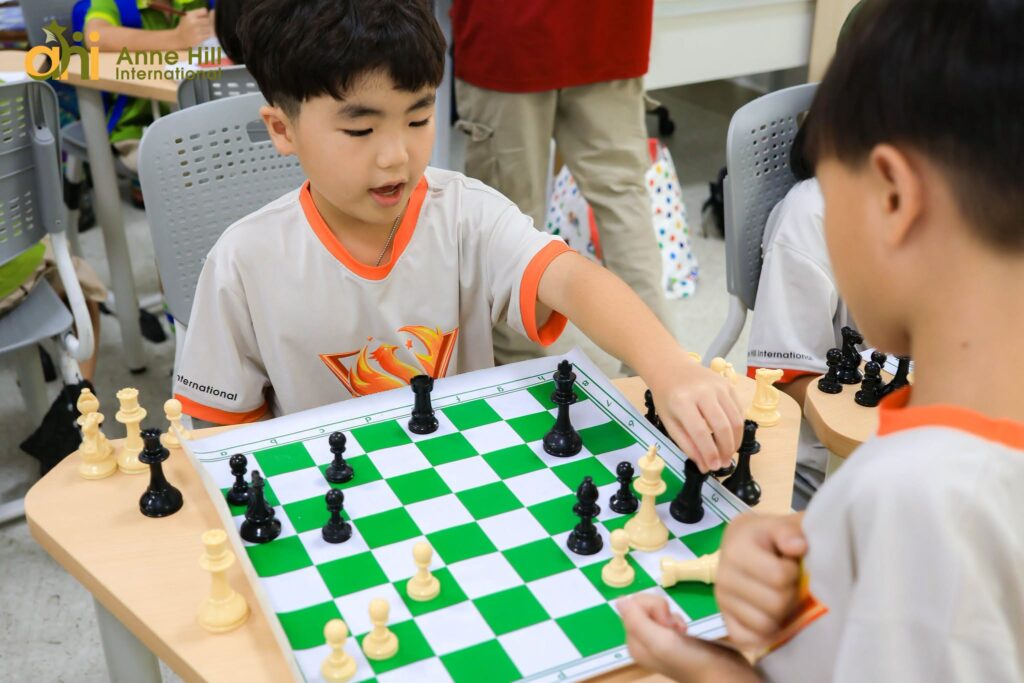
Chess Club challenges students to plan ahead and strategise, strengthening critical thinking, problem-solving and adaptability.
Skills AI Can’t Replace
These are the skills AI can’t replace because they depend on children making judgements, engaging with others and taking an active role in their own learning.
To conclude, these abilities are reflected in the AHI’s nine core values: empathetic, respectful, humble, ethical, resilient, communicator, adaptable, collaborator and thinker.
These values support children in developing independence, judgement, responsibility and an awareness of how they relate to others.
Being ethical encourages children to consider the impact of how AI is used, while humility reminds them that having access to information does not mean having all the answers.
Adaptability supports them as technology continues to evolve, while empathy, respect and collaboration remain important as AI changes the way people interact and work together.
Hence, these nine values provide a foundation for children to engage with AI thoughtfully while continuing to grow as individuals.
Building Future-Ready Skills at School and at Home
Children develop these skills through everyday experiences, with educators and parents playing an important role in helping them practice and apply them. Solving a problem, explaining an idea, working with others, creating something or trying again after a mistake all give children opportunities to build critical thinking, communication, collaboration and problem-solving skills for the digital era.
This could mean asking children to explain their reasoning, discuss different solutions, work with others or reflect on what went wrong when they make a mistake.
Research by the National Literacy Trust found that 82% of teachers believe students should be taught to engage critically with generative AI (National Literacy Trust, 2025), highlighting the importance of guidance as children begin using the technology.
When educators reinforce these habits, children can develop skills AI can’t replace while learning to use AI as a tool rather than rely on it for every answer.

Learning to communicate, collaborate and adapt through teamwork and hands-on learning.
The same habits can be encouraged at home. Parents can ask “How do you know?” or “What makes you think that?” instead of immediately providing an answer.
When children use AI, they can be encouraged to check information against another source, identify anything unclear and explain why they agree or disagree with a response.
Parents can also reinforce AHI’s Digital Citizenship and Online Safety practices by encouraging purposeful use of technology, helping children assess whether online sources are reliable and modelling responsible device use at home.
For example, putting devices away during family meals or conversations shows children that technology has a place, but does not need to take over every interaction. Additionally, setting age-appropriate screen time limits and discussing online habits can further help children develop a balanced approach to technology.
This supports responsible AI use while helping children understand when technology can assist them and when they need to think through a problem themselves.
AHI also encourages children to use technology purposefully, safely and respectfully, including understanding how to protect their personal information and seek support when needed.
AHI’s approach to digital balance also creates space for play, relationships and activities away from screens, giving children opportunities to develop these abilities through real-world experiences.
Growing alongside AI
Preparing children for an AI-enabled world is therefore not about choosing between technology and traditional learning. It is about growing alongside AI, with the knowledge, values and judgement to use it thoughtfully.
AI will continue to shape how children learn, communicate and work. Preparing children for the future therefore means giving them more than technical knowledge. It means creating opportunities to develop curiosity, judgement, resilience and confidence when facing unfamiliar challenges.
The AI skills for children will not simply be about knowing how to use the latest tool. In the 21st century, children will also need to question information, contribute ideas, work with others and adapt as technology changes.
At AHI, we are committed to nurturing the skills AI can’t replace, helping our students develop the confidence and capabilities to move forward alongside technology, rather than simply keeping up with it.
References
Armstrong, C., & Stephenson, R. (2026). Student generative artificial intelligence survey 2026 (HEPI Report 199). Higher Education Policy Institute.
Children and Screens. (2026, June 3). AI in education: What the research says.
Harvard Graduate School of Education. (2025, April 8). AI can add, not just subtract, from learning.
https://www.gse.harvard.edu/ideas/news/25/04/ai-can-add-not-just-subtract-learning
Hashem, Y., Esnaashari, S., Onslow, K., Chakraborty, S., Poletaev, A., Francis, J., & Bright, J. (2025). Understanding the impacts of generative AI use on children: WP1 surveys. The Alan Turing Institute.
National Literacy Trust. (2025, February 26). Children, young people and teachers’ use of generative AI to support literacy in 2024.
Zawacki-Richter, O., Marín, V. I., Bond, M., & Gouverneur, F. (2019). Systematic review of research on artificial intelligence applications in higher education—Where are the educators? International Journal of Educational Technology in Higher Education, 16(1), Article 39.