

Maths at Anne Hill International School (AHI) helps students build a deeper understanding of mathematics through mastery, reasoning and problem-solving.
For many parents, maths lessons often bring back memories of repetition and memorising methods, sometimes without fully understanding why they work. At Anne Hill International School (AHI), the approach centres on mastery: giving children the time and space to understand a concept thoroughly before moving on. So, how is Maths taught at AHI, and what helps make this often challenging subject feel more approachable for Primary and Secondary students?
What Is the Mastery Approach?
White Rose Maths describes the approach as a “journey to mastery”, rather than something students simply achieve and move on from. Mathematical understanding develops over time as students revisit and build on concepts through increasingly complex ideas and different contexts. Through carefully structured learning and practice, students gradually develop the confidence to apply what they know to unfamiliar problems and adapt their knowledge to new situations (White Rose Maths, 2018).
At AHI, the Mastery Approach is central to how students learn mathematics, with a strong emphasis on reasoning rather than memorising methods.
This approach is supported by White Rose Maths, which provides the curriculum framework and resources used for maths at AHI. Based on the English National Curriculum, White Rose Maths offers consistent progression from Years 1 to 9, with a focus on mastery, reasoning and problem-solving.
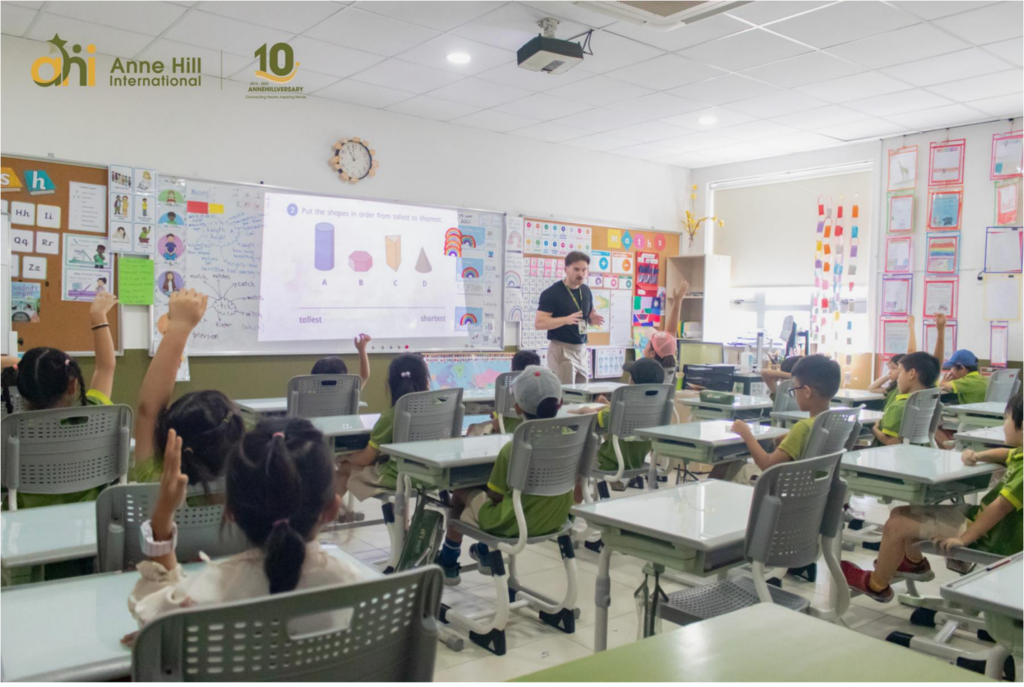
Photo: AHI students actively engaging and taking charge of their learning.
At AHI, this journey is supported by three key characteristics of the Mastery Approach: all students learn the same core content, lessons use the Concrete-Pictorial-Abstract (CPA) approach to build understanding step by step, and there is a strong focus on mathematical reasoning.
The CPA approach is a three-stage teaching method in which learners first use physical objects and manipulatives (concrete), then move to visual representations such as drawings or diagrams (pictorial), and finally work with numbers and mathematical symbols (abstract) (Third Space Learning, 2025). Together, these principles help students develop a deeper and more lasting understanding of the subject.
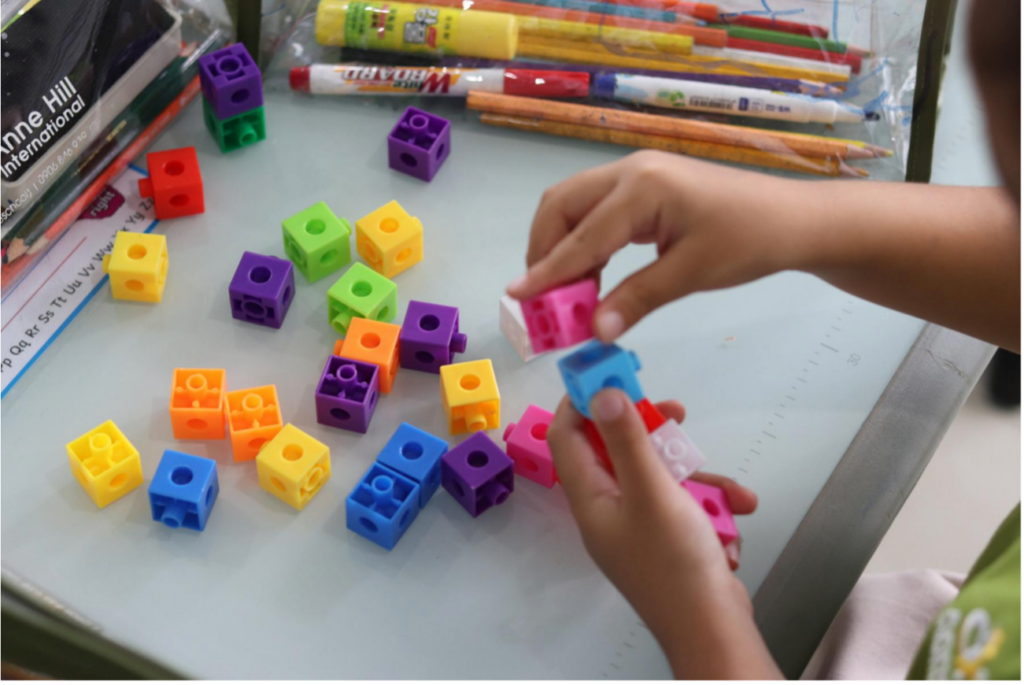
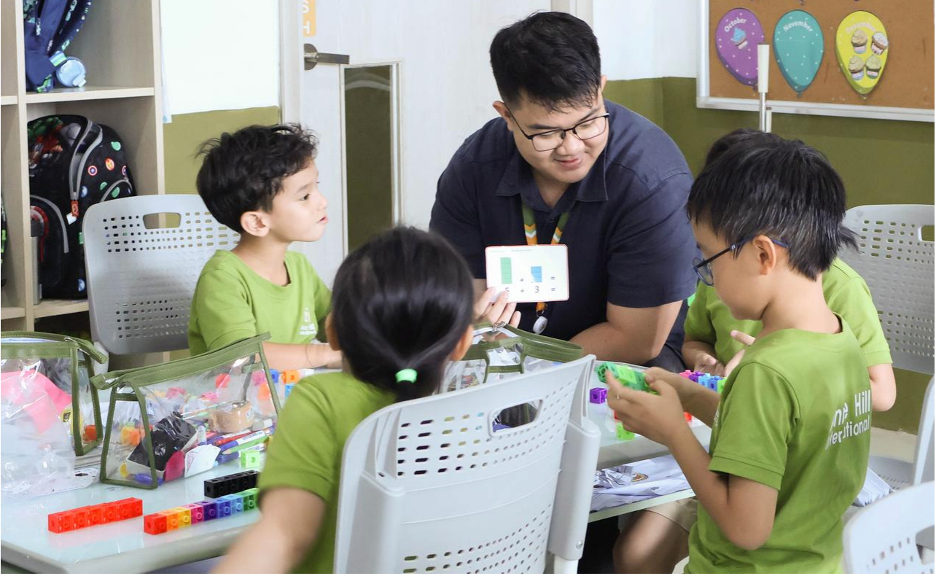
Photo: Hands-on learning helps students turn mathematical concepts into something they can see, explore and understand.
Learn more about our Primary curriculum and Secondary curriculum.
Inside a Maths Lesson at AHI
At AHI, the Mastery Approach is built into the structure of each maths lesson. Lessons begin with retrieval practice, where students revisit questions from previous lessons, terms and years to strengthen their recall and connect new learning with what they already know.
This is followed by the “I do, We do, You do” approach. As Mr Matthew, Vice Principal (Academic & Pastoral Care for Y4–Middle Years), explained during the Coffee Morning sessions on 9th and 10th September 2026:
“’I do’ means Teacher models the method, thinking aloud. ‘We do’ means class works together on guided examples. ‘You do’ Independent practice in books.”
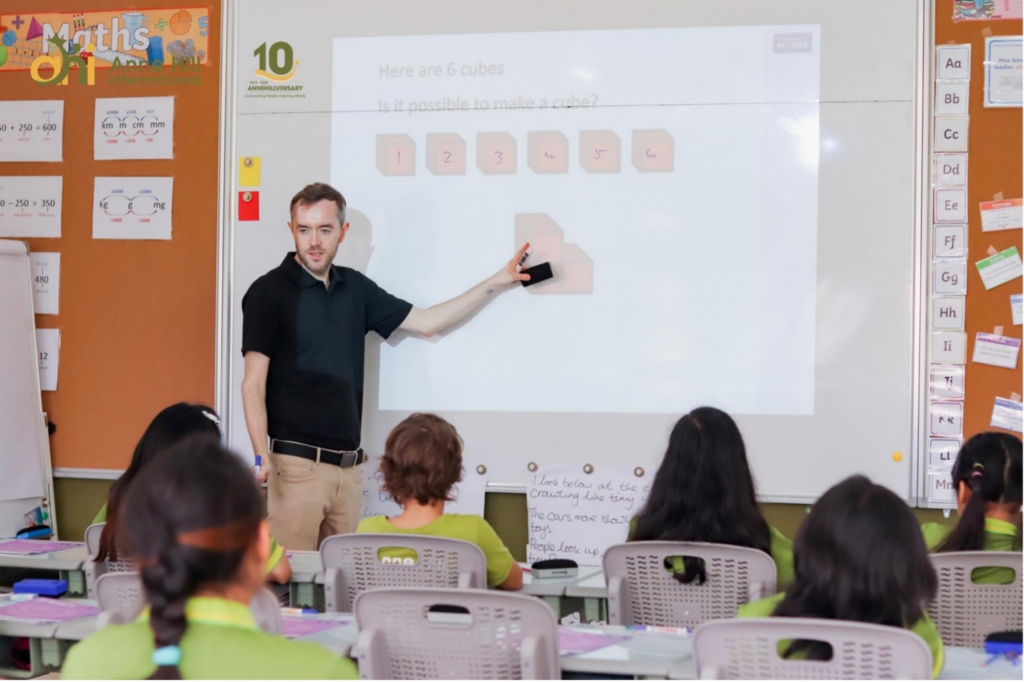
Photo: Teachers first guide students through each step, building understanding together.
Students also use the CPA approach to develop their understanding step by step. They may first work with practical objects, such as counters or cubes, before using visual representations such as bar models and finally moving towards abstract mathematical symbols and notation. This allows students to build conceptual understanding before applying their knowledge in a variety of situations.
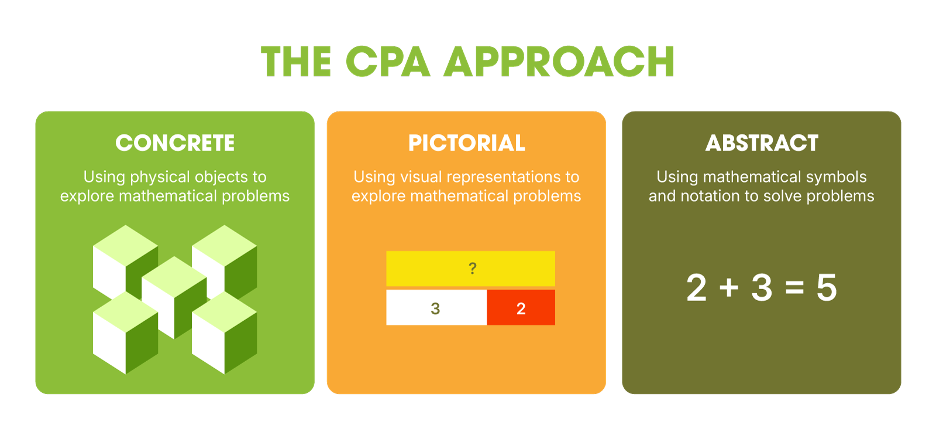
Photo: The Concrete-Pictorial-Abstract (CPA) approach helps students build mathematical understanding step by step.
Reasoning and problem-solving are the backbone of lessons. Students are encouraged to explain how they reached an answer and explore different ways of approaching a problem. Once students demonstrate that they have understood a concept, they are given opportunities to explore it in greater depth through additional reasoning tasks and open-ended investigations, rather than simply moving on to new content.
To track students’ mathematical progress and understanding, AHI uses a range of assessments. These include ongoing assessment during lessons, White Rose assessments, multiplication tests, and termly arithmetic and reasoning assessments.
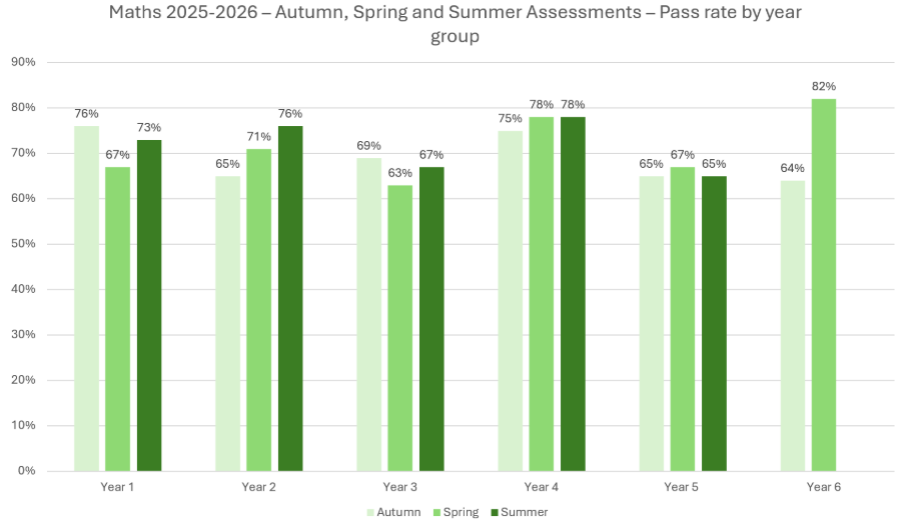
Image: AHI students’ maths assessment results across Autumn, Spring and Summer. (Source: AHI Assessment Data Report – July 2026)
The end-of-year White Rose Maths assessments show a broadly consistent picture of mathematics attainment across AHI. Results were broadly in line with those of schools of a similar size and context, with Year 4 standing out as an area of comparative strength at 6 percentage points above the comparison group. The differences across the remaining year groups were relatively small, while Year 2 recorded the strongest improvement across the year, rising from 65% in Autumn to 76% in Summer.
The Cambridge Primary Checkpoint results provide another measure of student performance. In 2024, AHI students achieved an average Mathematics score of 34, compared with the international average of 31. In 2026, the AHI average increased to 36, six points above the international average. The 2026 results also show improved performance across areas including Number and Geometry and Measure.
These results provide a snapshot of how AHI students are performing in mathematics, alongside the ongoing assessments used in the classroom.
Learn more about our students’ achievements: Year 6 (Class of 2026) at Anne Hill International School Achieved Best-Ever Cambridge Checkpoint Results.
Supporting Maths Learning at Home
Supporting children with maths learning at home does not mean re-teaching the lesson or giving them the answer. Instead, parents can encourage children to work through problems independently by asking questions such as:
- “What do you already know?”
- “Could you draw it?”
- “How could you check your answer?”
- “Can you explain your thinking?”
Parents are also encouraged to give children time to work through challenges, use equipment or drawings when needed, and understand that mistakes are part of learning.
Building confidence in maths starts with how children experience it at home. Parents should speak positively about maths and avoid comments such as “I was never good at maths.” Praising effort, perseverance and good thinking can help children stay engaged, while short, regular practice of number bonds, multiplication tables and mental maths facts can help strengthen their skills.

Photo: Fractions can be learned through sharing a pizza and understanding how each slice represents a part of a whole. (Source: Pexels)
Additionally, maths can be integrated into everyday activities. Parents can involve children in telling the time, discussing schedules, comparing prices while shopping, using fractions when sharing food, and estimating or measuring when helping out in the kitchen. These everyday situations provide opportunities for children to apply mathematical thinking in contexts beyond the classroom.
Beyond the Numbers
At AHI, our approach to teaching maths aims to build a strong foundation while helping students develop confidence, reasoning and problem-solving skills. The Mastery Approach extends beyond mathematics, encouraging students to look beyond the surface, develop a deeper understanding and apply their thinking to different situations.
In doing so, AHI helps foster a mindset of lifelong learning, empowering students to confidently apply what they have learnt beyond the classroom. Intentional and mindful learning continues both in school and at home, giving students space to reason and explore different ways of thinking. When parents and teachers work together, a student’s curiosity can grow into confidence, and knowledge finds purpose beyond the classroom.
Discover Meaningful Learning at AHI
Book a School Tour to discover how Anne Hill International School supports meaningful learning, helping students build strong foundations, develop confidence and become independent thinkers.

References
White Rose Education. (2018, September 26). The journey to mastery. https://whiteroseeducation.com/latest-news/the-journey-to-mastery
Third Space Learning. (2019). What is the Concrete Pictorial Abstract approach? https://thirdspacelearning.com/blog/concrete-pictorial-abstract-maths-cpa/