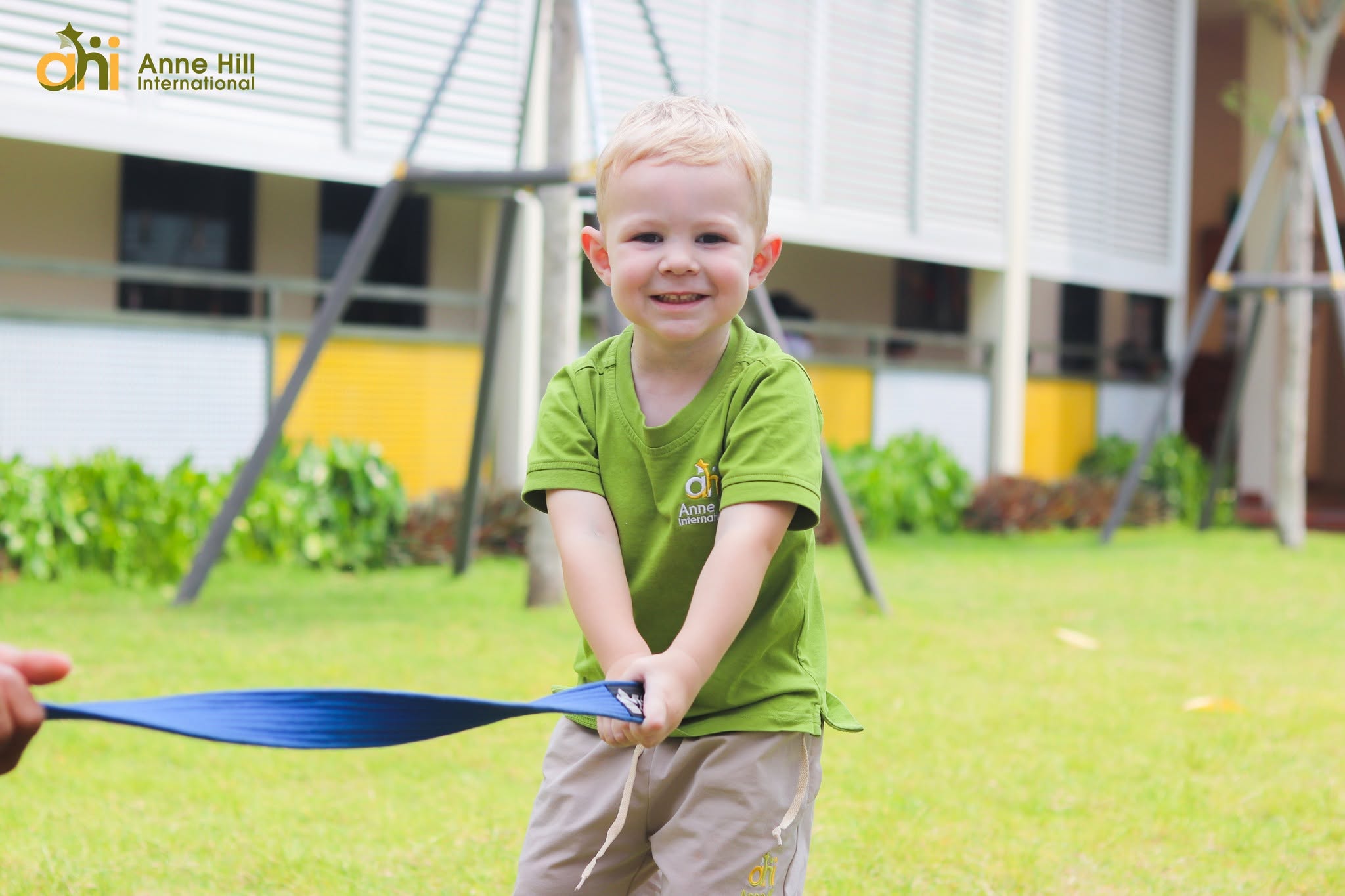
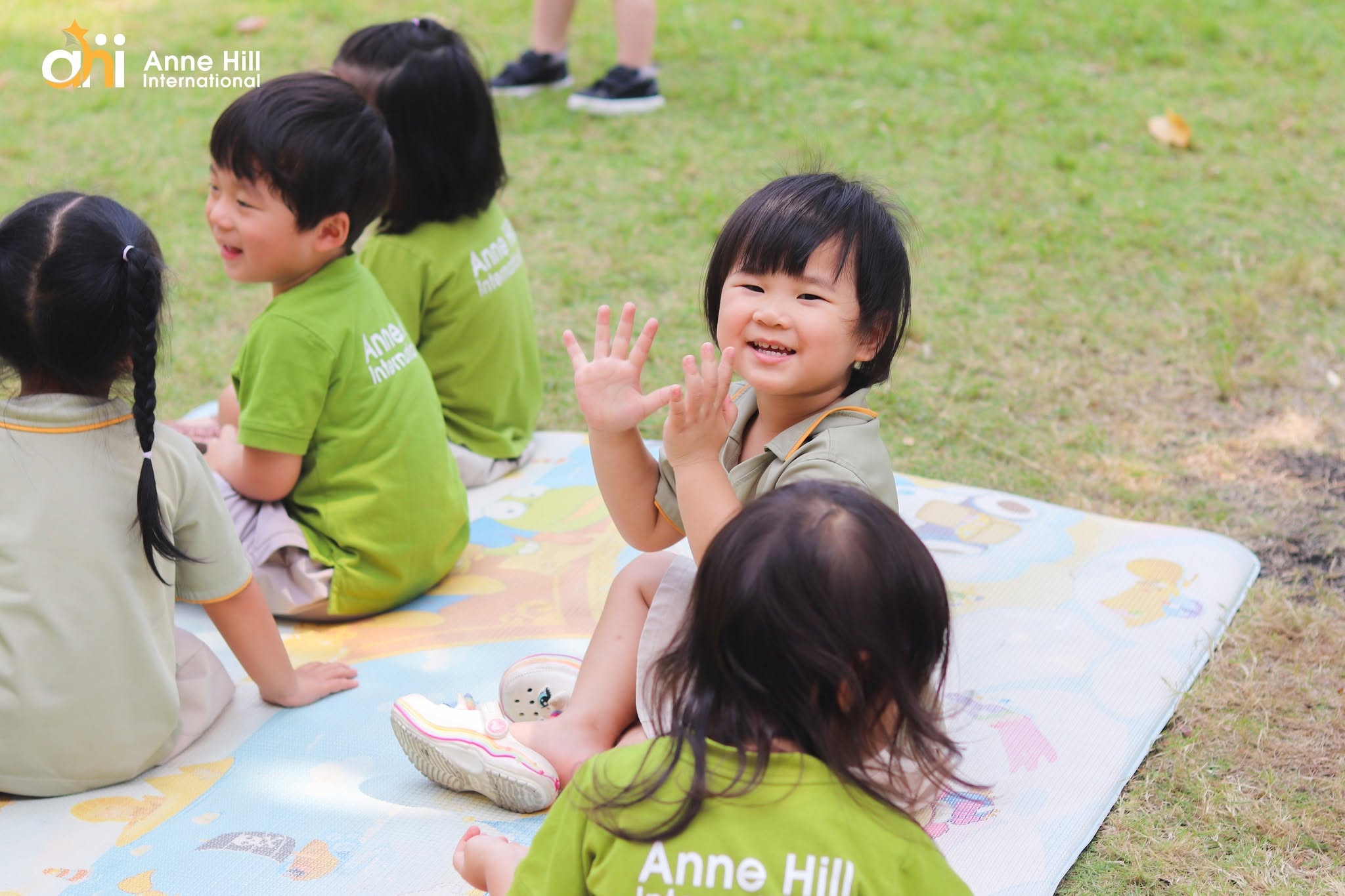
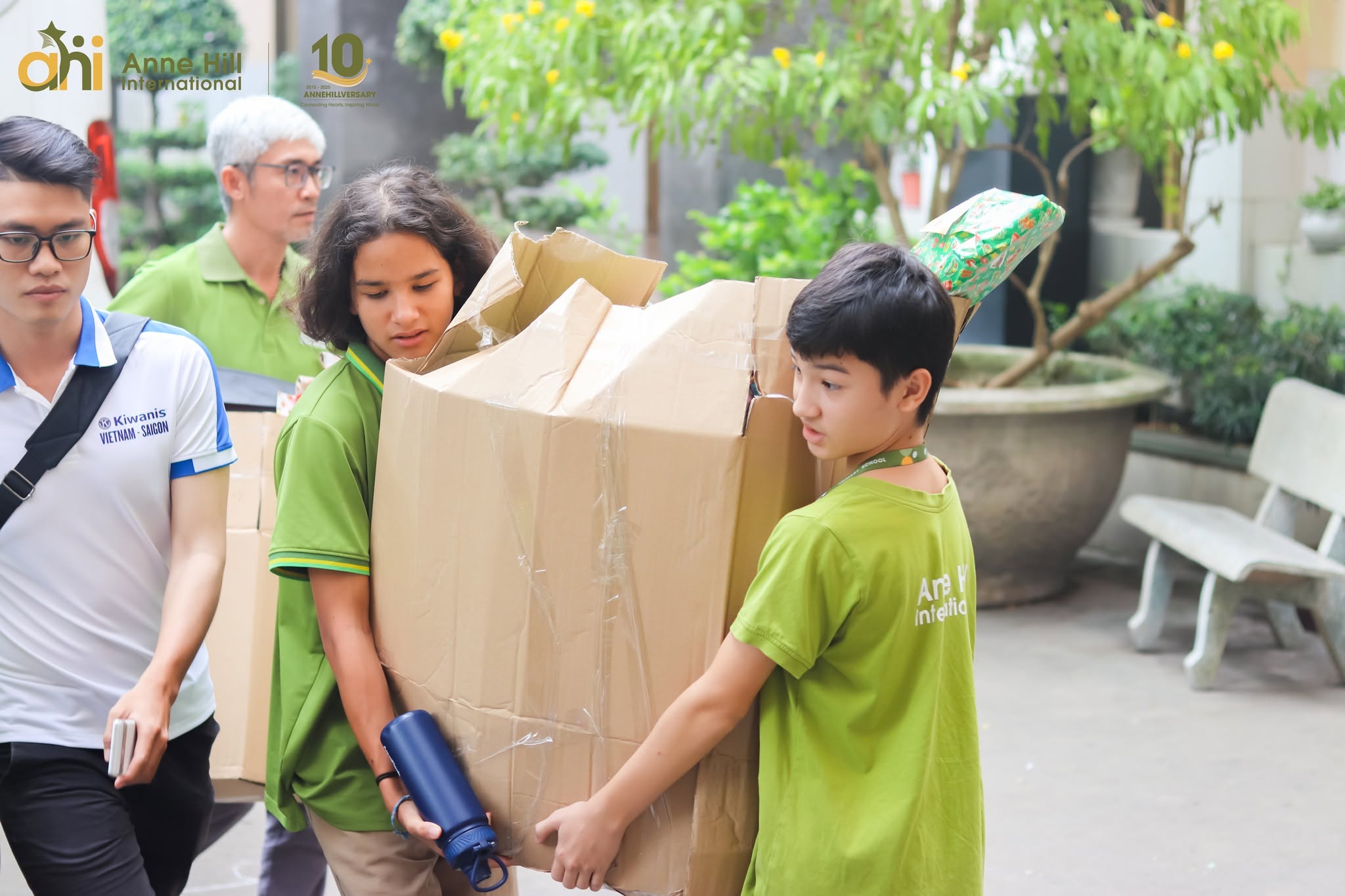
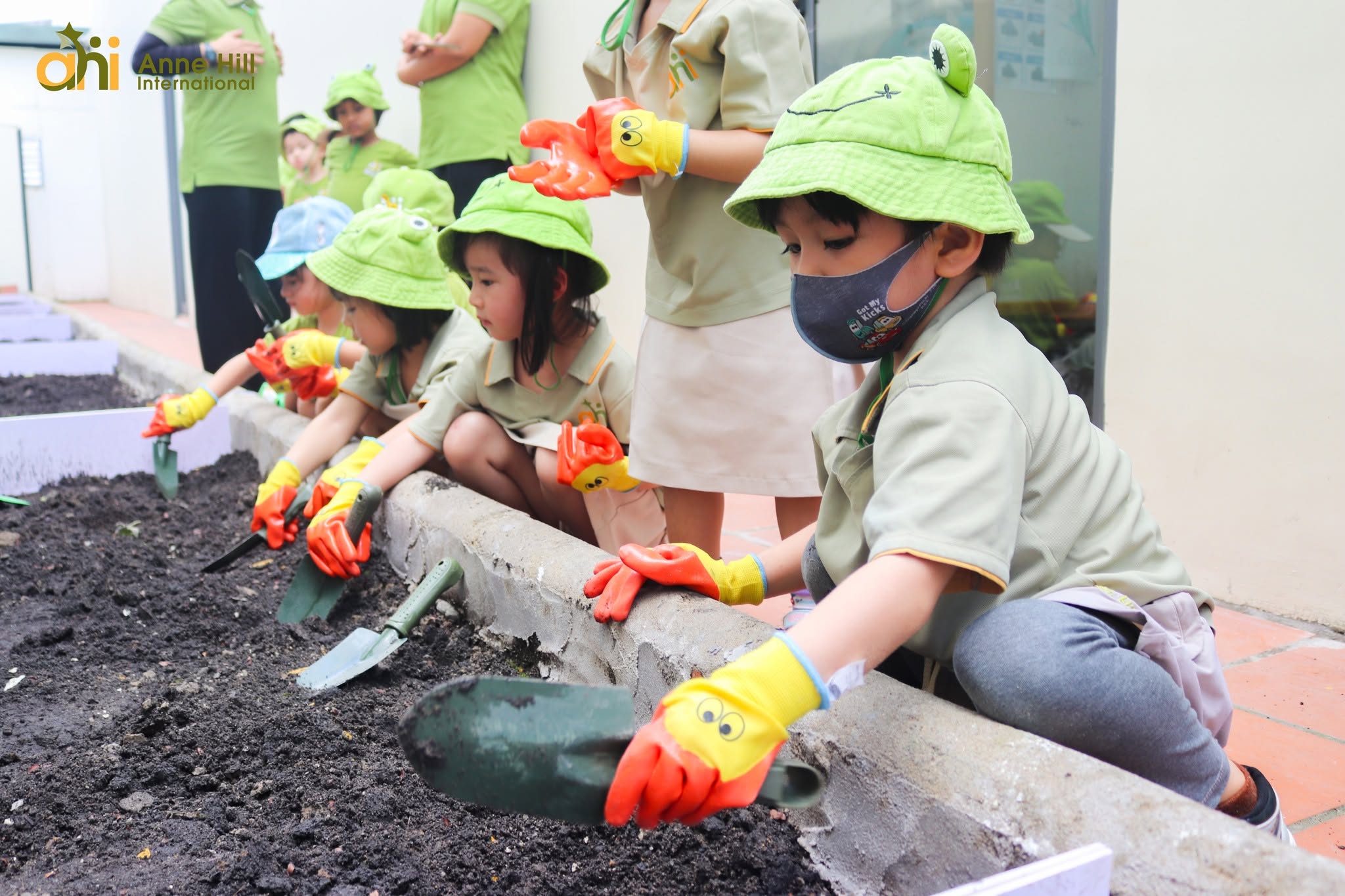
Anne Hill International School (AHI) will host its Halloween Bazaar on Saturday, 31st October 2026, from 8:00 AM to 4:00 PM across three campuses in An Khanh Ward, Ho Chi Minh City. Returning after a three-year break, the Bazaar will bring families and the wider community together for Halloween-themed activities, food, workshops and interactive experiences. More than 3,000 visitors are expected to attend, with participating vendors spanning F&B, kids and family-friendly concepts, fashion, gifts and lifestyle. The event will also support the Education Fund (EdFund) of the Singapore Chamber of Commerce Vietnam.
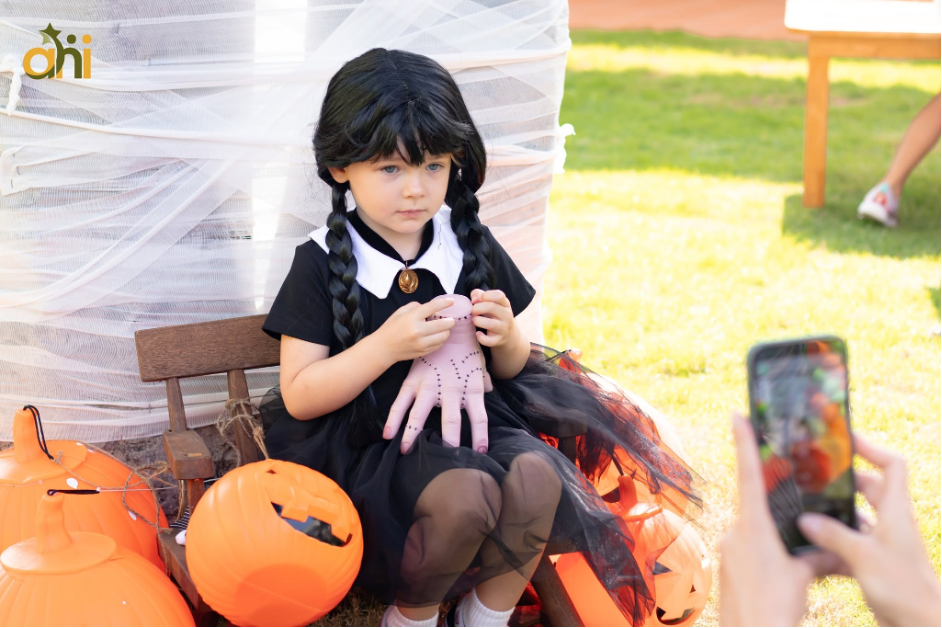
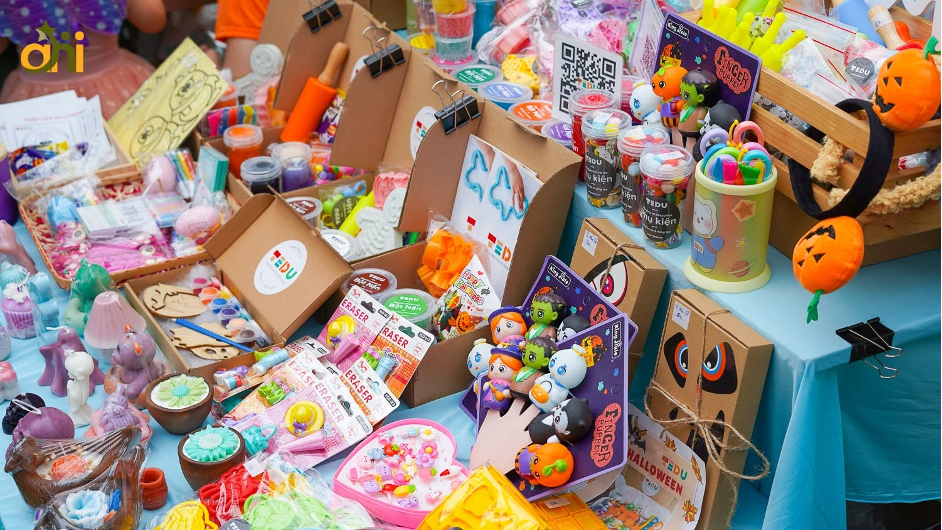
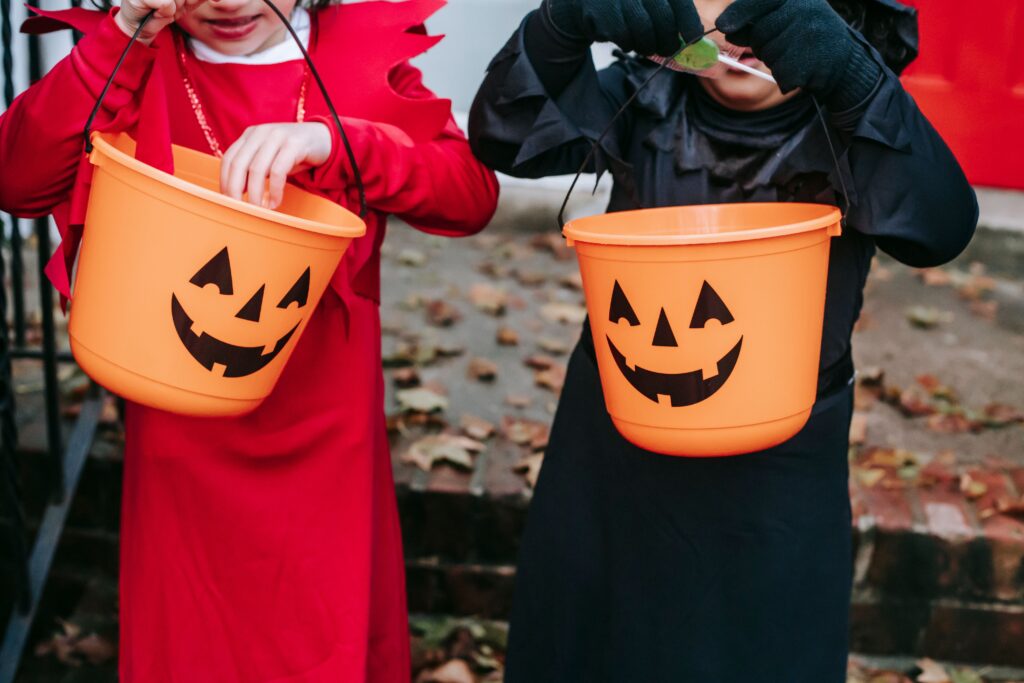
Image: AHI Halloween Bazaar 2026 brings families and the wider community together for a day of Halloween-themed fun and giving.
AHI Halloween Bazaar: A Bazaar with a History
The AHI Halloween Bazaar has become a tradition at our school, bringing together families, children, businesses and the wider community to celebrate Halloween while giving back.
Over the past 6 years, this community event has welcomed more than 11,000 visitors, worked with 300 or more brands and sponsors, and reached more than 300,000 people through its events and communications. Each edition has combined family entertainment, creative activities, food and community connections with a charitable cause, extending the Bazaar’s impact beyond the school gates.
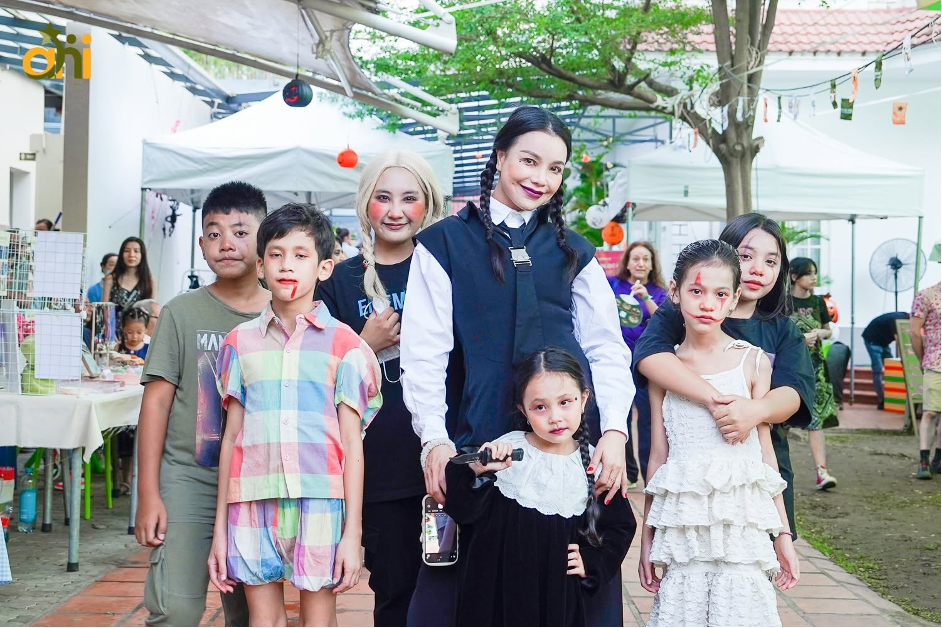
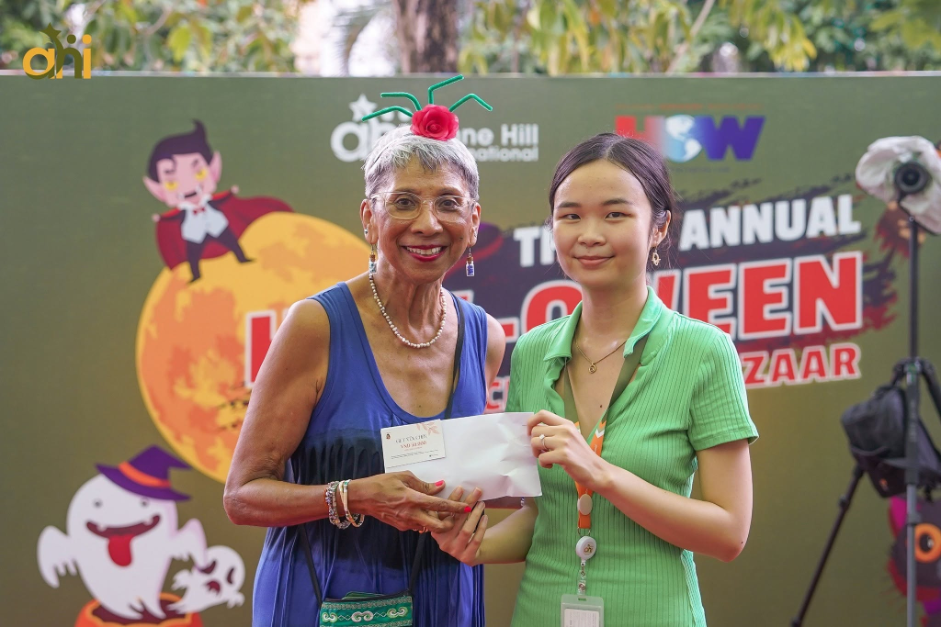
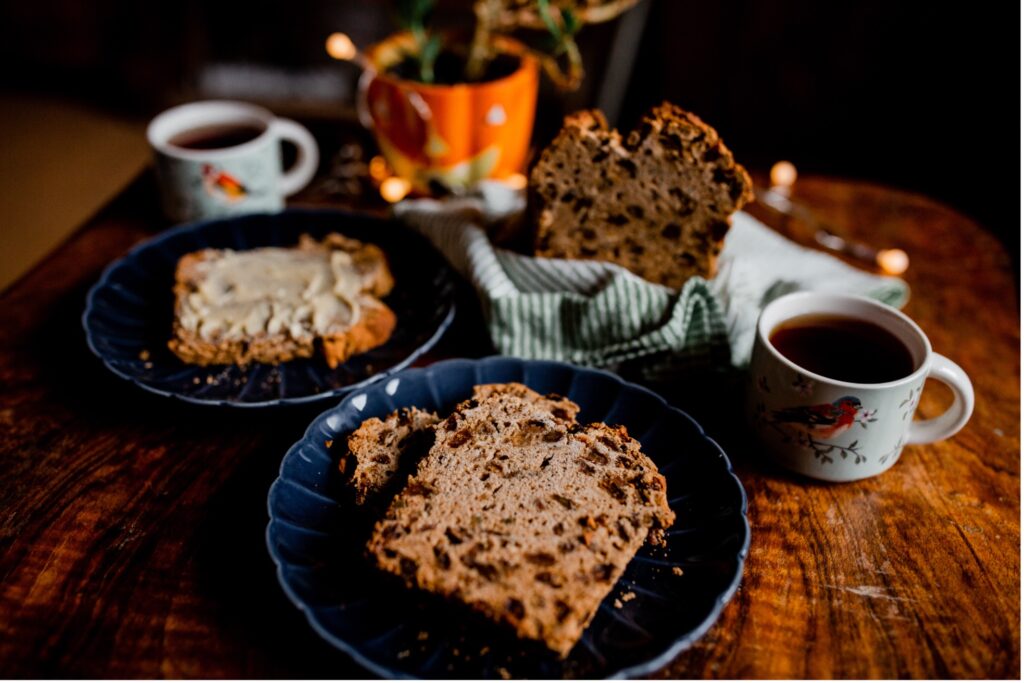
Image: AHI’s Halloween Bazaar, a long-standing school tradition bringing our community together to celebrate and give back.
This year’s edition builds on that history. The AHI Halloween Bazaar returns on Saturday, 31st October 2026, across AHI’s three campuses — 32 An Phu, 31 Giang Van Minh, and 12 Vo Truong Toan — in An Khanh Ward, with more than 80 partners and sponsors taking part and 3,000 or more visitors expected over the course of the day.
What’s Happening at the AHI Halloween Bazaar 2026
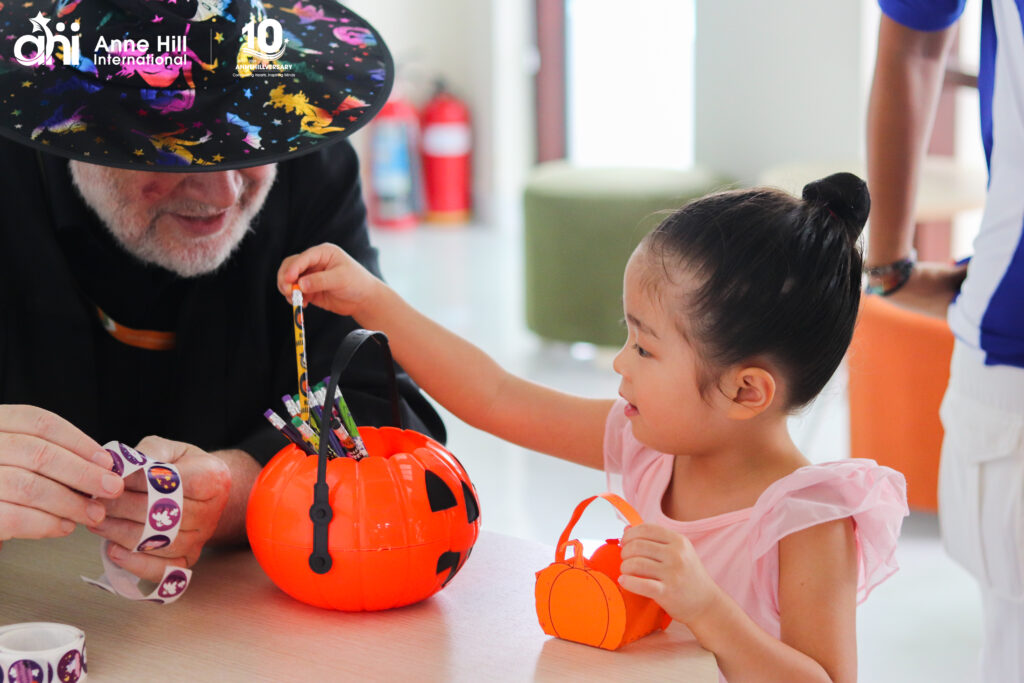
Image: The AHI Halloween Bazaar returns on 31st October 2026, in support of EdFund.
This year’s Halloween activities are shaped around three kinds of experiences.
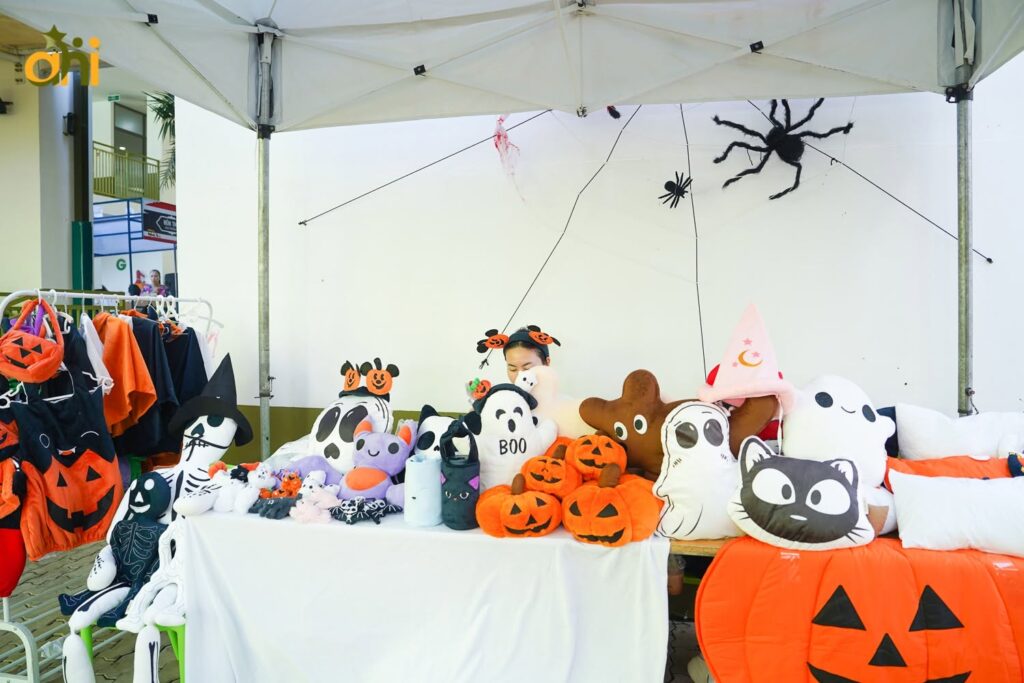
For families looking to spend time outdoors, there will be a pumpkin patch village, sports experiences, games, stage performances, and a haunted house and fun zone.
For those after something more hands-on, a range of workshops and creative activities will give children the chance to try something new and take part directly, making this a charity bazaar for children as much as for the adults alongside them.
For parents browsing with children in tow, kids and family-friendly stalls will offer toys, children’s products and family services alongside the day’s food and beverage options.
Together, these activities turn the Bazaar into more than a single afternoon out. As a Halloween bazaar for families, it brings food, shopping and hands-on experiences together in one place, giving families across Ho Chi Minh City a reason to spend the day together while contributing to something beyond their own enjoyment.
AHI Halloween Bazaar: A Bazaar with a Purpose
This year, proceeds from the Bazaar will go to the Education Fund (EdFund), which provides financial assistance through school fee scholarships to disadvantaged and deserving students pursuing their education (Singapore Chamber of Commerce Vietnam, n.d.).
In practice, this means every family or business taking part in this school fundraising event is doing more than enjoying a day of Halloween festivities. Their participation directly supports students who might otherwise face financial barriers to continuing their education, turning a single day of celebration into a contribution that lasts well beyond October.
It is this combination of celebration and purpose that gives the Bazaar a wider community impact, bringing families and businesses together while supporting educational opportunities for students in need.
Join Us at AHI Halloween Bazaar
Whether you are a business looking to connect with the community or a family looking forward to the holiday, everyone is welcome to be part of the AHI Halloween Bazaar.
Businesses can register as a vendor through the registration here: Register as a Vendor
For the latest announcements, event details and updates, follow AHI on Facebook and Instagram. More information about the Bazaar will be shared through AHI’s social media channels as the event approaches.
Learn More About AHI News
To explore what is coming up next, take a look at our Events Calendar and discover the activities we have planned.
Halloween is often associated with trick-or-treating, elaborate costumes and an eerie atmosphere on 31st October each year. Yet, the celebration takes on different forms around the world, shaped by the cultures, traditions and communities in which it is observed. As Halloween has spread across borders, familiar customs have been embraced and adapted in different ways, creating a range of traditions that may be unfamiliar even to those who celebrate Halloween.
For families in an international, multicultural community, exploring these differences can help children develop a wider understanding of the cultures around them. From traditional customs to modern celebrations, discover how Halloween is celebrated around the world.
Halloween Around the World
Halloween is a holiday celebrated annually on 31st October, known for traditions such as dressing up in costumes, trick-or-treating, carving pumpkins and enjoying festive activities.
Halloween traces its history and origins to Samhain, an ancient Celtic festival celebrated in Ireland to mark the end of the harvest and the beginning of winter. Over time, traditions from Samhain and All Hallows’ Eve contributed to the Halloween celebrated today (HISTORY.com Editors, 2026).
As Halloween travelled across borders, diverse communities embraced and adapted the tradition in their own ways, shaping how different cultures celebrate Halloween. What began as a festival rooted in ancient Celtic tradition has since become a widely recognised occasion, celebrated in ways that reflect the countries that have made it their own.
From costumes to traditions, Halloween around the world takes many different forms. (Source: Pexels)
How Halloween is Celebrated Across Cultures
Ireland
Many of Halloween’s core customs, including costumes and bonfires, have roots in Ireland, the birthplace of Halloween. Today, Irish celebrations continue to preserve these traditions, with communities lighting bonfires on Halloween night and families enjoying seasonal foods such as colcannon, a dish of mashed potatoes with cabbage and onions (RTÉ, 2025), and barmbrack, a fruit bread traditionally baked with objects such as a ring, coin or piece of cloth, each believed to tell fortunes about marriage, prosperity or hardship (Vice, 2016).
Guising, in which people dressed up and went door-to-door, also laid the foundations for the trick-or-treating tradition seen today. Festivals such as the Púca Festival in County Meath continue to celebrate Samhain through parades, music and crafts, keeping Ireland’s connection to Halloween’s cultural heritage alive (Ireland.com, 2024). The Ulster Folk Museum explains that hollowed turnips were carved before pumpkins became dominant under American influence.
Barmbrack, a traditional Irish fruit bread, is a familiar part of Halloween in Ireland, where hidden objects were traditionally used for fortune-telling. (Source: Adobe Stock)
United States
In the United States, Halloween has developed into a large-scale celebration known for neighbourhood trick-or-treating, elaborate decorations and creative costumes. Children go door-to-door to collect sweets, while homes and yards are transformed with pumpkins, lights and spooky displays.
The scale of the celebration is reflected in its economic impact. The National Retail Federation estimates that Halloween spending in the United States will reach $13.5 billion in 2026, maintaining the strong spending level of the previous year’s record $13.1 billion. Its latest survey found that 74% of consumers plan to celebrate Halloween, with handing out candy, dressing in costume, decorating homes and yards, carving pumpkins and watching scary movies among the most popular activities (National Retail Federation, 2026).
Pumpkin carving is a much-loved Halloween tradition in the United States, turning pumpkins into everything from classic jack-o’-lanterns to creative seasonal decorations. (Source: Magnific)
Japan
In Japan, Halloween has grown into a major urban event focused on costumes, street parties and themed attractions rather than family trick-or-treating. Major cities such as Tokyo and Osaka host large cosplay gatherings and parades, with the Shibuya area in Tokyo once known for massive crowds of costumed revellers before new rules limited street gatherings (Japanese Pod 101, 2025).
Theme parks run Halloween nights with special decorations, limited-edition food and costume contests, while convenience stores and supermarkets sell seasonal snacks and costume goods. Trick-or-treating remains rare and is mostly limited to organised events at international schools, housing compounds or commercial facilities rather than neighbourhoods (GaijinPot, 2023).
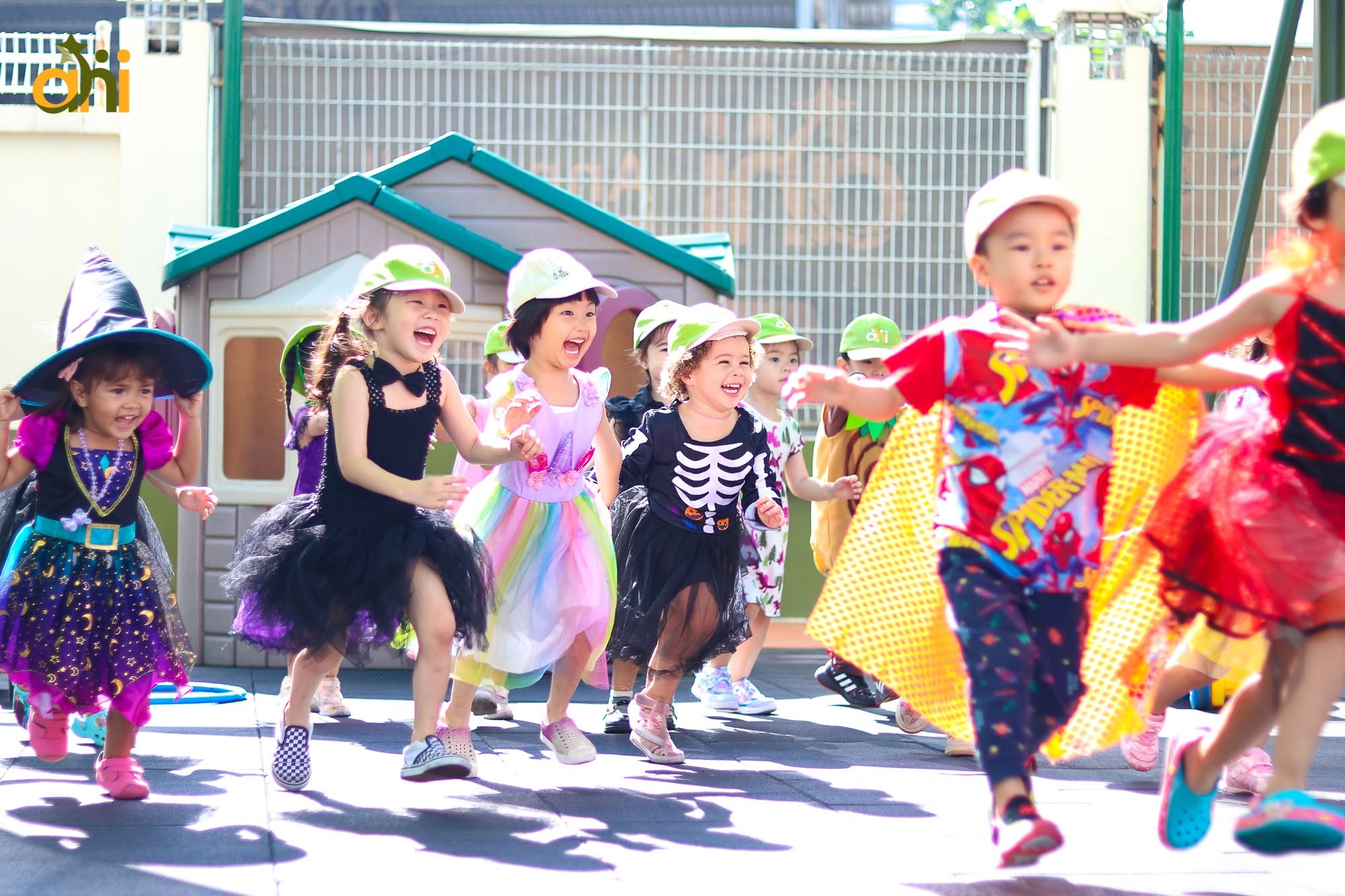
For our preschoolers at AHI, Halloween brought the excitement of dressing up, making crafts and enjoying a fun-filled trick-or-treating experience.
Vietnam
In Vietnam, Halloween is mainly celebrated in big cities like Ho Chi Minh City and Hanoi through decorated venues, costume parties and themed promotions at schools, shopping malls, cafés and bars. In Ho Chi Minh City, streets such as Nguyễn Huệ Walking Street and Bùi Viện Street see Halloween displays, costumed staff and special drink or food menus in the days leading up to 31 October (VietnamNet, 2019).
Young people and expatriates often mark the night by dressing up, taking photos, going to parties or visiting haunted-house style attractions set up by entertainment venues. International schools and language centres also organise trick-or-treating or costume parades for children, but door-to-door trick-or-treating is not common in residential areas (VNExpress, 2024).
What Halloween Looks Like at AHI
With students from more than 30 nationalities, AHI brings together children who may have grown up with very different experiences of Halloween. Their backgrounds can shape how they understand Halloween traditions in different countries and how different cultures celebrate Halloween. For some, the holiday may be associated with trick-or-treating and neighbourhood celebrations; for others, it may be more familiar as a school event, a costume tradition or a social occasion.
These different experiences are part of what makes Halloween across cultures meaningful within AHI’s multicultural community. Students have opportunities to share the traditions they know while discovering how others celebrate. Events such as the AHI Halloween Bazaar provide a space for students to come together, exchange experiences and take part in an international celebration of Halloween.
A glimpse of AHI’s How-oween Charity Bazaar 2023, featuring over 80 vendors and sponsors who brought the event to life.
Celebrating Difference, Together
Halloween around the world may differ, but sharing these traditions can turn a familiar celebration into an opportunity for children to learn about the people and cultures around them. By hearing how others celebrate, students can broaden their perspectives and develop a deeper understanding of the diverse world they are growing up in.
At AHI, cultural exchanges like these are part of everyday life in a multicultural community. Growing up alongside students and teachers from different backgrounds gives children opportunities to listen, share and learn from one another, helping them build the curiosity and respect they need to understand and engage with the diverse communities around them.
Learn More About AHI News
To explore what is coming up next, take a look at our Events Calendar and discover the activities we have planned.
In this digital age, children can ask AI to explain a concept, support their problem-solving skills or generate an answer within seconds. With information always at their fingertips, an important question arises for parents: what should children still learn to do for themselves?
Rather than keeping technology out of the classroom, the focus should be on helping children use it wisely while building the skills they need to think independently, work with others and respond to change. This article explores how critical thinking, communication, collaboration and adaptability can develop alongside AI literacy, and how families can nurture them at home.
What Can AI Do for Children’s Learning Today?
Artificial intelligence (AI) refers to technology that can perform tasks that typically require aspects of human intelligence, such as understanding language, generating content, solving problems and recognising patterns. As for AI in education, these capabilities can support learning by helping children access explanations, generate ideas, practice skills and receive feedback. (Mark Warschauer, Zawacki-Richter et al., 2019)
Not long ago, a child who wanted to understand a difficult concept might have searched through a textbook, asked a teacher or worked through the problem themselves. Today, they can turn to an AI chatbot for an explanation within seconds.
A study by the Institute of Digital Media and Child Development found that 80% of students surveyed use AI to explain ideas when they are confused, while 70% use it to generate ideas and 60% use it to summarise texts (Children and Screens, 2026). To look more closely at our younger children, Hashem et al. (2025) found that 22% of children aged 8–12 had used a generative AI tool, with usage rising from 15% among 8-year-olds to 27% among 12-year-olds. These findings suggest that children are beginning to encounter generative AI early in their education journey (National Literacy Trust, 2025). Students commonly use AI to explain concepts, summarise academic material and structure ideas (Stephenson & Armstrong, 2026).
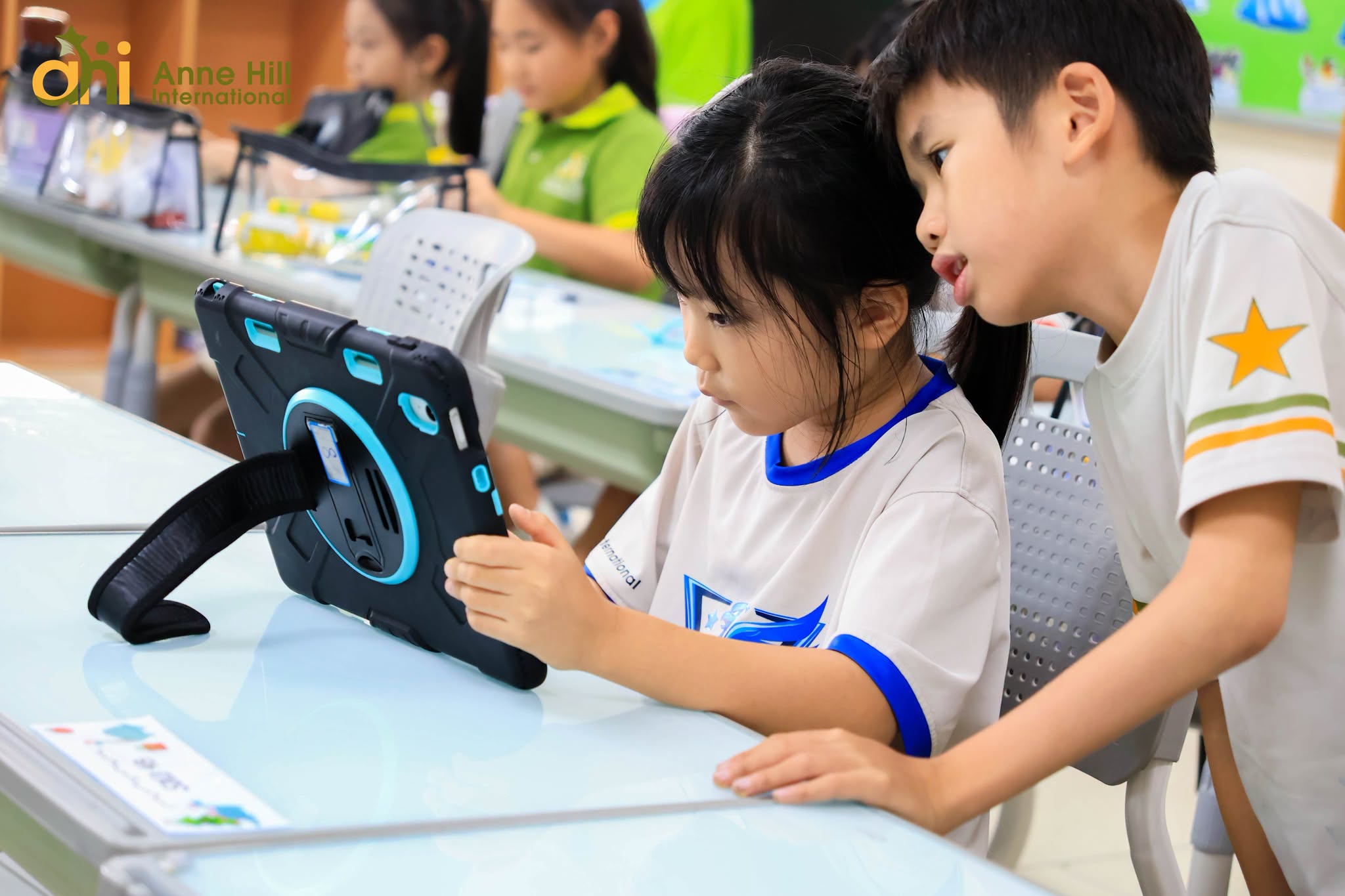
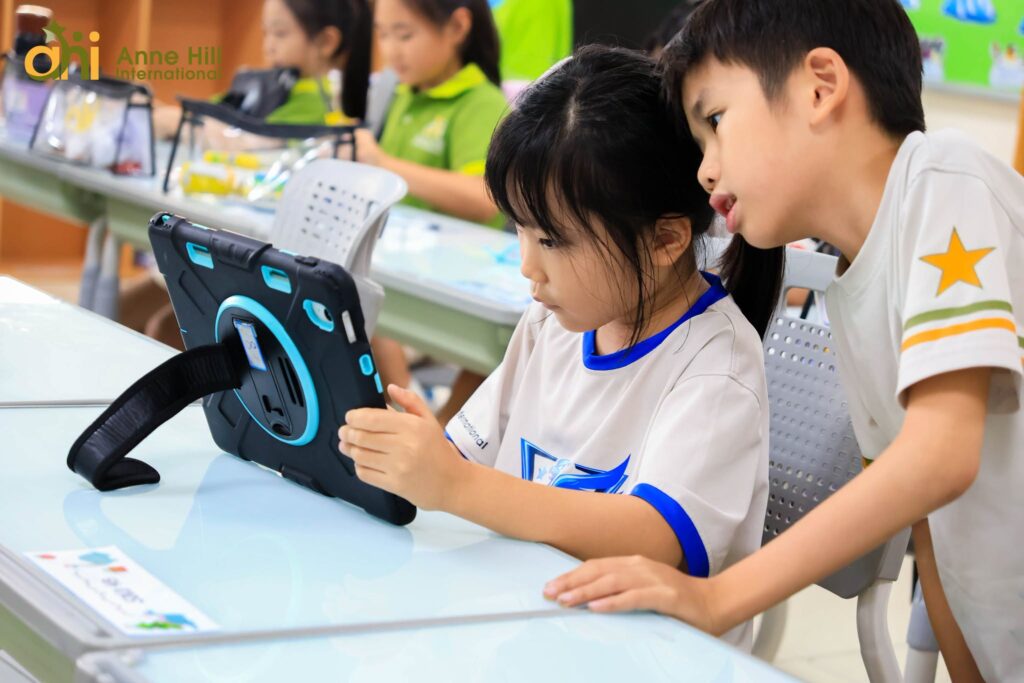
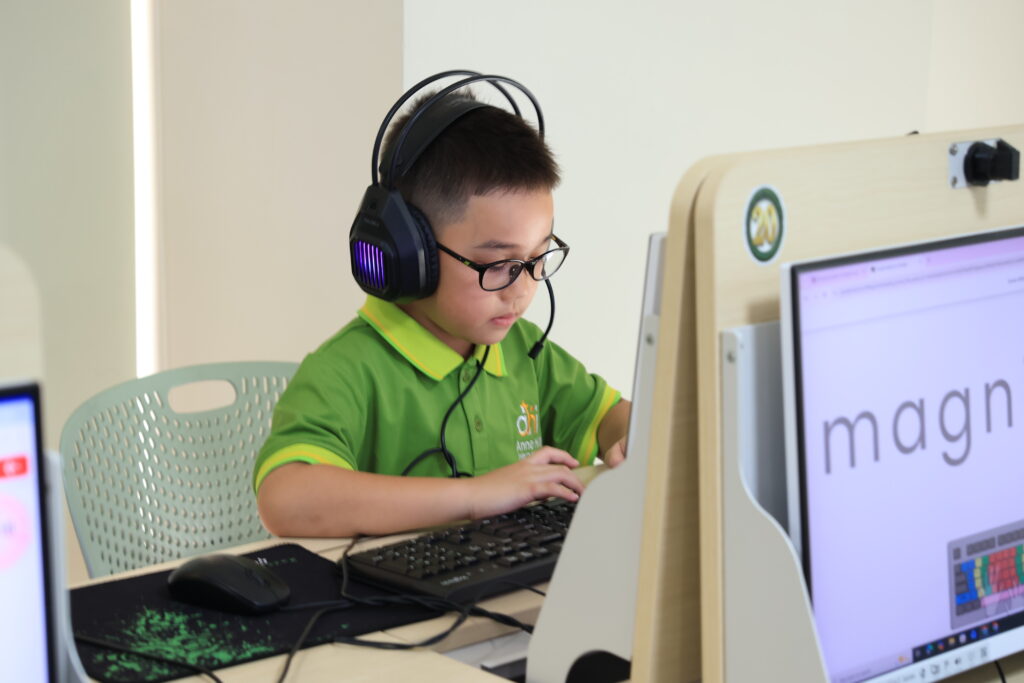
ICT classes give students opportunities to develop digital literacy and build the skills to navigate technology thoughtfully and responsibly.
This changes more than how quickly children can find information. An AI-generated answer may be useful, but receiving an answer does not necessarily mean understanding it. Children need to consider whether information is accurate, relevant or appropriate before accepting it.
This is where AI literacy becomes important. Alongside knowing how to use AI tools, children need the judgement to question and evaluate what they receive from them. Digital literacy gives them the foundation to navigate digital information thoughtfully and responsibly.
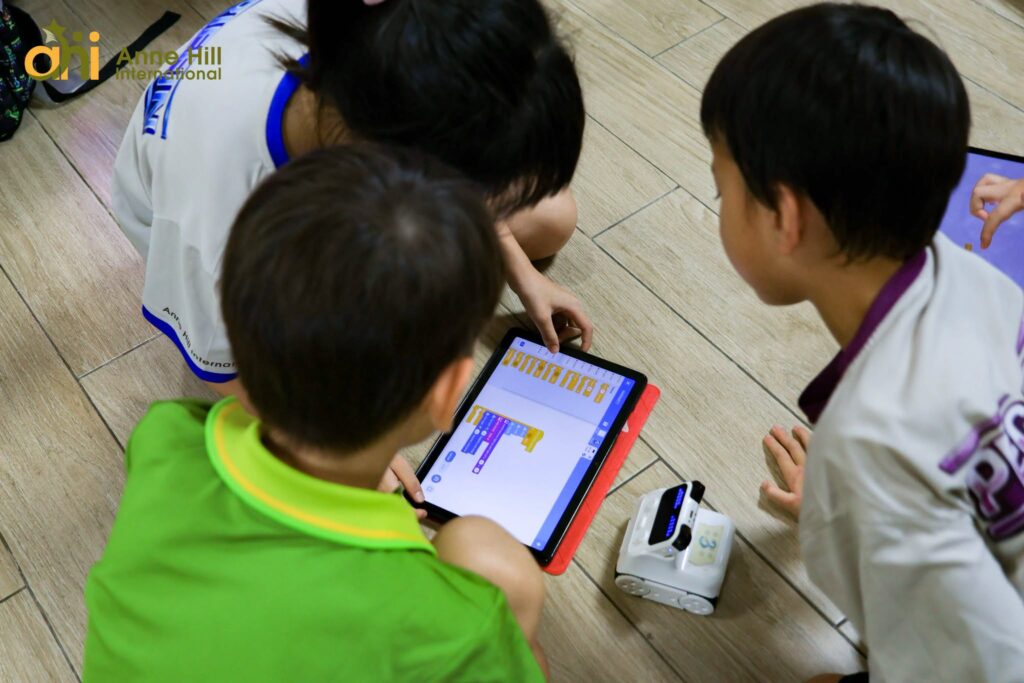
Through robotics, students explore technology hands-on, applying their ideas and problem-solving skills to real-world challenges.
The Essential Skills Every Child Needs to Develop
As AI makes information easier to access, children need abundant opportunities to develop the skills that allow them to make sense of it.
Critical thinking begins with questioning. Children need to consider how they know something is correct and whether there is evidence to support it. These skills can be strengthened through opportunities that encourage independent thinking and active problem-solving.
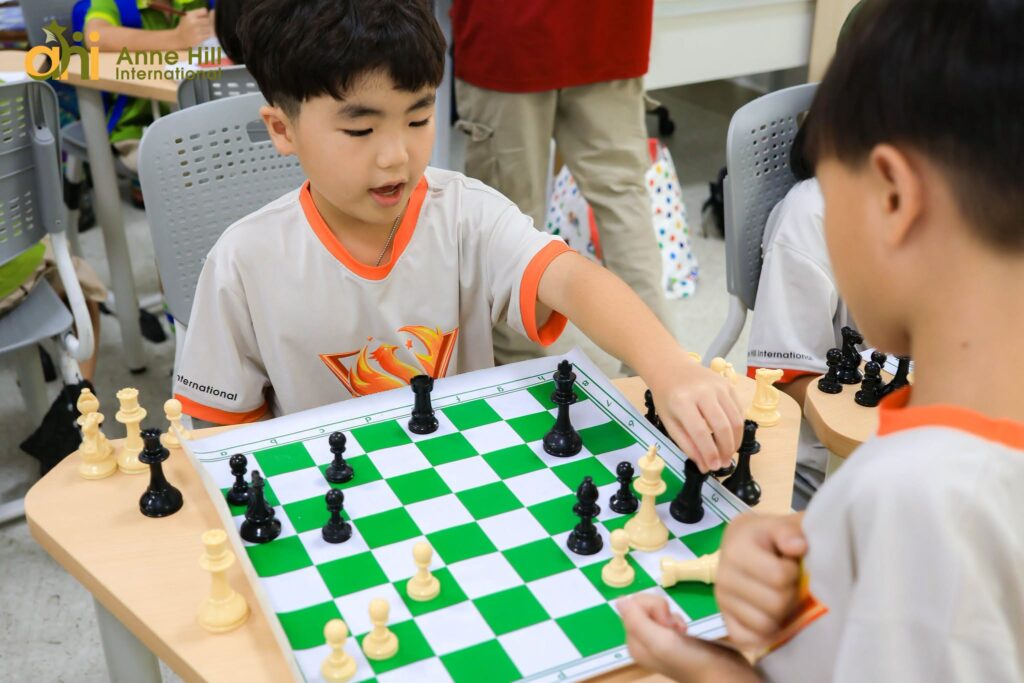
At Anne Hill International School (AHI), this extends beyond formal lessons. In our After-School Activities (ASAs) and Co-Curricular Activities (CCAs) programmes, such as Chess Club, students have space to plan, consider different strategies and make decisions through matches, puzzles and challenges, developing critical thinking, patience and resilience. Book Club also gives children opportunities to explore books, write, review, role-play and share their ideas, developing communication, storytelling and creativity.
Communication and collaboration allow children to explain their thinking, listen to different perspectives and work towards solutions with others. These experiences also develop problem-solving skills, particularly when there is no single correct answer.
At AHI, we provide opportunities to develop these skills AI can’t replace. For example, the Montessori experience in the AHI Early Years focuses on self-directed activities, hands-on learning and purposeful exploration. Children engage in five key areas of learning: Practical Life, Sensorial, Language, Mathematics and Culture.
Together, these areas encourage children to make decisions, explore ideas and work through challenges independently, building their ability to think through situations, consider different approaches and find solutions.
Creativity and innovation require children to explore possibilities, make connections and develop their own ideas. AI can generate suggestions, but children still need to decide what is meaningful, appropriate or worth pursuing.
Within the AHI Secondary Curriculum, Design & Technology gives students chances to identify real-world problems, create prototypes and refine solutions through an iterative design process. These experiences give children space to make choices, test ideas and learn from mistakes.
Adaptability is equally important as technology and ways of working continue to change. Children need to be comfortable learning, adjusting and trying new approaches rather than depending on one tool or method.
At AHI, assemblies provide opportunities for students to encounter different cultures and perspectives. The United Nations Day assembly, for example, encourages students to become adaptable communicators as they learn about different countries and consider perspectives beyond their own.
Chess Club challenges students to plan ahead and strategise, strengthening critical thinking, problem-solving and adaptability.
These are the skills AI can’t replace because they depend on children making judgements, engaging with others and taking an active role in their own learning.
To conclude, these abilities are reflected in the AHI’s nine core values: empathetic, respectful, humble, ethical, resilient, communicator, adaptable, collaborator and thinker.
These values support children in developing independence, judgement, responsibility and an awareness of how they relate to others.
Being ethical encourages children to consider the impact of how AI is used, while humility reminds them that having access to information does not mean having all the answers.
Adaptability supports them as technology continues to evolve, while empathy, respect and collaboration remain important as AI changes the way people interact and work together.
Hence, these nine values provide a foundation for children to engage with AI thoughtfully while continuing to grow as individuals.
Building Future-Ready Skills at School and at Home
Children develop these skills through everyday experiences, with educators and parents playing an important role in helping them practice and apply them. Solving a problem, explaining an idea, working with others, creating something or trying again after a mistake all give children opportunities to build critical thinking, communication, collaboration and problem-solving skills for the digital era.
This could mean asking children to explain their reasoning, discuss different solutions, work with others or reflect on what went wrong when they make a mistake.
Research by the National Literacy Trust found that 82% of teachers believe students should be taught to engage critically with generative AI (National Literacy Trust, 2025), highlighting the importance of guidance as children begin using the technology.
When educators reinforce these habits, children can develop skills AI can’t replace while learning to use AI as a tool rather than rely on it for every answer.
Learning to communicate, collaborate and adapt through teamwork and hands-on learning.
The same habits can be encouraged at home. Parents can ask “How do you know?” or “What makes you think that?” instead of immediately providing an answer.
When children use AI, they can be encouraged to check information against another source, identify anything unclear and explain why they agree or disagree with a response.
Parents can also reinforce AHI’s Digital Citizenship and Online Safety practices by encouraging purposeful use of technology, helping children assess whether online sources are reliable and modelling responsible device use at home.
For example, putting devices away during family meals or conversations shows children that technology has a place, but does not need to take over every interaction. Additionally, setting age-appropriate screen time limits and discussing online habits can further help children develop a balanced approach to technology.
This supports responsible AI use while helping children understand when technology can assist them and when they need to think through a problem themselves.
AHI also encourages children to use technology purposefully, safely and respectfully, including understanding how to protect their personal information and seek support when needed.
AHI’s approach to digital balance also creates space for play, relationships and activities away from screens, giving children opportunities to develop these abilities through real-world experiences.
Growing alongside AI
Preparing children for an AI-enabled world is therefore not about choosing between technology and traditional learning. It is about growing alongside AI, with the knowledge, values and judgement to use it thoughtfully.
AI will continue to shape how children learn, communicate and work. Preparing children for the future therefore means giving them more than technical knowledge. It means creating opportunities to develop curiosity, judgement, resilience and confidence when facing unfamiliar challenges.
The AI skills for children will not simply be about knowing how to use the latest tool. In the 21st century, children will also need to question information, contribute ideas, work with others and adapt as technology changes.
At AHI, we are committed to nurturing the skills AI can’t replace, helping our students develop the confidence and capabilities to move forward alongside technology, rather than simply keeping up with it.
References
Armstrong, C., & Stephenson, R. (2026). Student generative artificial intelligence survey 2026 (HEPI Report 199). Higher Education Policy Institute.
Hashem, Y., Esnaashari, S., Onslow, K., Chakraborty, S., Poletaev, A., Francis, J., & Bright, J. (2025). Understanding the impacts of generative AI use on children: WP1 surveys. The Alan Turing Institute.
Zawacki-Richter, O., Marín, V. I., Bond, M., & Gouverneur, F. (2019). Systematic review of research on artificial intelligence applications in higher education—Where are the educators? International Journal of Educational Technology in Higher Education, 16(1), Article 39.
In August 2026, Anne Hill International School (AHI) received the Year 6 Cambridge Checkpoint results for the May 2026 examinations. This year’s results mark a significant milestone for AHI, with the highest Cambridge Checkpoint performance ever recorded at the school.
A Successful Year of Academic Progress
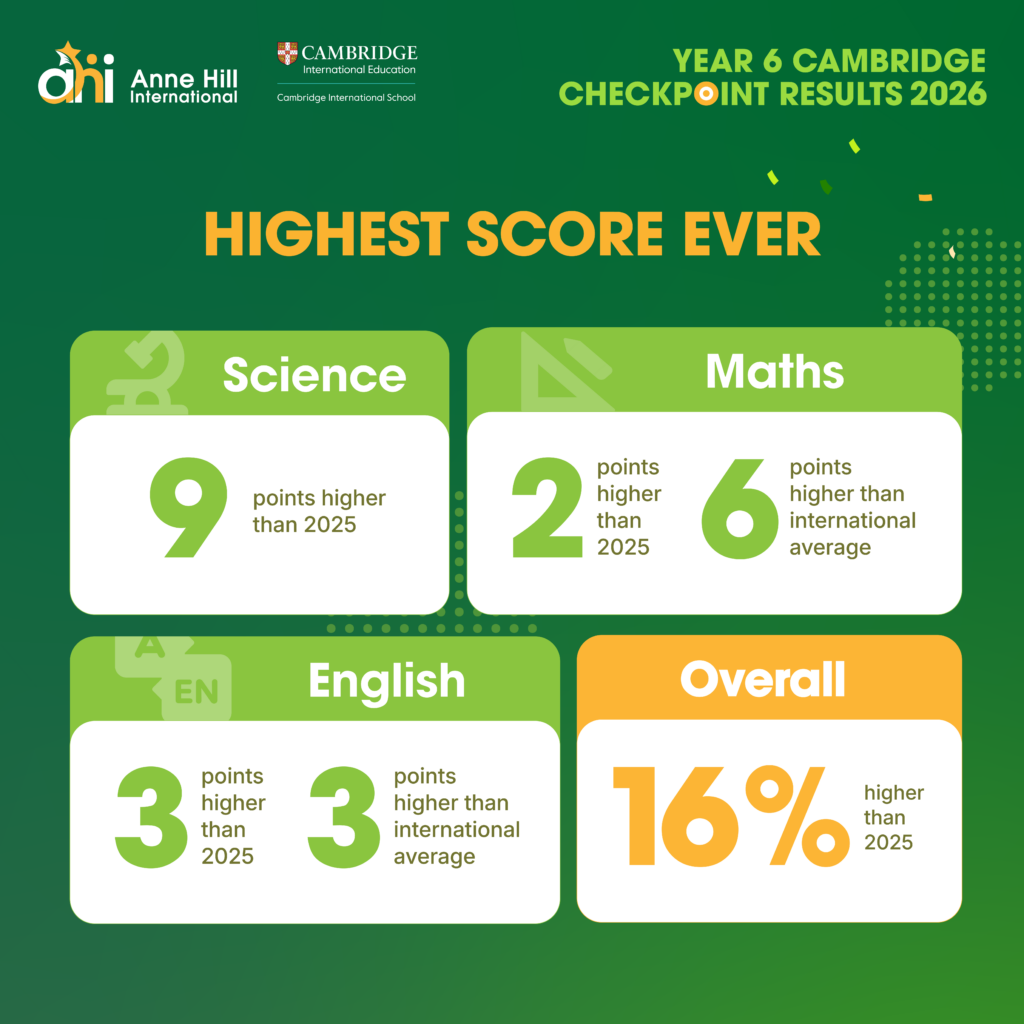
Infographic: Impressive figures from this year’s Cambridge Checkpoint results.
Across all three subjects – English, Mathematics, and Science – our Year 6 students (AY 2025-2026) achieved an average score of 34,4 – 16% higher than the average score in 2025, and also the highest ever recorded at AHI. This reflects strong academic growth over the past year.
In English, our students achieved an average score of 36, an increase of 3 points from 2025 and 3 points above the International Average. Mathematics delivered another particularly strong result, with an average score of 36 – also 3 points higher than last year and an impressive 6 points above the International Average. This result highlights the strength of the cohort’s mathematical achievement. In Science, the average score reached 31, representing the most significant year-on-year improvement, with a remarkable 9-point increase from 2025.
Exceptional Individual Achievement
This year also witnessed many excellent individual achievements across the cohort.
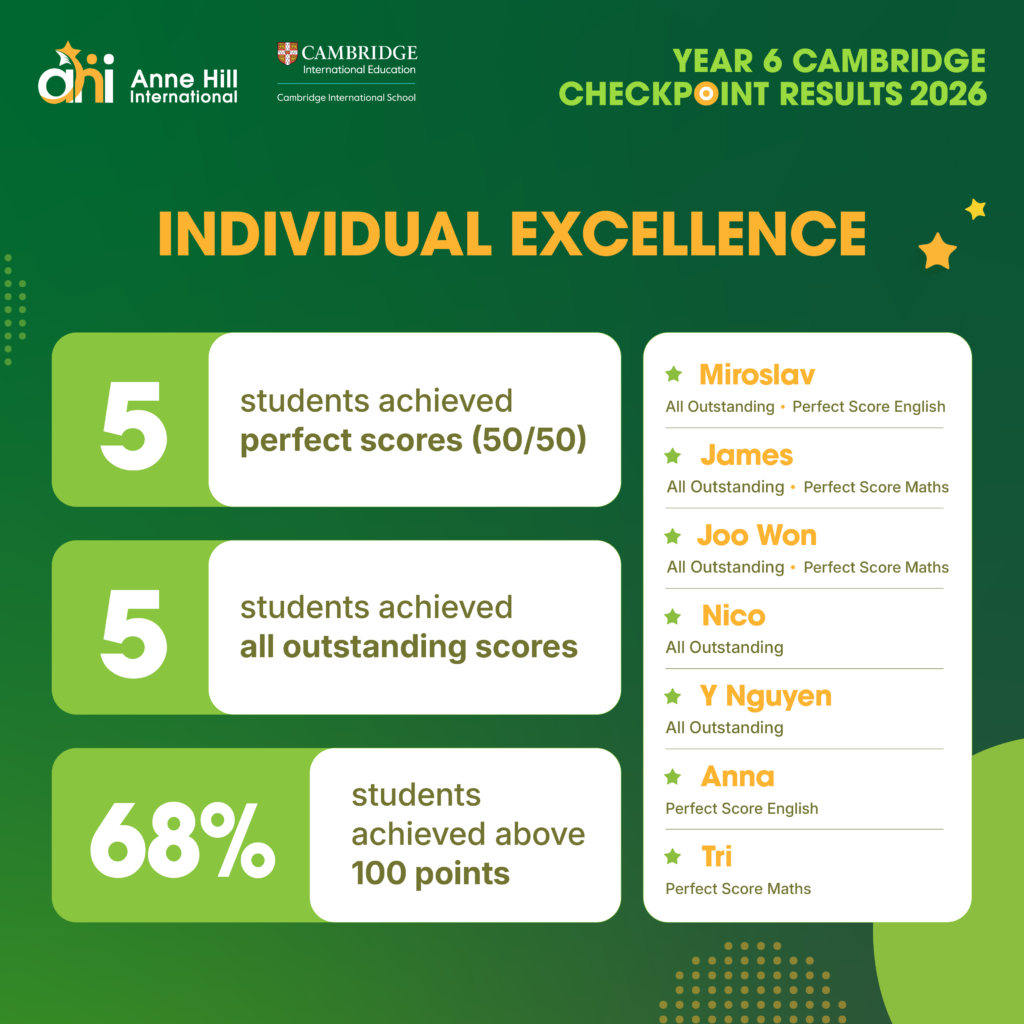
Infographic: Many excellent students at Anne Hill International School achieved all outstanding and perfect scores.
Five students achieved perfect scores (50/50) in English and Mathematics, including three perfect scores in Mathematics and two in English. This makes Mathematics a particular highlight of this year’s results.
In addition, five students achieved Outstanding results for all three subjects, demonstrating exceptional academic performance across the full range of the Cambridge Checkpoint curriculum. Looking at the cohort as a whole, 68% of students achieved a combined score of more than 100 out of 150 across the three subjects.
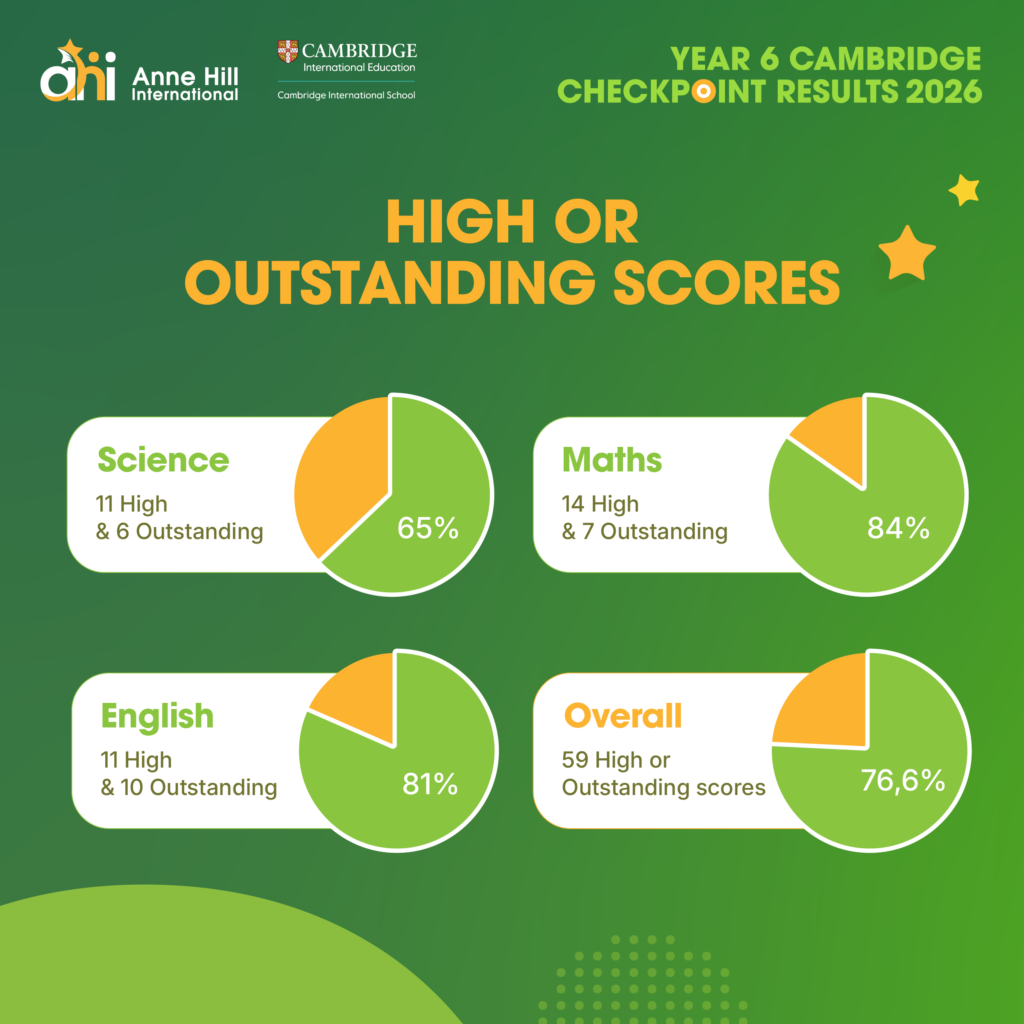
Infographic: A large proportion of scores are High or Outstanding scores.
Beyond individual excellence, the results also highlight a strong consistency of achievement among all students. More than three-quarters of our students (76.6%) achieved High or Outstanding results across all three subjects, demonstrating that strong academic performance was not limited to a small group of students. Mathematics recorded the highest proportion of High or Outstanding results at 84%, closely followed by English at 81%, while 65% of students achieved these levels in Science. Together, these figures reflect a broad and balanced level of achievement across the cohort, with the majority of students performing strongly across the full range of subjects.
Celebrating the Results Together
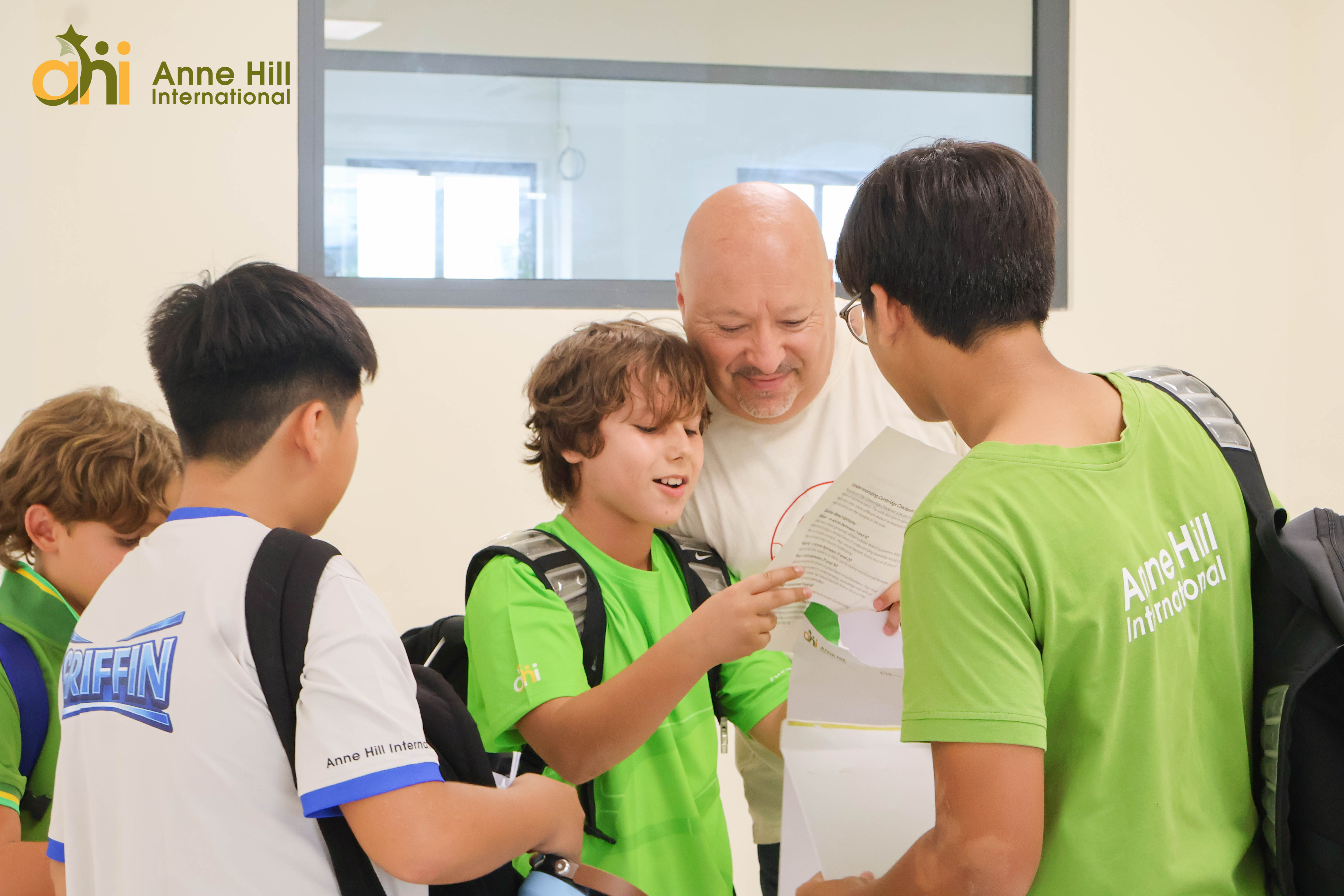
Photo: Mr. Matthew announced the Cambridge Checkpoint results to Year 7 students during the assembly.
The results were shared with our Year 7 students during their first Secondary School Assembly.
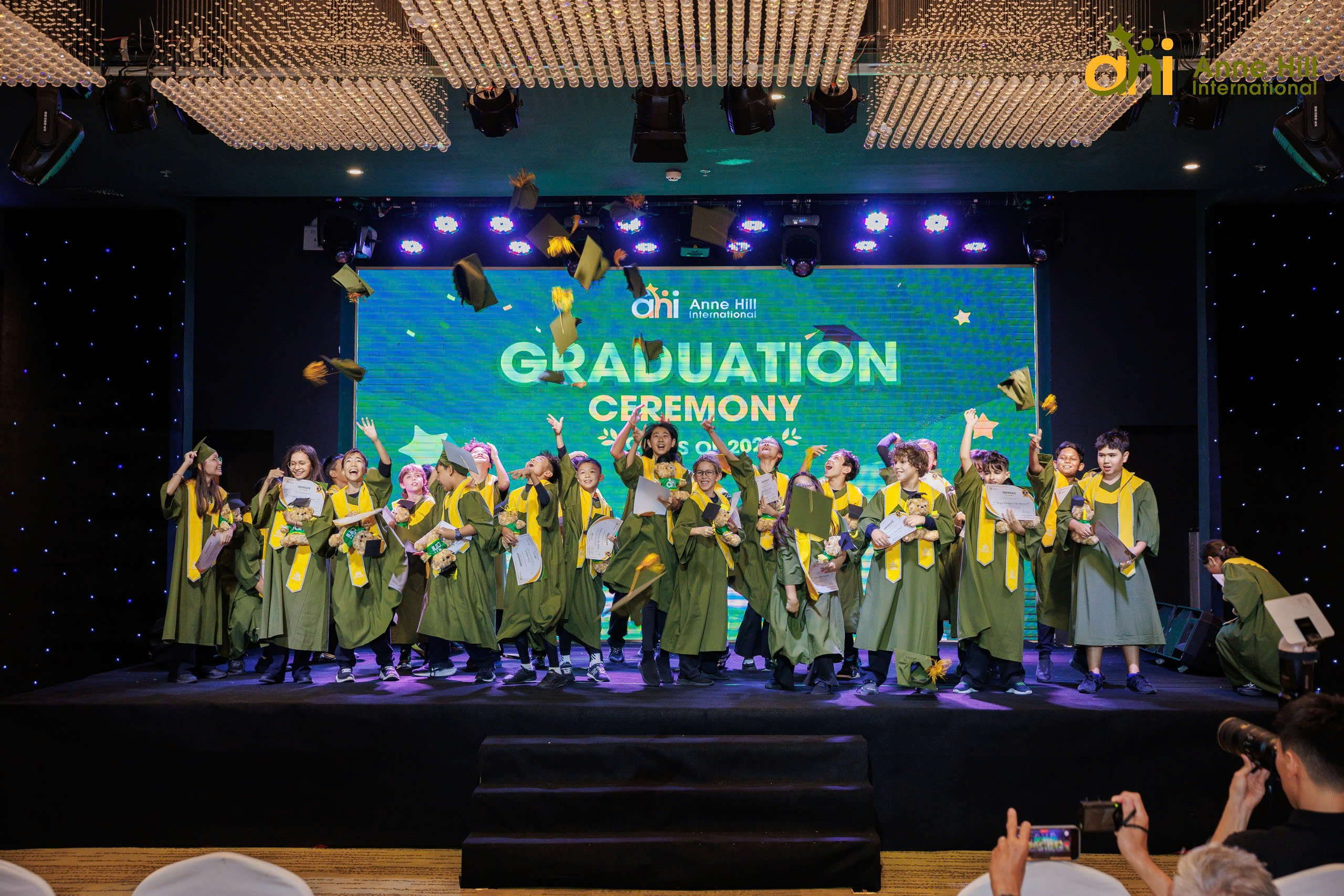
Mr. Matthew Mayne, Vice-Principal (Academic & Pastoral Care for Year 4 – Middle Years), personally presented the results to each student. As their results were revealed, our students celebrated the moment surrounded by the applause and encouragement of their teachers, friends, families and senior students.
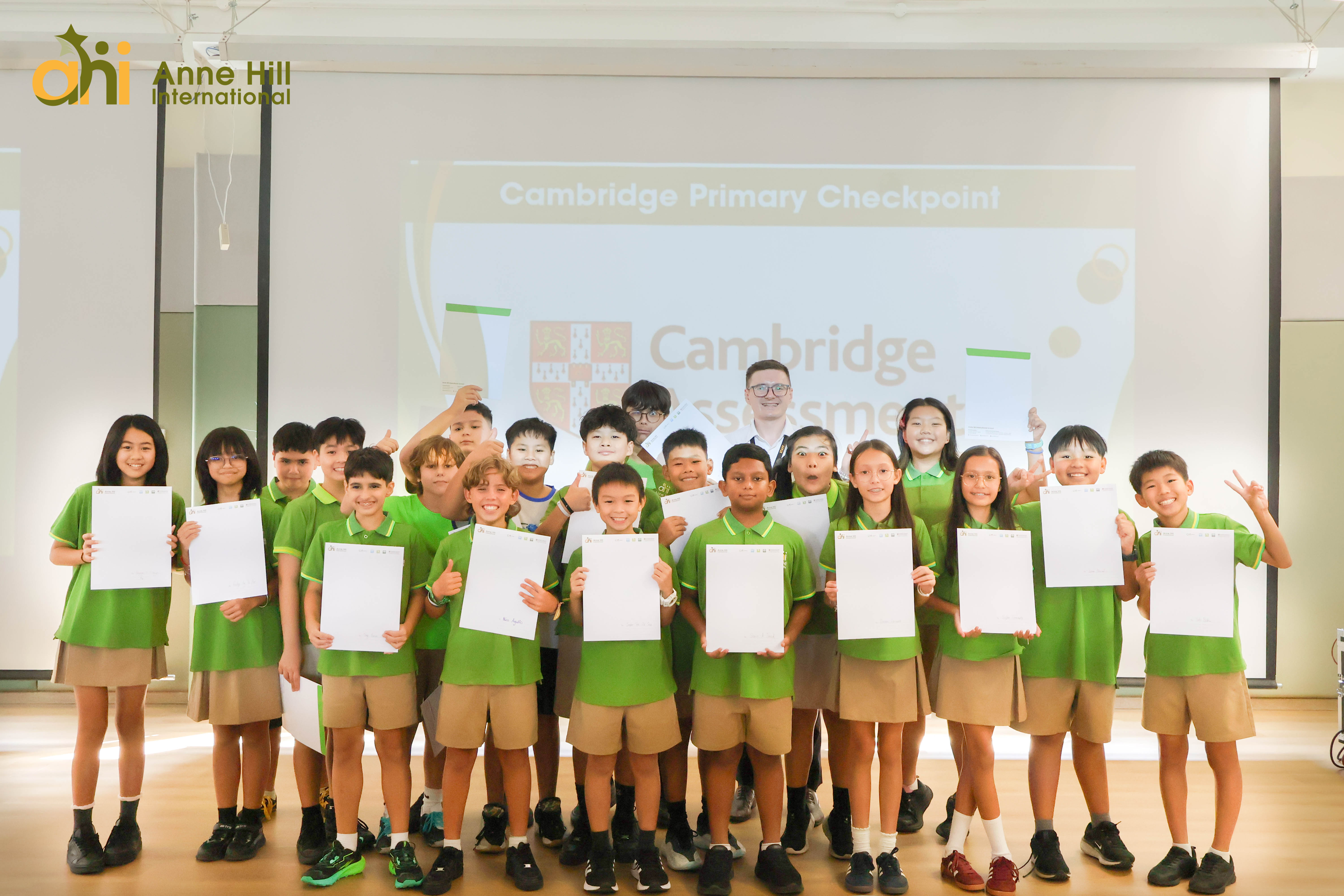
Photo: Students celebrating the remarkable results with parents and friends.
These achievements are a testament to the hard work, determination and commitment of our Year 6 students, alongside the dedication of their teachers and the continued support of their families.
We are incredibly proud of the Class of 2026 and the strong academic foundation they have built. As they take their next steps into Secondary School, we look forward to seeing them continue to grow, challenge themselves, and achieve even more.
Learn More About AHI
Discover how Anne Hill International School supports students in developing strong academic foundations while preparing them for future success:
As another school year draws to a close, summer arrives with a welcome shift in pace—and a priceless opportunity for parents to reconnect with their children.
Yet, with empty calendar pages comes a subtle challenge: how do we make this extra time truly count? Without a bit of intention, the weeks can easily drift by.
To help you shape a summer that is both refreshing and meaningful, Anne Hill International School is pleased to share a few thoughtful ideas for your family.
Making the Most of Summer with Your Child
Stepping Outdoors: Sunshine, Movement, and Shared Joy
Summer is the perfect time to spend more hours outdoors, enjoying the fresh air and the simple joy of unstructured play. Families can head to a nearby park for a weekend picnic, go for a bike ride together, or enjoy an active outdoor game as a group.
Photo: AHI Preschoolers enjoying open air in our signature grass field.
These moments bring children a sense of ease and refreshment, a welcome contrast to the pressures of the school year. Sunshine and fresh air have also been shown to support children’s physical and social and emotional development.
As a family, you might create a simple summer “check-in” list together. There is no need to travel far — parents can put together a list of green, open spaces nearby with clean air, and simply dive into outdoor activities with their children!
Volunteering Together: Cultivating Kindness and Connection
During the school year, students may have already taken part in charity trips organised by the school — and there is no reason this spirit of giving should pause just because summer has arrived.
To make summer volunteering more meaningful, parents can start by talking with their children about what these activities mean to them and how they see their own role in helping others. Encourage them to suggest their own ideas — there are countless ways to make the world a little better, and children often surprise us with what they come up with.
It could be as simple as an afternoon spent picking up litter in the park, helping a neighbour fix something around the house, or organising a fun little workshop for younger children. It could also mean venturing further, with a visit to an SOS village outside the city. Since children are free from the constraints of a school timetable, summer is the perfect season for these bold, creative ideas.
Photo: AHI Secondary students donating Christmas gifts to St. Joseph’s Charity School in 2025.
Through these experiences, children learn empathy in a tangible, lasting way. And when families volunteer together, kindness becomes a shared value — showing children that spending quality time on something meaningful can be its own kind of joy.
Nurturing a Garden: Quiet Lessons in Patience and Care
Watching a tiny seed push through the soil is one of the most rewarding everyday miracles a child can experience — yet during the busy school year, there may be little time to enjoy it.
Tending to a small windowsill garden or a backyard patch teaches children about science, the life cycle of a tree, and the quiet beauty that green brings into our lives. As they measure daily growth, water fragile leaves, and wait patiently for blossoms, children develop a gentle curiosity and a deeper appreciation for the rhythms of nature. In terms of values, this simple activity teaches consistency and the importance of patience in a fast-paced world.
Photo: AHI Preschoolers nurturing their own Eco Garden on campus.
To deepen these lessons, parents can take their children to a botanical garden or forest to experience nature firsthand, or read books and watch films about trees and the importance of greenery in our cities. This helps children see trees not just as plants, but as friends — before, naturally, they start dreaming of growing their own little forest at home.
Documentary Evenings: Igniting Curiosity and Thoughtful Dialogue
Rainy afternoons or quiet evenings provide a wonderful backdrop for cozy documentary nights.
Exploring topics like deep-sea wildlife, space exploration, or ancient history opens up whole new worlds right from your living room.
You can also refer to some recommended lists on the internet, including an IMDb list of over 300 documentaries and educational series for kids — covering science, nature, history, and world cultures, from Bill Nye and Cosmos to nature films like Winged Migration. It is a great starting point for families looking to mix screen time with genuine learning.
Photo: A variety of engaging digital content that supports children’s learning.
Rather than passive screen time, these shared viewing experiences spark wonder, encourage big questions, and lead to lively family discussions that keep young minds actively engaged.
Local Excursions: Turning the City into an Open Classroom
Learning does not pause when the school doors close—it simply changes scenery.
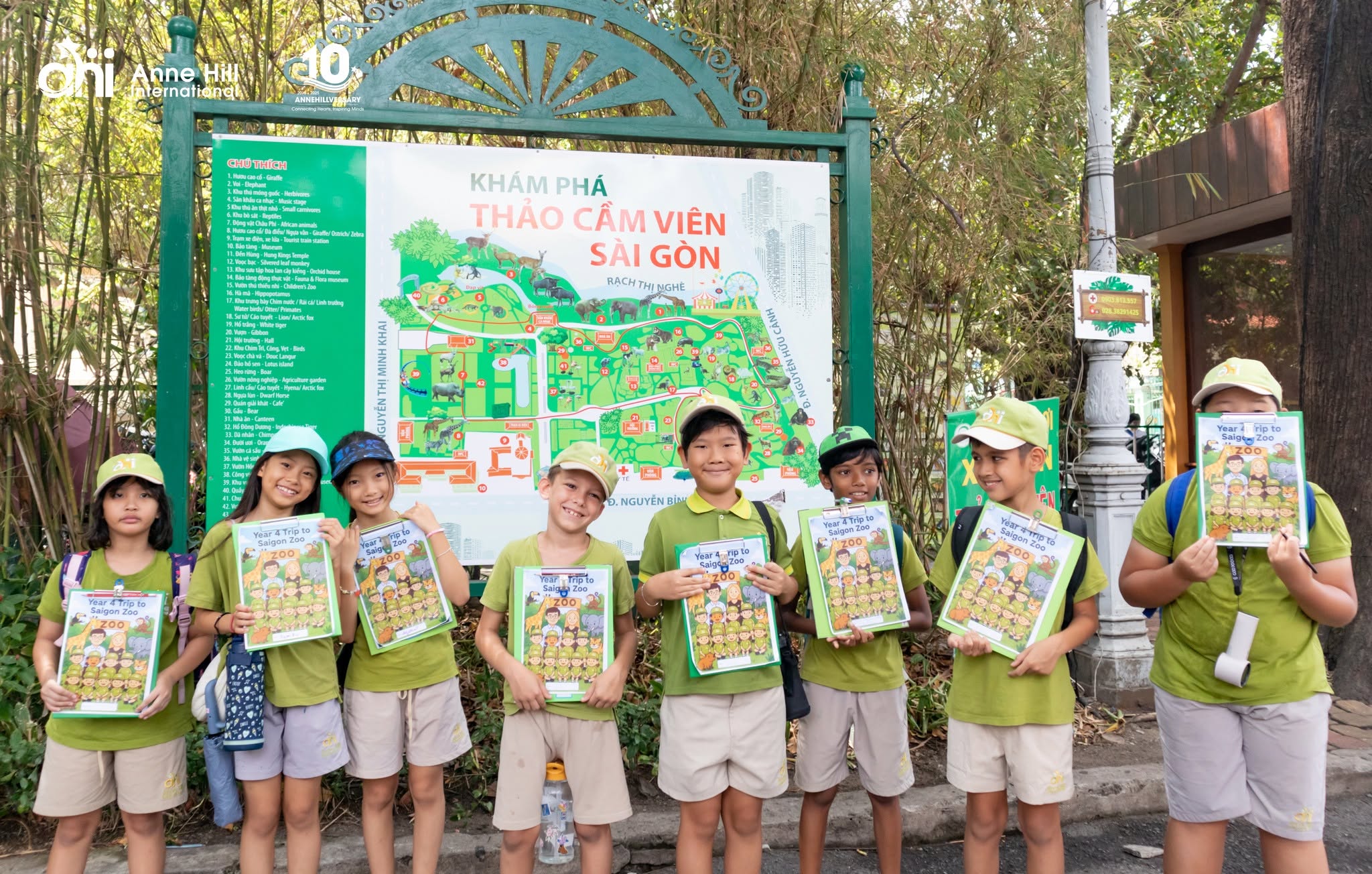
Our Year 4 Students’ Trip to Saigon Zoo and Botanical Gardens: Learning Through Nature.
A family trip to a local museum, art gallery, science centre, or historic site turns a summer day into a hands-on adventure.
For families in Ho Chi Minh City, children can explore nature at farms and parks such as Thảo Cầm Viên Sài Gòn, Green Noen Farm in Củ Chi, Vườn Xoài in Đồng Nai, or Bò Cạp Vàng Tourist Area in Đồng Nai. For a mix of learning and fun, kids can also visit museums like the Ho Chi Minh City Museum, the Áo Dài Museum, the Vietnam Museum of Nature, or the Fine Arts Museum.
For a deeper dive into culture and history, families can visit historical places such as the Independence Palace, Saigon Central Post Office, Notre-Dame Cathedral, the Vietnam History Museum, the Ho Chi Minh Museum at Nhà Rồng Wharf, Bửu Long Pagoda, Vĩnh Nghiêm Pagoda, or Lăng Ông Bà Chiểu.
These short excursions bridge the gap between textbook knowledge and real-world discovery, encouraging children to observe, ask questions, and see learning as an exciting lifelong pursuit.
At Anne Hill International School (AHI), we believe that preparing future generations to address emerging challenges requires an educational model that fosters both intellectual advancement and learning through experience. True education goes beyond textbooks and examinations – it shapes character, builds confidence, and equips students to engage meaningfully with the world around them.
The adoption of a holistic approach reflects our commitment to a more comprehensive vision of education and student development, one that values academic excellence alongside the personal, social, and emotional growth every child deserves.
About Holistic Education
Education that Nurtures the Whole Child
Holistic education focuses on developing the whole child, helping them grow into confident, well-rounded individuals who can contribute positively to their communities. (Drew, 2026). It recognises that students need opportunities to grow intellectually, emotionally, socially, physically, and morally in order to thrive. This approach moves beyond memorisation and test performance, emphasising meaningful learning experiences that help students understand themselves, build positive relationships, and develop a sense of purpose.
Beyond Academic Achievements
As a result, holistic education places equal importance on academic knowledge and essential life skills. Students are encouraged to develop critical thinking, creativity, emotional intelligence, communication, and collaboration skills through experiential learning and self-discovery. By valuing personal growth alongside academic success, holistic education aims to nurture confident, well-rounded individuals who are motivated to learn throughout their lives.
The learning environment plays an important role in supporting this approach. Rather than focusing solely on instruction, classrooms are designed to be welcoming, flexible, and student-centred. Learning spaces may include movable furniture, collaborative work areas, quiet reading corners, outdoor learning environments, and personalised learning stations that cater to different needs and learning styles. These features create a supportive and engaging atmosphere that encourages exploration, collaboration, and independent learning while fostering students’ confidence, social-emotional development, and academic success (Wideman-van der Laan, 2024).
Classrooms should be welcoming, flexible and student-centred to support a holistic education.
Another notable aspect of holistic education is its emphasis on physical wellbeing. Recognising that a healthy body supports both learning and daily life, holistic education encourages regular physical activity and health education to promote students’ overall development (Zhao et al., 2023).
Increasingly Embraced by Schools Worldwide
As academic knowledge alone is no longer sufficient to prepare students for a rapidly changing and interconnected world, schools are increasingly appreciating holistic education. Research has highlighted the need of skills such as critical thinking, creativity, collaboration, communication, and social responsibility to succeed in the future alongside subject knowledge (American University, n.d.).
Growing awareness of student wellbeing has also contributed to the popularity of holistic education. By supporting students’ emotional, social, and physical development alongside academic learning, schools can create environments that promote both personal growth and academic achievement (Global Partnership for Education, 2023).
In addition, holistic education aligns with growing international recognition that education should support the development of the whole child. Organisations such as UNESCO advocate educational approaches that nurture cognitive, social, emotional, physical, and ethical development, helping students become lifelong learners and active contributors to society (UNESCO, 2021; American University, n.d.).
By nurturing students’ emotional, social, and physical development alongside academics, schools can foster both personal growth and academic success.
Proven Practices at AHI
At AHI, holistic education lies at the heart of the school’s vision to nurture “well-rounded, globally-minded, lifelong learners.” This reflects a commitment to developing students not only academically, but also personally, socially, and emotionally. By helping students understand themselves, engage with the wider world, and build the skills needed for a changing future, AHI aims to prepare learners for success both in school and beyond.
This approach is trusted by families and has contributed to positive outcomes in students’ confidence, wellbeing, engagement, and overall development.
The Key Role of IPC
AHI students are encouraged to explore their interests, but they are also intentionally exposed to a broad range of subjects, cultures, ideas, and experiences. The International Primary Curriculum (IPC) plays a key role in supporting this approach. Alongside academic learning, the IPC promotes personal and international development through values such as resilience, empathy, collaboration, and respect. Students are encouraged to understand different perspectives, explore global issues, and consider their role within a wider international community.
This ensures that academic success is developed alongside character, social responsibility, and personal growth.
IPC encourages students to explore global issues and consider their role within a wider international community.
Connecting with the Real World
As Mr Benjamin Cracknell (Vice Principal – Lower Primary) explains, one of the key purposes of education is to expose students to a wide range of experiences, ideas, and opportunities, helping them discover their interests, strengths, and passions while also developing an understanding of what may not resonate with them.
Research also recognises that children learn most effectively when they can connect new knowledge to real experiences (Dewey, 1938). At AHI, educational visits, assemblies, exit points, events, and residential trips help bring learning to life by allowing students to see, experience, and better understand the concepts they encounter in lessons. These experiences build valuable background knowledge, enabling students to learn more effectively.
Extra-curricular activities provide another important dimension of holistic education. Through opportunities such as music, sports, performing arts, and clubs, students can develop confidence, creativity, teamwork, and resilience while exploring interests beyond the classroom.
Mr Ben highly appreciated that many AHI students are having access to activities such as joining a school band, roller skating, or participating in performance opportunities. These experiences broaden students’ horizons and help them develop skills and passions that may shape their future interests and aspirations.
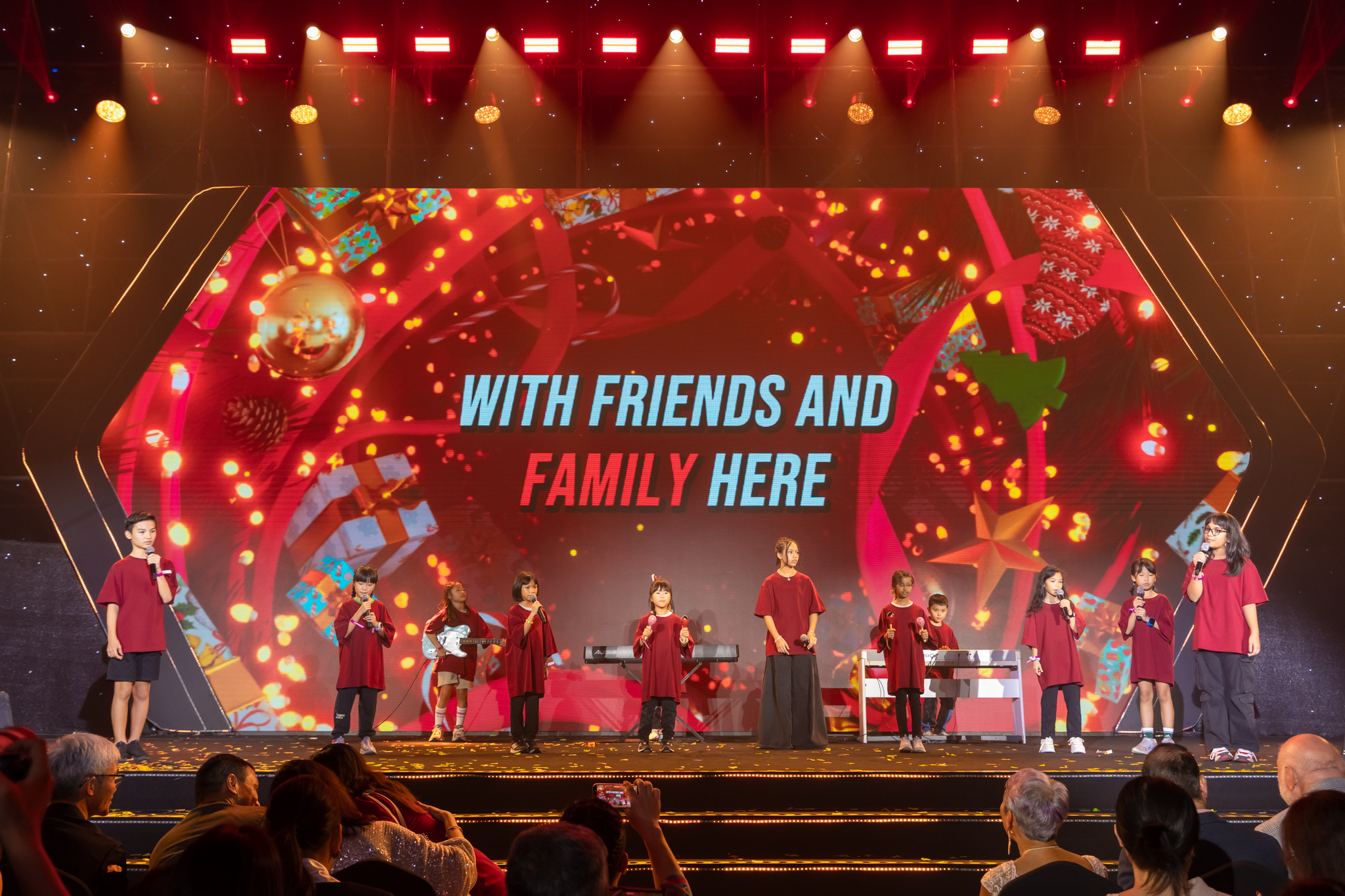
Photo: AHI School Band performing in the 10th Anniversary School Concert in December 2025.
The Positive Impact
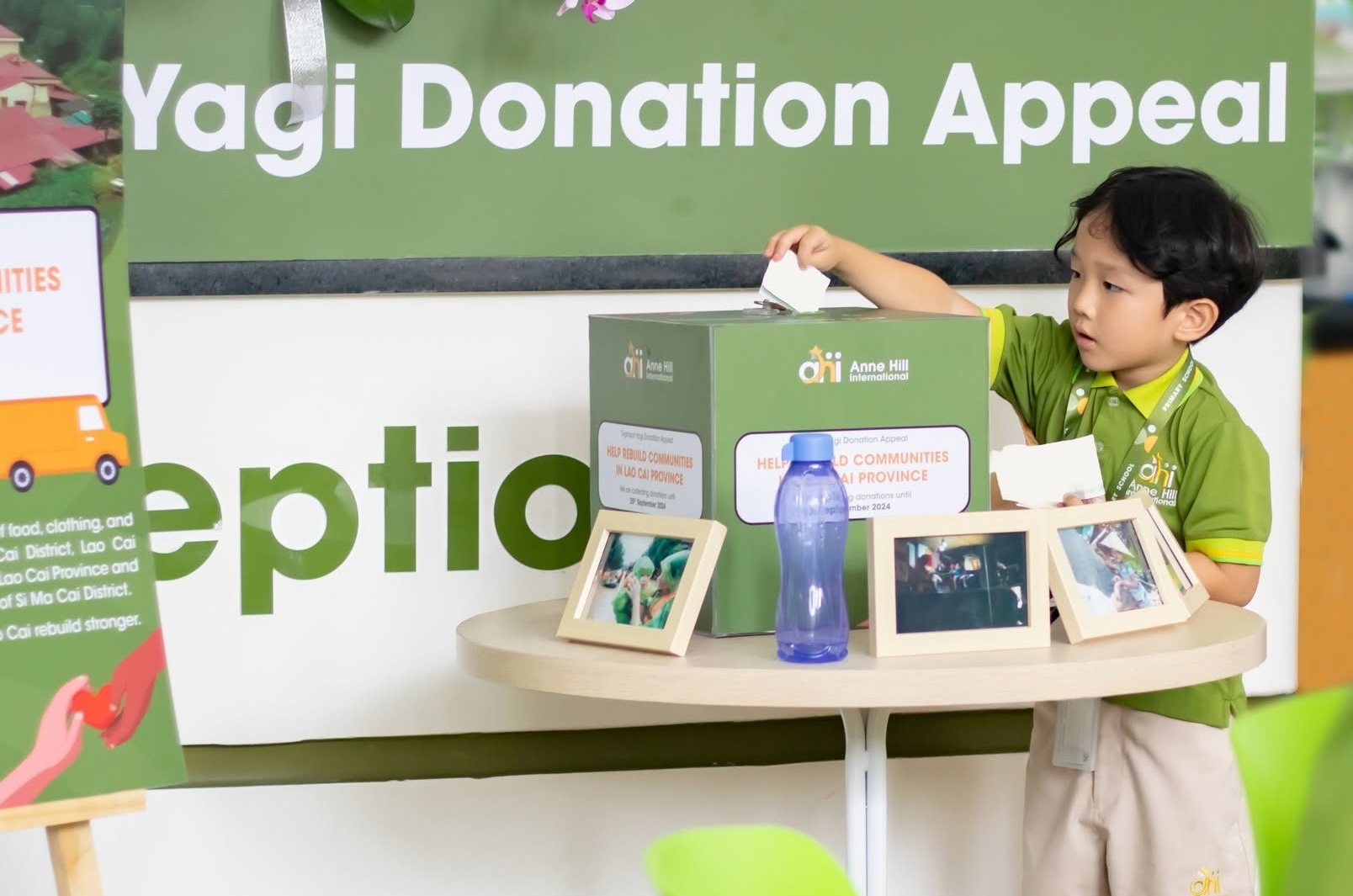
The impact of this approach can be seen in the attitudes and actions of AHI students. Mr. Ben highlighted examples of students organising donation drives following a typhoon and actively supporting initiatives such as the Kindness Machine project.
These experiences demonstrate growing awareness of issues beyond their immediate surroundings and a willingness to take positive action within their community. Such moments reflect the wider purpose of holistic education: helping children understand not only what is happening in the world, but also how they can contribute meaningfully to it.
Photo: AHI students participating in the 2024 Yagi Donation Appeal in support of families affected by Typhoon Yagi in Lao Cai.
Balancing with Academic Requirements
Importantly, holistic education does not diminish the importance of academic achievement. Rather, it recognises that strong academic foundations and personal development are equally important for long-term success.
Literacy, communication, critical thinking, and subject knowledge provide students with essential tools that open future opportunities and choices. At the same time, experiences beyond the classroom help students develop confidence, adaptability, resilience, and social awareness.
By combining academic excellence with broad learning experiences, holistic education aims to ensure that students leave school not only knowledgeable, but also equipped to navigate the opportunities and challenges of an ever-changing world.
Holistic education does not mean placing less value on academics.
Key Takeaways
Holistic education develops the whole child by supporting intellectual, emotional, social, physical, and moral growth, rather than focusing solely on academic achievement.
Learning extends beyond examinations and memorisation, helping students develop critical thinking, creativity, communication, collaboration, emotional intelligence, and lifelong learning habits.
The learning environment matters. Flexible, student-centred spaces encourage exploration, independence, collaboration, wellbeing, and deeper engagement with learning.
Physical wellbeing is an essential part of education. Holistic education recognises that health, movement, and physical development support both learning and overall quality of life.
Holistic education integrates the strengths of multiple educational philosophies, balancing academic, emotional, social, moral, and personal development to meet the diverse needs of learners.
No single educational model is sufficient on its own. Research suggests that holistic education combines the broad knowledge of liberal education, the expertise of specialised education, and the personal development focus of quality education.
Schools worldwide are increasingly embracing holistic education as future success requires skills such as creativity, collaboration, communication, adaptability, and social responsibility alongside subject knowledge.
Learn More About AHI Curriculum
Learn more about our holistic education programmes:
Book a School Tour to discover how your child can grow in our caring community.
FAQs
1. What is holistic education?
Holistic education focuses on developing the whole child rather than concentrating solely on academic achievement. It supports students’ intellectual, emotional, social, physical, and moral growth, helping them become confident, well-rounded individuals who can contribute positively to society.
2. Does holistic education mean academics are less important?
No. Holistic education values strong academic achievement while also recognising the importance of life skills such as critical thinking, communication, creativity, collaboration, resilience, and emotional intelligence. The goal is to prepare students for both examinations and life beyond school.
3. Why are more schools adopting holistic education?
Research suggests that academic knowledge alone is no longer enough in a rapidly changing world. Schools increasingly recognise the importance of developing transferable skills, wellbeing, adaptability, social responsibility, and lifelong learning habits alongside subject knowledge.
4. How is holistic education different from traditional education?
Traditional approaches often place greater emphasis on memorisation, examinations, and subject knowledge. Holistic education takes a broader view by combining academic learning with personal development, wellbeing, character education, real-world experiences, and global awareness.
5. How does AHI implement holistic education?
AHI integrates holistic education through its vision of nurturing well-rounded, globally-minded, lifelong learners. This includes the International Primary Curriculum (IPC), experiential learning opportunities, educational visits, assemblies, residential trips, extra-curricular activities, values education, and community engagement initiatives.
6. What role does the IPC play in holistic education at AHI?
The IPC supports academic learning while promoting personal and international development. Through its values and thematic units, students develop qualities such as empathy, resilience, collaboration, respect, and global awareness alongside strong subject knowledge.
7. What impact does holistic education have on students?
Holistic education helps students become more confident, socially aware, and engaged learners. At AHI, this can be seen through examples such as students organising donation drives, participating in kindness initiatives, and demonstrating a growing awareness of how they can make positive contributions to their community and the wider world.
References:
American University. (n.d.). What is holistic education?
Zhao, Y., Muhamad, M. M., Mustakim, S. S., Li, W., & Wu, X. (2023). Analyzing the comparison and integration of the holistic education approach with liberal, specialized, and quality educational modes.International Journal of Academic Research in Economics and Management Sciences, 12(4), 279–297.
The question is no longer whether children should use technology, but how they can use it in a healthy and balanced way.
Screens are now a permanent part of childhood. From learning and friendships to play and creativity, technology is woven into almost every aspect of a child’s daily life. Yet for many families, facing this reality can feel overwhelming. Setting boundaries around screen time, understanding digital behaviours, and knowing how to start the right conversations at home are challenges that parents face more than ever before.
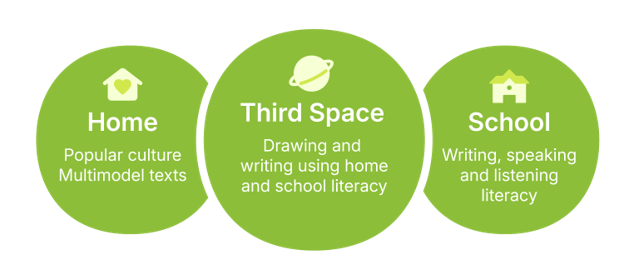
The Third Space: Children’s Digital Reality
According to Pahl and Rowsell (2005), in the framework of Literacy and Education, children today live across three spaces: school, home, and the digital space. The third space (or third place) is a hybrid learning and identity-building environment where the informal, cultural literacies of the home intersect with the formalised, institutional literacies of school. This third space is where friendships are maintained, creativity is expressed, and much of modern learning takes place. Teaching digital literacy begins with helping children understand what kind of space the digital world actually is. Unlike the first two, it has no physical walls, no natural closing time, and no built-in supervision.
The third space model, according to Pahl and Rowsell (2005).
Research from Rideout et al. (2022) confirms that daily entertainment screen time for children aged 8 to 12 averages over 5.5 hours, while teenagers exceed 8 hours, with these figures nearly doubling over the past decade. The American Psychological Association and other experts emphasise that the quality and nature of content (active versus passive) are more critical indicators of impact than total time. As Ms Mili put it during the workshop, we cannot lock the door to the third space, but we can teach children how to navigate it. This is the heart of digital balance.
Regarding screen time, the quality and nature of content (active versus passive) are more critical indicators of impact than total time.
What is Digital Balance?
To understand digital balance, it helps to look at how much has changed. In 1990, a child’s everyday toolkit included heavy textbooks, handwritten diaries, a Walkman, a landline phone, a physical map, a camera, and board games. Today, every one of those tools has a digital equivalent: Google, Notes apps, Spotify, WhatsApp, Google Maps, Instagram, Minecraft, etc. The tools have changed. The human needs behind them have not. Children still need connection, creativity, learning, and play. Their devices are simply where they go to meet those needs now.
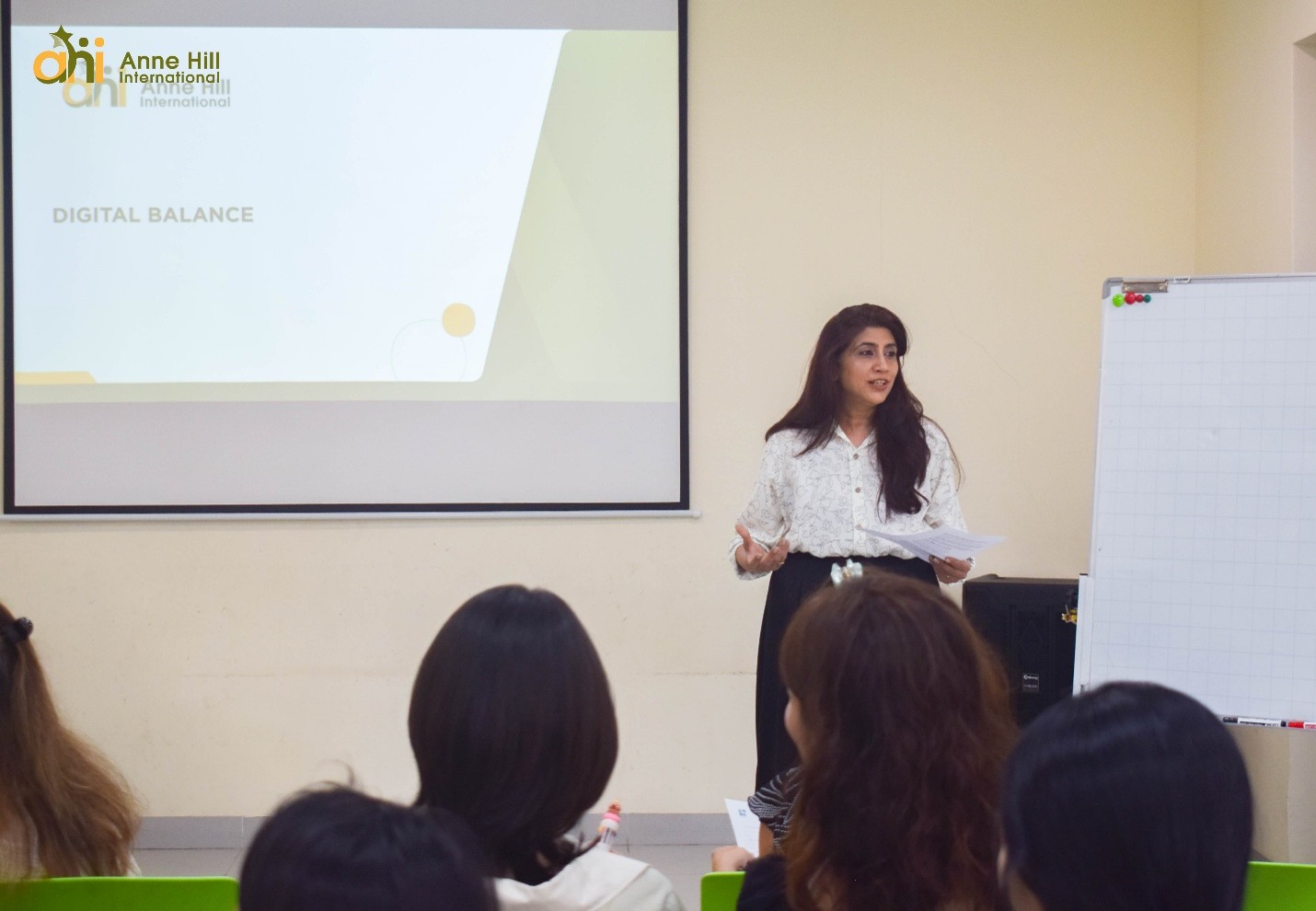
Ms Mili Manek leading the Digital Balance Parent Workshop at AHI’s Primary Campus, helping families build practical strategies for healthier screen time habits.
Digital balance is the foundation of digital literacy: the ability to use technology with awareness, intention, and critical thinking
This reframing was at the heart of Anne Hill International School (AHI)’s “Digital Balance” Parent Workshop, held on 7th May 2026 and led by Ms Mili Manek, Mental Health Counsellor and Educator with over 20 years of experience. As Ms Mili explained to parents, their devices are not their distractions. They are a destination for all the physical and human needs that children once met through physical tools. Understanding this changes the conversation entirely.
Not all time spent online supports a child’s wellbeing. One of the most practical frameworks introduced during the workshop was the distinction between digital drainers and digital fillers.
Digital drainers are passive, reactive, or emotionally depleting forms of screen use. Doom-scrolling, for example, creates a shallow, compulsive loop that research associates with increased anxiety and boredom rather than genuine satisfaction. Exposure to trolling or rage-bait content has been linked to heightened anger, low self-esteem, and emotional dysregulation in children and adolescents (Smith, 2025).
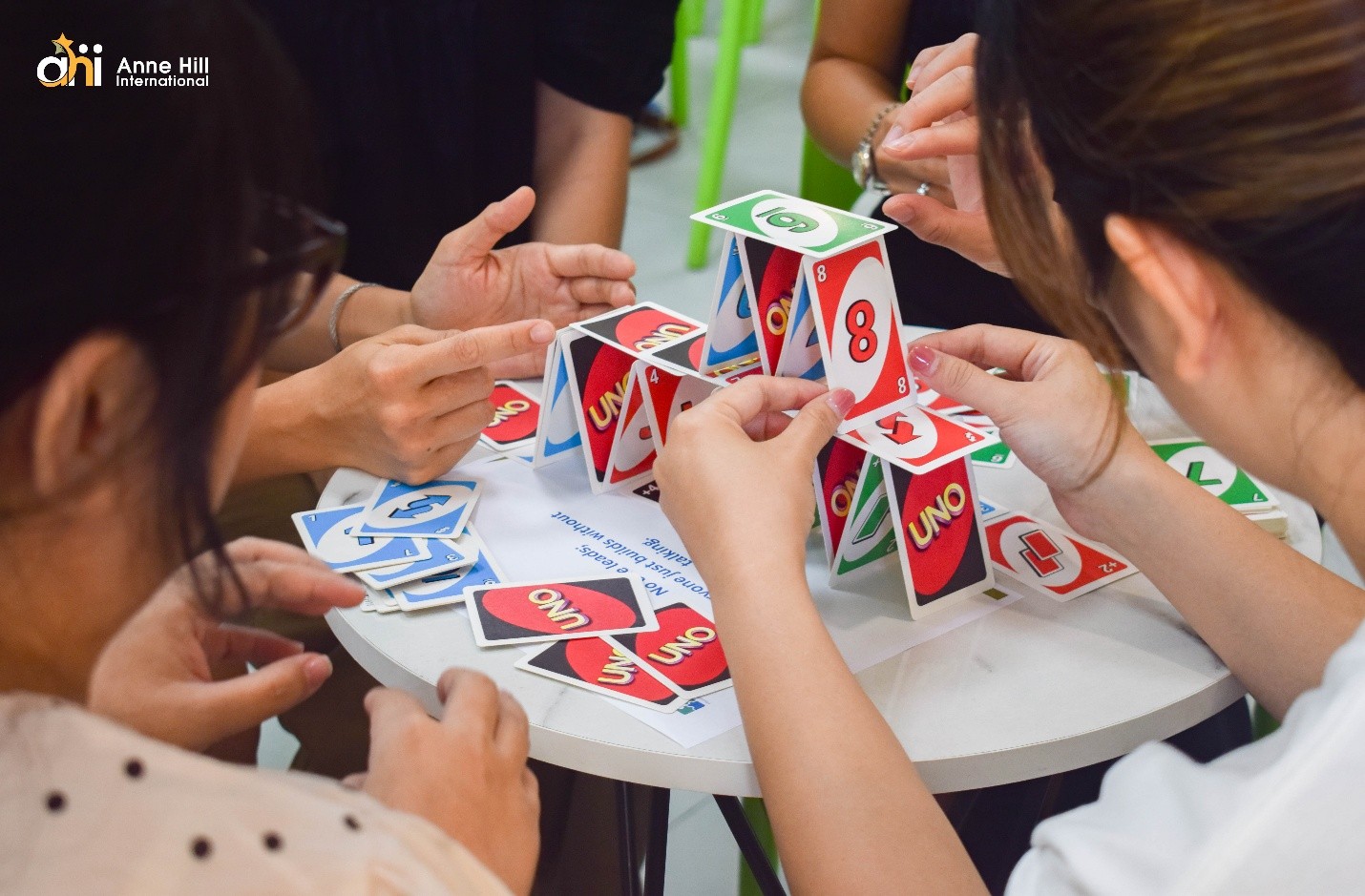
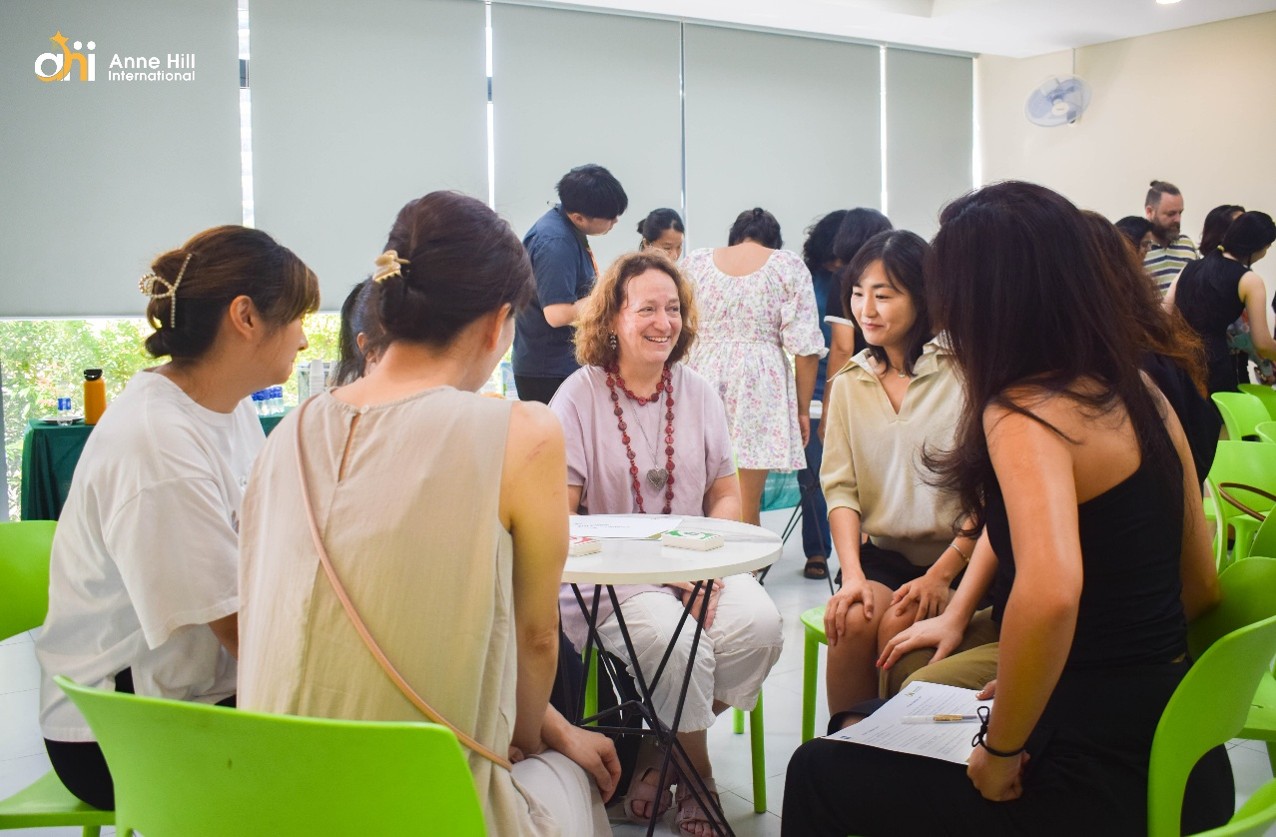
Parents sharing their perspectives on Digital Trainers and Digital Fillers while participating in the interactive “Build or Break” game during the Digital Balance Workshop at AHI (May 2026)
Digital fillers, on the other hand, are forms of engagement that genuinely nourish children. Creative coding, digital art, learning a new skill through video tutorials, and connecting with a grandparent overseas via video call are all experiences that support wellbeing, social connection, and cognitive development, even when they happen on a screen.
Teaching children to recognise what drains them and what fills them is one of the most important digital literacy skills they can develop, and one that begins with everyday conversations at home. This is worth building early. The digital habits formed during childhood have a tendency to persist into adolescence and adulthood, and awareness, once cultivated, tends to grow with the child.
From Policing to Mentoring: A Shift in Approach at Home
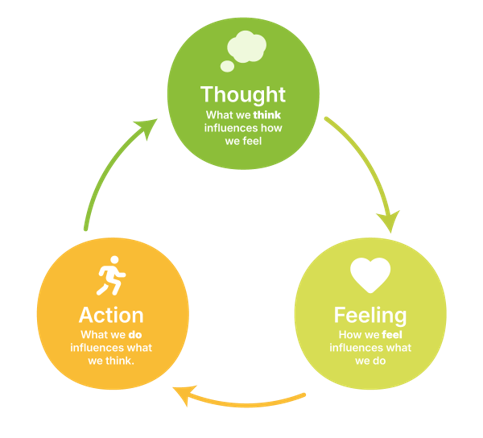
One of the most common patterns Ms Mili described during the workshop is what she called the Thought-Emotion-Behaviour Cycle. This is the loop many parents find themselves in around screens:
Thought:“They’re always on that device. They’re irresponsible. They’re addicted to screens.”
Emotion: Helplessness, anger, or fear, and often, guilt.
Behaviour: Arguments, shouting, or shutting the conversation down entirely.
The result is more conflict and less connection, with no real change in the child’s digital habits. As Ms Mili explained during the workshop, this cycle does not begin with bad intentions. It begins with a thought that goes unchecked, and understanding that is the first step toward breaking it.
Thought-Emotion-Behaviour Cycle
The shift Ms Mili encouraged is from policing to mentoring. Rather than reacting to screen use with control or confrontation, mentoring means stepping into the role of a guide. This is someone who sets boundaries with empathy, explains the reasoning behind expectations, and keeps the relationship with the child at the centre. In practice, this looks like:
Acknowledging what the child is doing before redirecting, rather than immediately taking the device away.
Explaining why a boundary exists, such as the importance of sleep, rather than simply enforcing it.
Involving children in setting their own screen time boundaries, so they develop ownership over their digital habits rather than just compliance.
Staying curious about what children are doing online, rather than assuming it is harmful.
Research on authoritative parenting consistently shows that this approach produces better long-term outcomes for children’s self-regulation and digital wellbeing than control-based responses alone (Zulkarnain et al., 2025). Children who are mentored gradually develop the internal skills to manage their own screen time, which is ultimately the goal.
Digital Balance at School: Intentional, Not Accidental
A balanced approach to children and technology does not begin and end at home. Schools play an equally important role, and the most effective learning environments treat digital use as purposeful and guided rather than incidental.
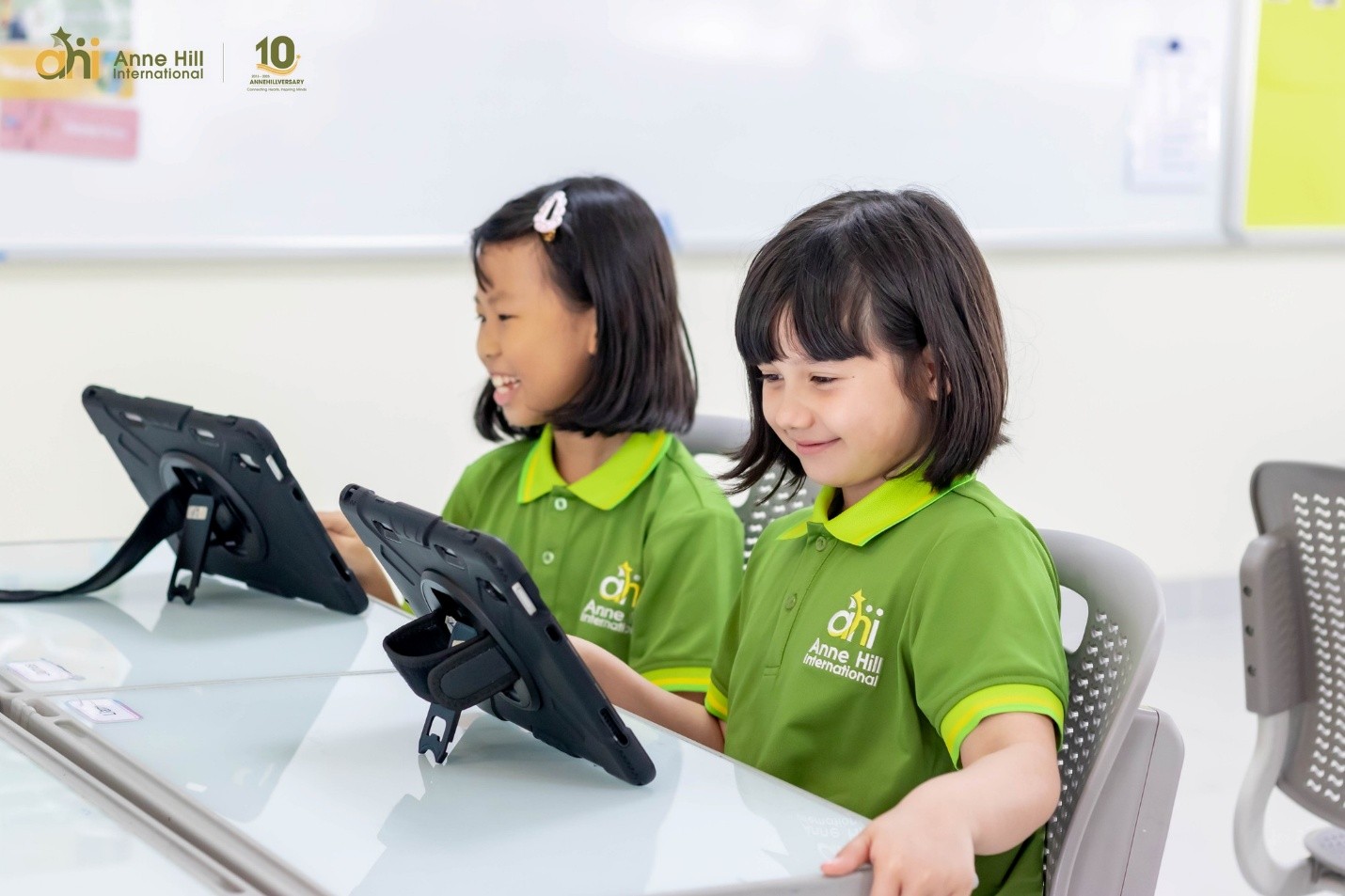
In practice, this means technology is used as a tool for learning rather than passive consumption. Digital experiences such as research projects, creative digital storytelling, and collaborative presentations are integrated with discussion, reflection, and real-world application. They sit alongside rich offline learning, such as daily reading with physical books, hands-on science experiments, outdoor exploration, and unstructured social play.
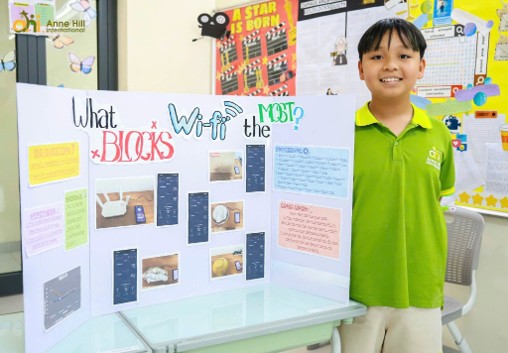
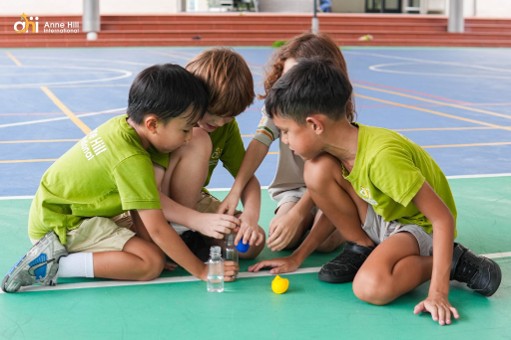
AHI students working on hands-on projects during Science Week 2026, reflecting the importance of rich offline learning experiences alongside purposeful digital engagement.
This balance reflects what developmental researchers describe as the importance of varied learning environments for healthy childhood development. Brown’s (2009) research on play highlights that unstructured, offline activity remains irreplaceable for developing creativity, emotional regulation, and social intelligence, capacities that no screen can replicate on its own.
The goal is not to limit what technology can offer children. It is to ensure that digital literacy develops alongside, and not at the expense of, the full range of human capacities they need to thrive.
The WE of Digital Balance: School and Home Together
Perhaps the most important insight from Ms Mili’s workshop was also the simplest: Digital balance is not a solo effort.
It is not us versus them, and not us versus the device. It is a WE, grounded in the connection, consistency, and mentoring that children, parents, and schools build together. When families and schools hold the same expectations and maintain open conversations, the guidance children receive becomes coherent and trustworthy rather than pulling in opposite directions.
Ms Mili and AHI parents exchanging ideas and experiences on Digital Balance, creating a warm and collaborative environment built on connection and shared insights.
That coherence matters because the children growing up today are the first generation for whom the digital world has always existed. How they learn to navigate it will shape every aspect of their lives, and digital balance gives them the tools to do so with awareness and confidence, both online and off. That is the kind of well-rounded, globally minded, lifelong learner that this moment in childhood calls for, and it is something school and families can only build together.
Book a School Tour to discover how your child can grow in our caring community.
References:
Brown, S. (2009). Play: How it shapes the brain, opens the imagination, and invigorates the soul. Penguin Books.
Zulkarnain, Z., Tarmidi, T., Purwasih, E., & Bochaver, S. N. (2025). Parenting styles, loneliness and problematic internet use among adolescents: A cross-sectional analysis. Journal of Education Culture and Society, 16(1), 231–49. https://doi.org/10.15503/jecs2025.2.231.249
At Anne Hill International School, global citizenship and intercultural learning are implemented across all aspects of school life, from the curriculum to community events and daily interactions. AHI students are encouraged to explore different perspectives to grow into open-minded, globally aware individuals who could thrive in an interconnected world.
What is Global Citizenship Education
According to UNESCO, global citizenship is:
“The understanding that we are connected not only to one country, but also to a wider global community, where individuals can contribute positively through their mindset and everyday actions” (UNESCO, 2026).
Global citizenship education equips students with the knowledge, skills, and values to engage with global challenges such as climate change, poverty, sustainability, and inequality. It helps learners become adaptable, collaborative, and critical thinkers in an increasingly global society.
For young people, it promotes respect, tolerance and appreciation of diversity. It also helps them understand how their actions impact others, while building confidence, teamwork, communication, and problem-solving skills. These experiences support personal, educational and future professional growth. (Yassin, 2026).
As Parry (2025) highlights, international schools are uniquely positioned to develop global citizenship through multicultural environments that expose students to different perspectives from an early age, compared to a more local context.
Global Citizenship Education at the Heart of AHI’s Guiding Statements
As part of our guiding statements, we are committed to nurturing globally minded learners who are confident, compassionate, and culturally aware. By aligning our curriculum and learning experiences with UNESCO Sustainability Goal 4.7 on Education for Sustainable Development, we equip students to engage positively with the world.
These principles shape how we teach, connect, and grow as a diverse learning community. Through meaningful learning experiences, students develop the understanding, skills, and perspectives needed to thrive in an interconnected world.
At Anne Hill International School, global mindedness lies at the heart of everything we do.
From Global Educators to Globally Minded Learners
Coming from diverse cultural and professional backgrounds, AHI educators play an important role in nurturing global citizenship education within the school community. Through real-life stories and cultural discussions drawn from their own international experiences, teachers inspire students to become more open-minded, adaptable, and globally aware. They also serve as authentic role models, demonstrating what it means to be true global citizens in today’s interconnected world.
Beyond the classroom, teachers also contribute to teaching the co-curricular activities, as well as organising school events, creating authentic opportunities for collaboration and cultural exchange.
Nurtured by an international faculty, students develop critical thinking, confident communication skills, and a deeper appreciation for diversity.
A Diverse Team of Global Educator at AHI (Data analysed in May 2026)
The connection between Global Citizenship Education with the ICA curriculum
At AHI, global citizenship is embedded within the International Primary Curriculum (IPC). Through engaging thematic units, students explore subjects such as science, history, geography, humanities, and the arts from international perspectives.
The IPC encourages inquiry-based learning, allowing students to make meaningful connections across subjects while developing collaboration, communication, and intercultural understanding. They are also exposed to global issues, diverse cultures, and different perspectives through classroom learning, reading programmes, and co-curricular activities.
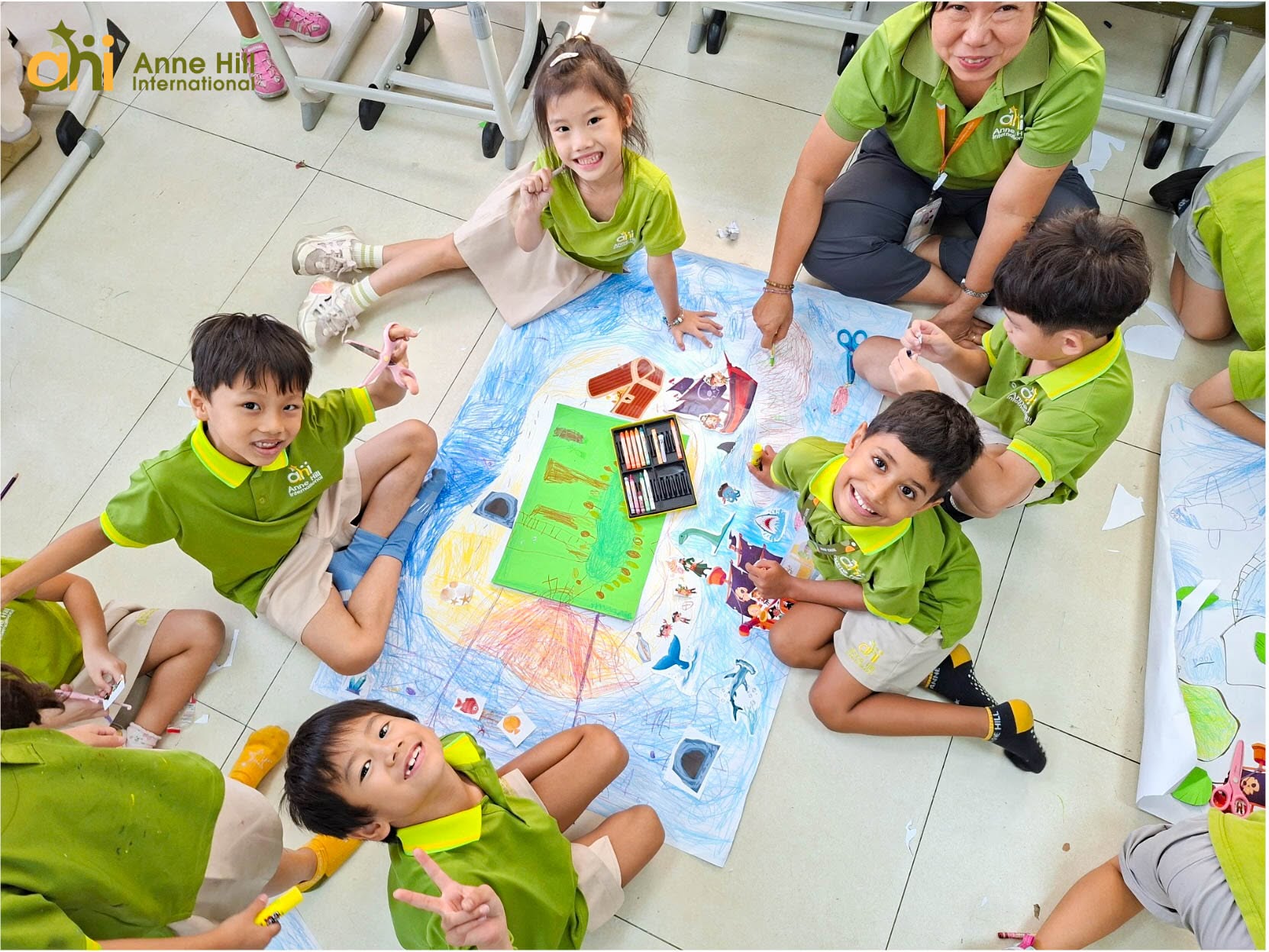
Students further apply their learning through engaging projects and exit points. For example, in the Year 1 Treasure Island Exit Point, students apply their geography knowledge through map reading, explore history through pirate stories, experience science through learning how earth, sun and the moon helps navigation, and build international understanding by learning about different ways of life and cultures around the world.
Year 1 students admiring the treasure they have discovered during the Exit Point “Treasure Island” (April 2026)
Learning in a Truly International Community
AHI students come from more than 30 different nationalities. AHI students do not need to travel overseas to begin experiencing the richness of a multicultural world. Every classroom becomes a miniature version of the global community, where children grow up surrounded by diversity from their very first years of life.
From a very young age, AHI students naturally learn that people may look, sound, think, and live differently from themselves. They encounter different hair colours, skin tones, accents, beliefs, traditions, and perspectives as part of their everyday learning environment. These differences are not presented as something unusual, but simply as a natural reflection of the world we live in.
Beyond academic learning, students at AHI are encouraged to cultivate kindness, compassion, and a sense of responsibility towards the wider world. Even at a young age, they begin to understand that the world is vast, interconnected, and filled with opportunities for them to make a positive difference.
Our Students Come from All Around the World
Bringing Global Learning to Life
Each academic year, Anne Hill International School organises around 30 events that give students meaningful opportunities to explore different cultures. Signature events such as International Day promote intercultural learning through cultural booths, performances, collaborative activities, and shared celebrations.
Beyond the classroom, students participate in assemblies, World Book Day, and cultural celebrations such as Diwali, Songkran, and Tết. These experiences spark curiosity, encourage active participation, and deepen students’ appreciation of different cultures and traditions.
Students also take part in events that celebrate diversity and inclusion. During Anti-Bullying Week, they join activities such as Odd Socks Day and Old Shoes Day. By wearing fun, mismatched socks and shoes, students learn that differences should be valued and respected. These activities encourage kindness, individuality, and the confidence to stand up against bullying.
Our international mums and dads also help nurture globally minded learners through language and cultural sharing. On International Mother Language Day, parents introduced nine different languages through interactive activities and cultural experiences. Their contributions helped students appreciate linguistic diversity and gain a deeper understanding of the multilingual world around them.
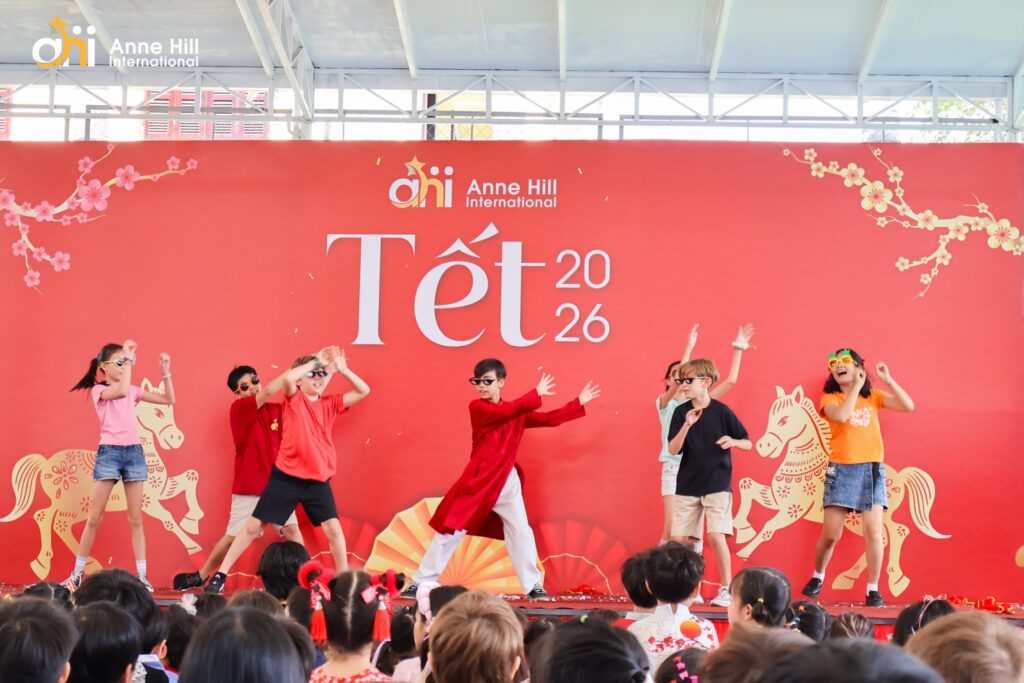
Students performing during Tet Celebration
Our student showcasing his socks
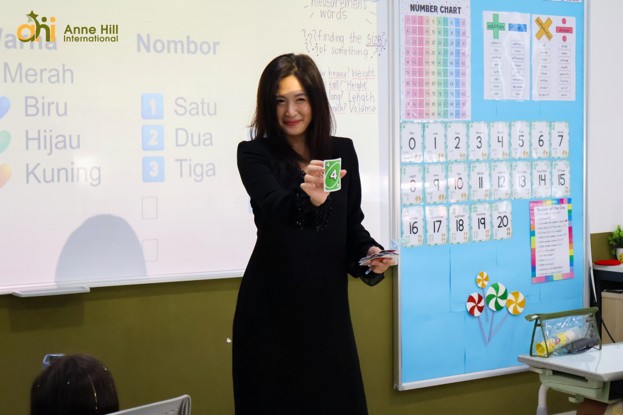
A parent teaching how to count in Malay using UNO cards
Through intercultural learning, diverse educational experience, and strong partnerships between educators, families and the wider school community, AHI students are guided to become respectful, adaptable and socially responsible global citizens.
Book a School Tour to discover how your child can grow in our caring community.