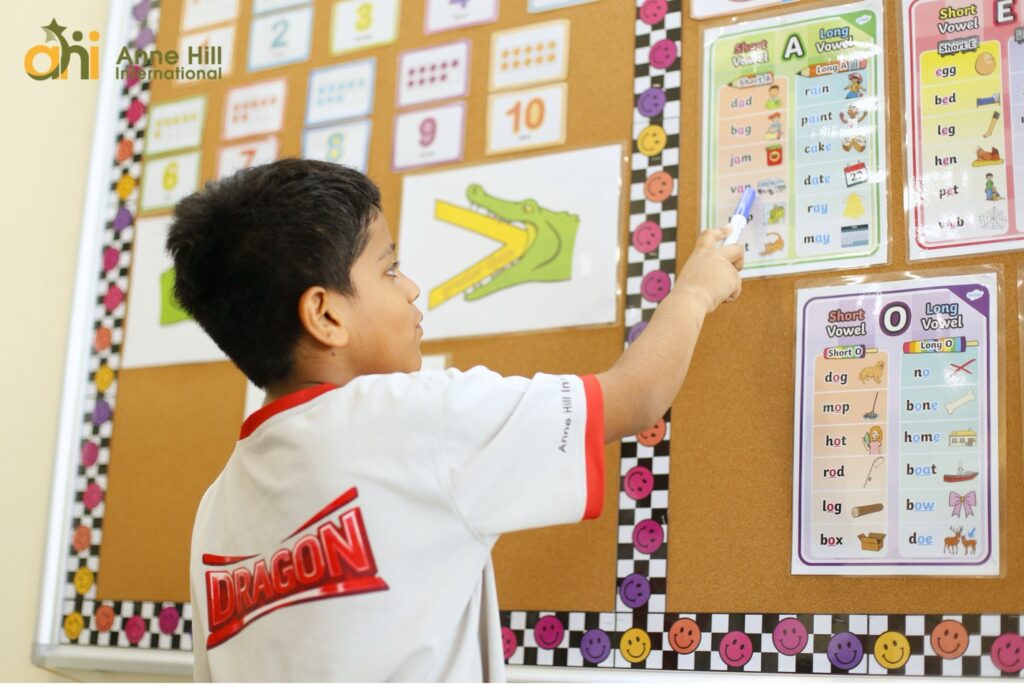


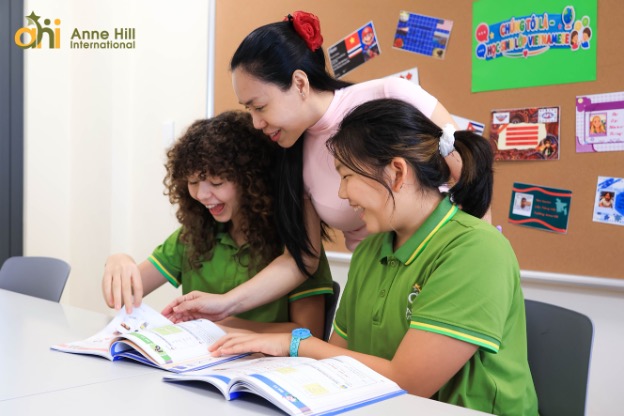
Photo: Vietnamese language lesson at Anne Hill International School
An international education teaches mainly in English, usually towards international qualifications; a bilingual education teaches in both English and Vietnamese alongside the national curriculum. The right choice depends on your child’s languages, your plans and the qualifications you want.
In This Article
- What is the difference between international and bilingual education?
- Which language will my child learn in all day?
- Which curriculum and qualifications does each lead to?
- Which one suits our family?
- Does Anne Hill offer both?
- Questions parents ask
What is the difference between international and bilingual education?
When parents search “international vs bilingual school HCMC”, the question underneath is simpler: which language should my child learn in, and where should it lead? The difference comes down to three things.
Language of teaching: An international education teaches mainly in English, while a bilingual education teaches in both English and Vietnamese.
Curriculum: An international education follows an international curriculum, such as the International Primary Curriculum or Cambridge. A bilingual education follows Vietnam’s national curriculum, with English alongside.
Where it leads: An international education usually leads to international qualifications such as Cambridge International General Certificate of Secondary Education (IGCSE) and A Level. A bilingual education follows Vietnam’s national curriculum, although some schools offer international programmes alongside it. Ask each school where its pathway leads.
Neither pathway is better in general. The right choice depends on your child, the languages spoken at home and where your family expects to be in five or ten years.
Which language will my child learn in all day?
At Anne Hill International School (AHI), English is the main language of teaching in every subject except second-language classes. This means most of your child’s school day takes place in English.
In a bilingual education, lessons are taught in both Vietnamese and English. When comparing schools, ask how many lessons a week are taught in each language and which subjects are taught in Vietnamese or English.
Children who are still learning English can receive additional support. At AHI, children whose first language is not English take an English proficiency assessment when they apply. Those who need further support join our English as an Additional Language (EAL) programme.
Vietnamese remains part of the school week. It is compulsory for children of Vietnamese nationality, while other children can choose Vietnamese, Mandarin or Spanish as their second language.
Learn more: Mandarin at AHI: Building Confidence Through Language and Culture
Your child’s language exposure at home matters, too. If your family speaks Vietnamese at home, an English-medium school day gives your child opportunities to use both languages in different settings. If your child has little exposure to English at home, ask how the school helps new students follow lessons during their first term.
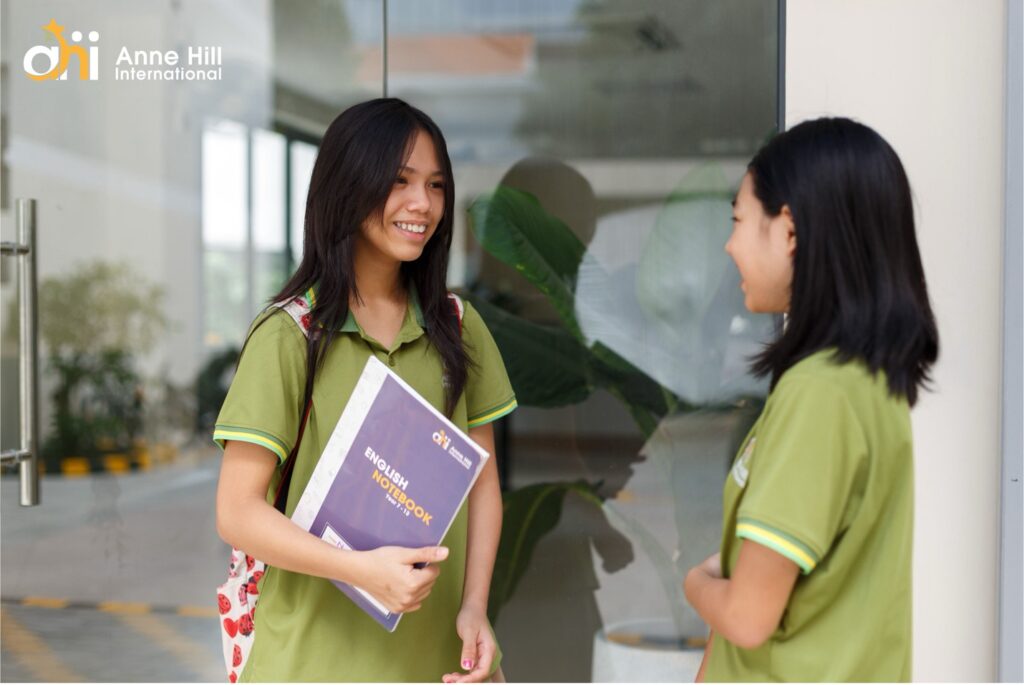
Photo: Secondary students after an English lesson at Anne Hill International School
Which curriculum and qualifications does each lead to?
An international education leads to international qualifications. At AHI, students follow the Cambridge pathway. A bilingual education follows Vietnam’s national curriculum, with English alongside, so it is worth asking each school which qualifications and education records your child will receive.
International education at Anne Hill International School and bilingual education
| Area | International education at Anne Hill International School | Bilingual education |
|---|---|---|
| Curriculum | International Early Years Curriculum (IEYC) in Preschool; International Primary Curriculum (IPC) with Cambridge Primary from Year 1 to Year 6; International Middle Years Curriculum (IMYC), followed by Cambridge IGCSE and A Level, in Secondary | Vietnam’s national curriculum, with English alongside |
| External tests and qualifications | Cambridge Checkpoint in Year 6 and Year 9, followed by Cambridge IGCSE and A Level, set and marked by Cambridge | Ask each school which qualifications it offers |
| Ministry of Education and Training (MOET) records | AHI does not issue MOET transcripts because it does not follow Vietnam’s national curriculum | Ask each school which records it issues |
AHI’s Secondary School pathway runs to Cambridge A Level. In 2026–2027, our classes run to Year 13.
Cambridge states that its IGCSE and International Advanced Subsidiary (AS) & Advanced (A) Level qualifications are accepted as equivalent to UK GCSE and A Levels by leading universities worldwide. If your child may need Vietnam Ministry of Education and Training (MOET) records in the future, check the requirements before choosing a school. AHI does not issue these transcripts, so ask the receiving school what documentation would be needed if your child later moves into Vietnam’s national education system.
Which one suits our family?
Start by thinking about where your child is likely to study next. The points below can help your family compare the options, but they are not rules.
An international education may suit your family if:
- You may move to another country, or your child may join another international school.
- Your child is likely to go to university abroad.
- Your child does not speak Vietnamese yet, or English is already a home language.
- You want Cambridge qualifications such as IGCSE and A Level.
A bilingual education may suit your family if:
- You want your child to follow Vietnam’s national curriculum.
- Your child is likely to stay in the Vietnamese education system and may need MOET records.
- You want your child to develop strong English skills alongside learning in Vietnamese.
If your family is still deciding, ask both schools the same three questions:
- How many lessons a week are taught in each language, and which subjects use each language?
- Which qualifications and education records will my child receive?
- If our family plans change, how could my child move to another education system?
Comparing the answers will help you understand what each school offers and whether its pathway suits your family’s plans.
Does Anne Hill offer both?
Yes, across two schools. Anne Hill International School offers an international education taught in English, from Preschool to Secondary. For bilingual education, families can visit Anne Hill’s sister school, which offers bilingual education.
The sister school teaches Vietnam’s national curriculum alongside Cambridge programmes. Its students can later move to Anne Hill International School for Cambridge IGCSE.
Visiting both schools can help families compare their learning environments, language use and curriculum pathways. Speak with the school teams about your child’s needs and your family’s plans before deciding which option may suit you best.
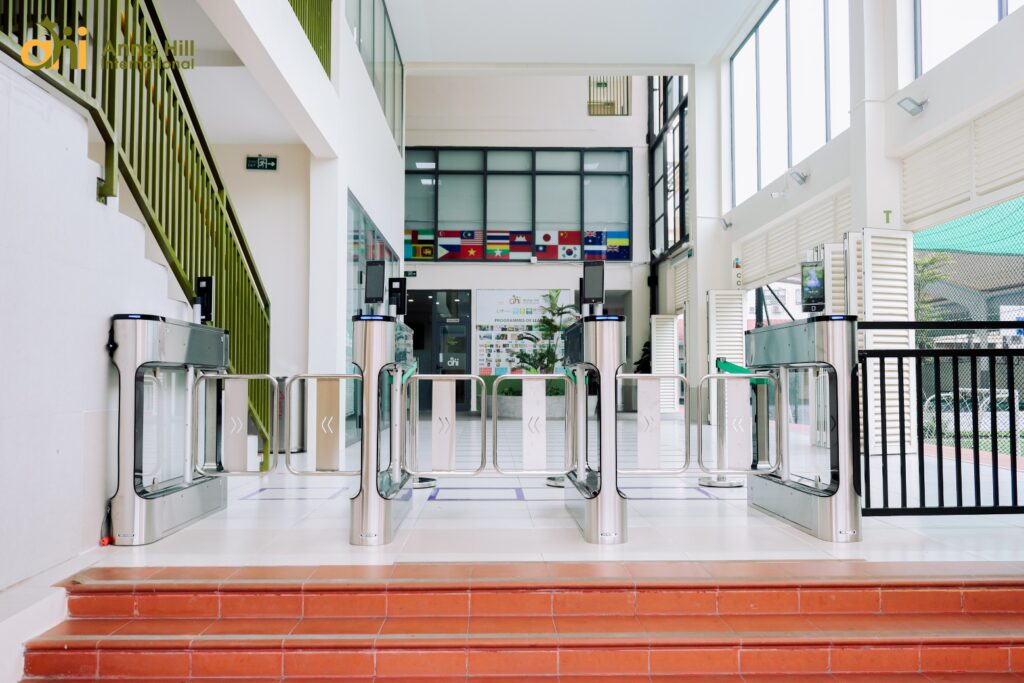
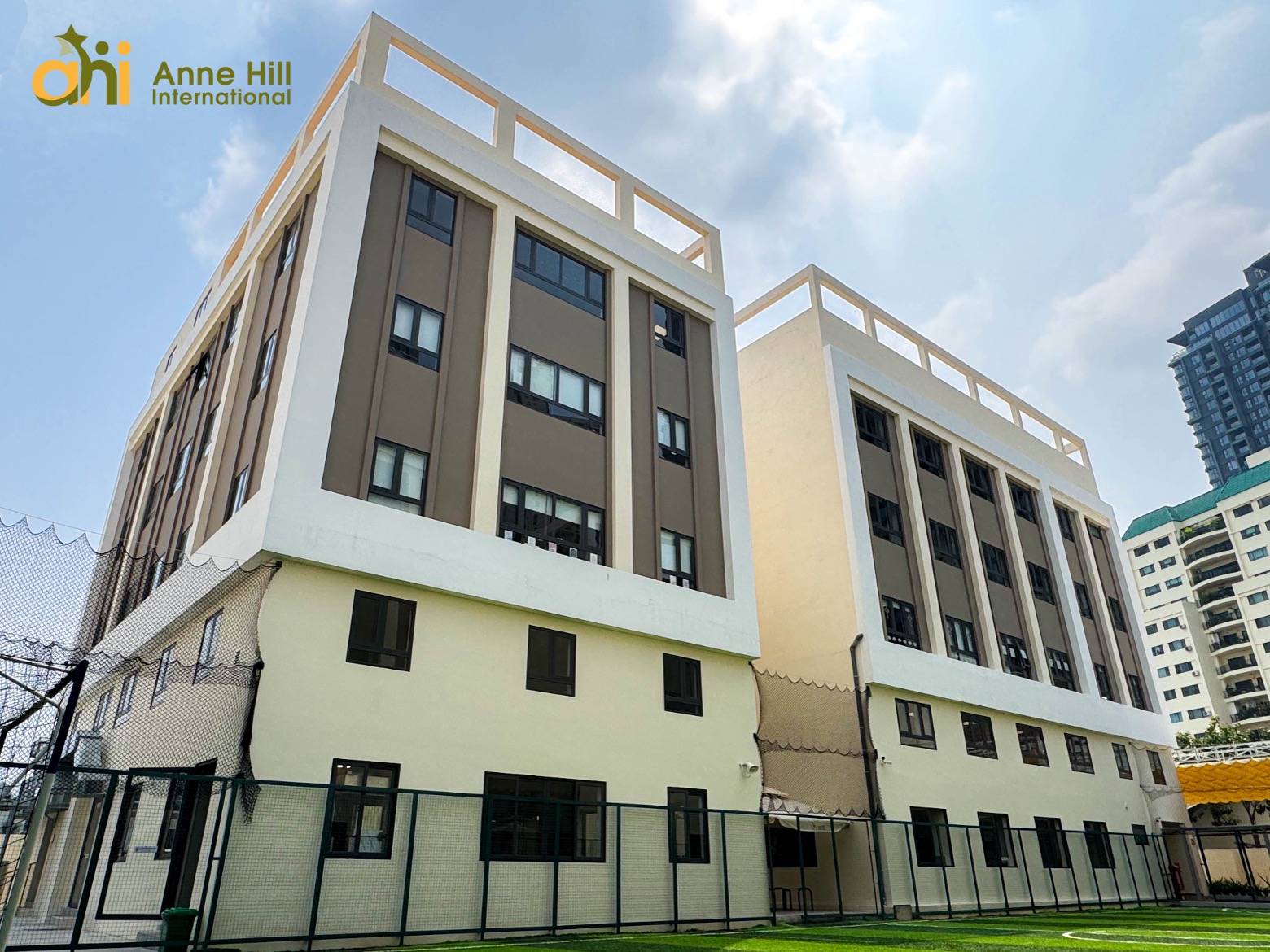
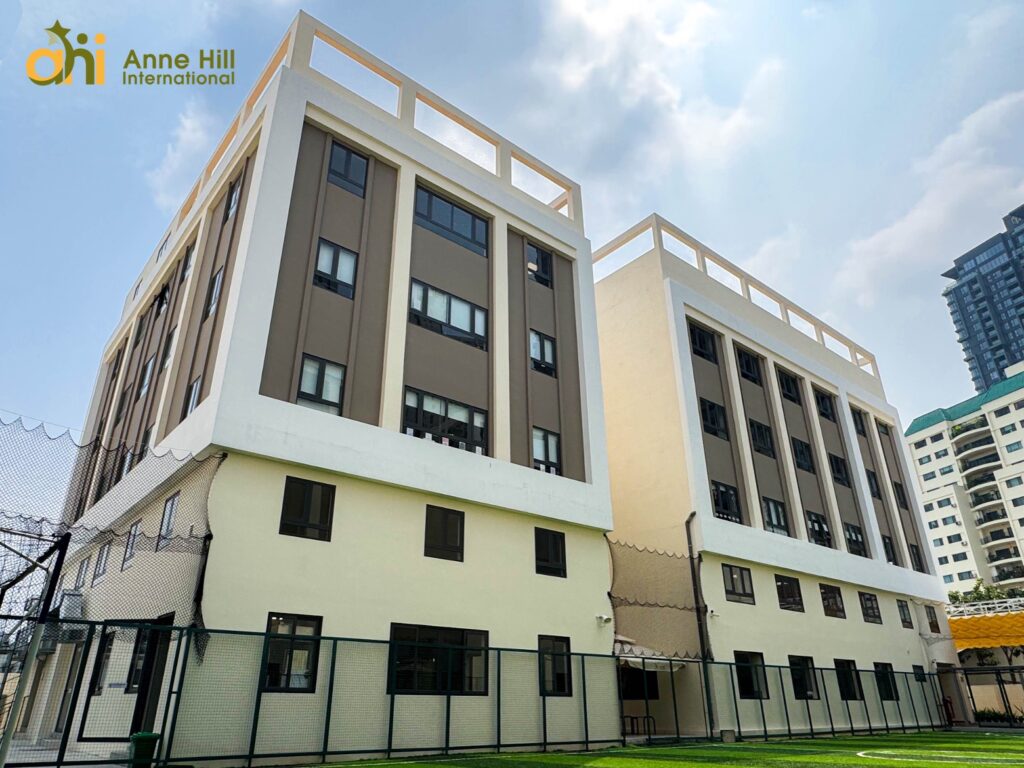
Photo: Entrance to Anne Hill International School’s Primary Campus in An Khanh Ward, Ho Chi Minh City
Questions parents ask
Will my child keep up in Vietnamese at an international school?
Vietnamese is compulsory at AHI for children of Vietnamese nationality. The programme covers Vietnamese language, history and culture in line with national requirements.
From Year 6, lessons include Vietnamese geography and history aligned with national expectations. In Secondary, Vietnamese students are offered IGCSE Vietnamese alongside the national language curriculum. Primary children have three Vietnamese lessons a week.
Reading Vietnamese books and talking in Vietnamese at home can give children more opportunities to practice the language outside school.
Can my child move between the two later?
Yes, with some planning. A child joining AHI from a school offering bilingual education takes an English proficiency assessment and receives EAL support if needed.
A child moving from AHI into Vietnam’s national education system may be asked for MOET records, which AHI does not issue. Check the receiving school’s requirements before making a decision.
Students at the sister school can move to AHI for Cambridge IGCSE. Families should speak with both school teams about admissions requirements and subject pathways before deciding.
Is an international education only for foreign families?
No. Vietnamese families choose international education, too. At AHI, Vietnamese students continue to learn Vietnamese language, history and culture as part of their school week while learning through English in other subjects.
Visit Anne Hill International School
See an English-medium classroom for yourself and ask how Vietnamese fits into your child’s week. Book a school tour to see the classrooms, meet the teachers and ask your questions.