

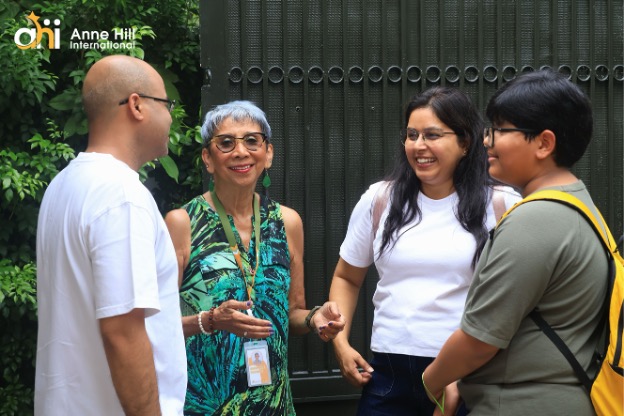
Photo: Parents speaking with Ms Anne Hill during an Open Day at Anne Hill International School in May 2026
The right international school in Ho Chi Minh City depends on your child’s age, languages and next move. These 12 questions, asked on every tour, make schools comparable.
In This Article
- What should we decide before we tour?
- Which 12 questions should we ask on every tour?
- Can we print a checklist for school tours?
- How does Anne Hill answer the 12 questions?
- Questions parents ask
What should we decide before we tour?
Many families start by searching for “the best international schools in Ho Chi Minh City”, but a list cannot tell you which school fits your child: only your family can. Agree on these 4 things before you book tours, and each visit becomes a check against your own needs.
- Your child’s age and start date. Ask each school how it places children by age. At Anne Hill International School, children join the year group that matches their age on 1 September.
- Languages. Which languages does your child speak now, which do you want them to learn in, and will they need help with English? See our guide to international or bilingual education.
- How long you will stay, and where next. If you may move country again, ask how easily your child could continue the same curriculum elsewhere.
- Budget and the daily journey. Agree on a yearly budget, then ask each school what its fee includes: meals, the bus, after-school care and trips. Time the journey at the hour you would really travel.
Which 12 questions should we ask on every tour?
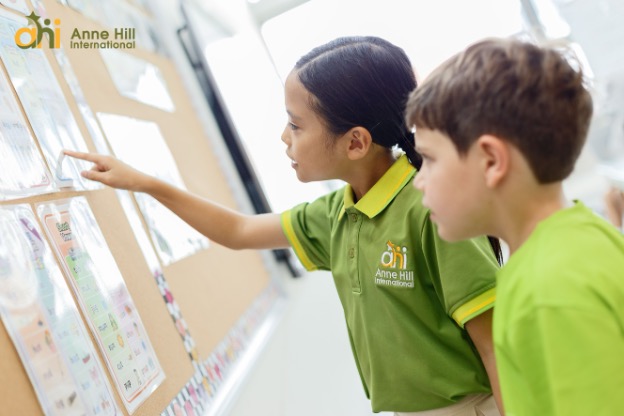
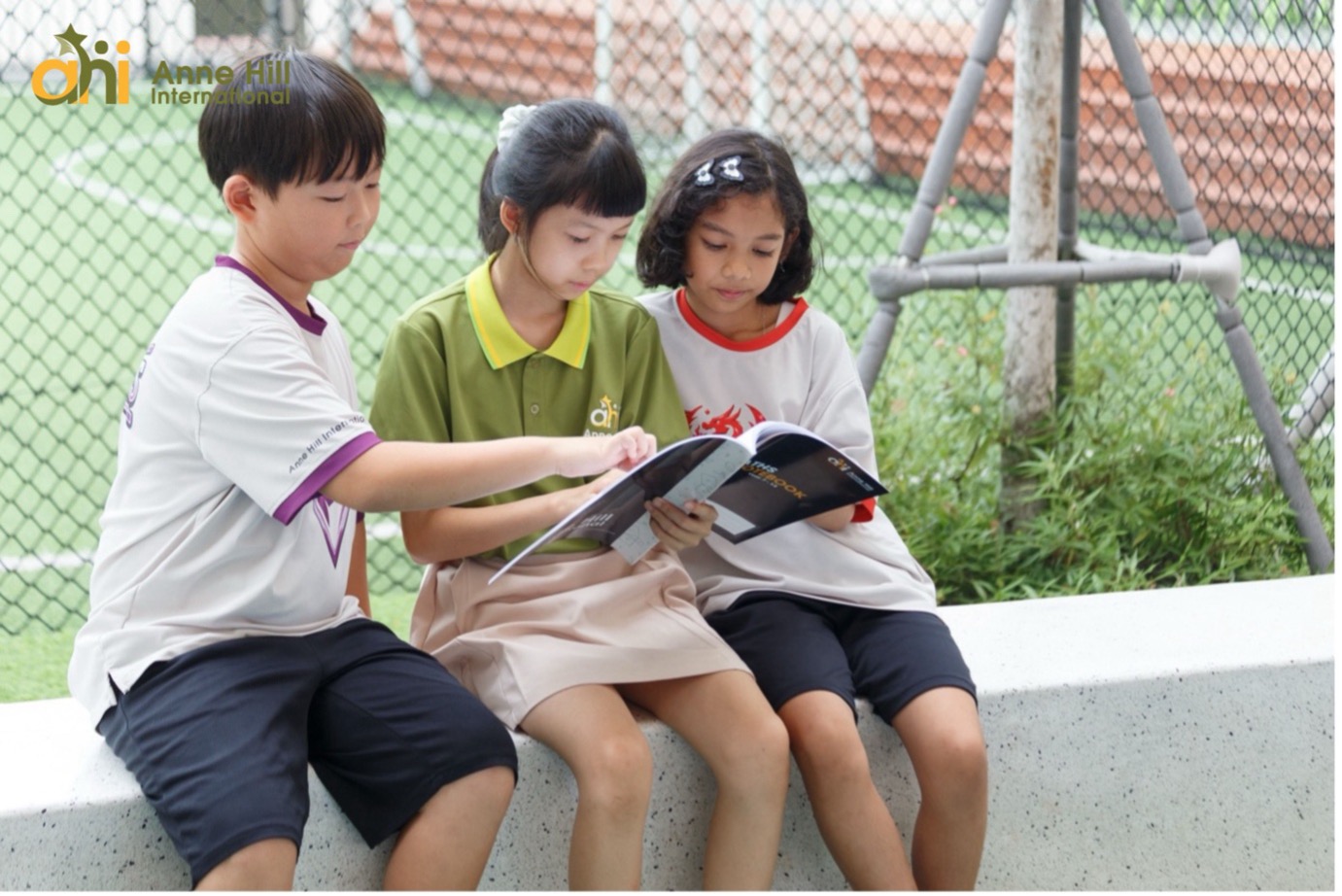
Photo: Students in a Primary classroom at Anne Hill International School, Ho Chi Minh City
Ask every school the same 12 questions, in the same words, and write the answers down. They cover what your child will learn, who teaches them, how they are looked after and what it costs, so the answers line up afterwards.
- What curriculum do you teach, and where does it lead? Ask about every stage from your child’s age to the last year the school offers, and which qualifications come at the end.
- Who accredits the school, and who registers it? Ask for today’s status, not the plan. The questions at the end explain the difference.
- How big are the classes? Ask for the largest class size in your child’s year group, and how many adults are in the room.
- What qualifications do your teachers hold? Ask about teaching qualifications, training each year and how long teachers usually stay.
- How do you support children who are still learning English? Ask how English is assessed when your child applies, what support follows and whether it costs extra.
- Which other languages are taught? Vietnamese families should ask how Vietnamese language, history and culture are covered, and in which years.
- How do you look after my child’s wellbeing? Ask about pastoral care, the school nurse, safeguarding and who you talk to when something is wrong.
- What results can you share? Ask which external tests students sit, and how the school’s results compare with the international average.
- Which facilities will my child actually use? Ask to see the classrooms, library, outdoor space and sports facilities for your child’s age group, not only the newest building.
- What do the fees include? Ask for the fee schedule in writing, what it covers, what costs extra and whether any financial help exists.
- How will my child get to school? Ask about bus routes, pick-up times and after-school care that fits your working day.
- What happens after the last year you offer? Ask where children go next, and whether the school is adding year groups.
Can we print a checklist for school tours?
Yes. Print this page or save the table to your phone, and take it to each of the international schools in HCMC on your shortlist. Write each school’s answer in its column; any gaps show you what to follow up by email.
| Question | School 1 | School 2 | School 3 |
|---|---|---|---|
| 1. Curriculum, and where it leads | |||
| 2. Accreditation and registration | |||
| 3. Class size in my child’s year | |||
| 4. Teacher qualifications | |||
| 5. English support, and its cost | |||
| 6. Other languages | |||
| 7. Wellbeing and pastoral care | |||
| 8. Results, against the international average | |||
| 9. Facilities for my child’s age | |||
| 10. What the fees include | |||
| 11. Bus and pick-up | |||
| 12. What happens after the last year | |||
| How did my child feel on the visit? |
How does Anne Hill answer the 12 questions?

Photo: Students in the Science Lab at Anne Hill International School’s Secondary Campus, Ho Chi Minh City
Here are our own answers, so you can hold us to the same checklist as every other school you visit.
| Question | Anne Hill’s answer | Read more |
|---|---|---|
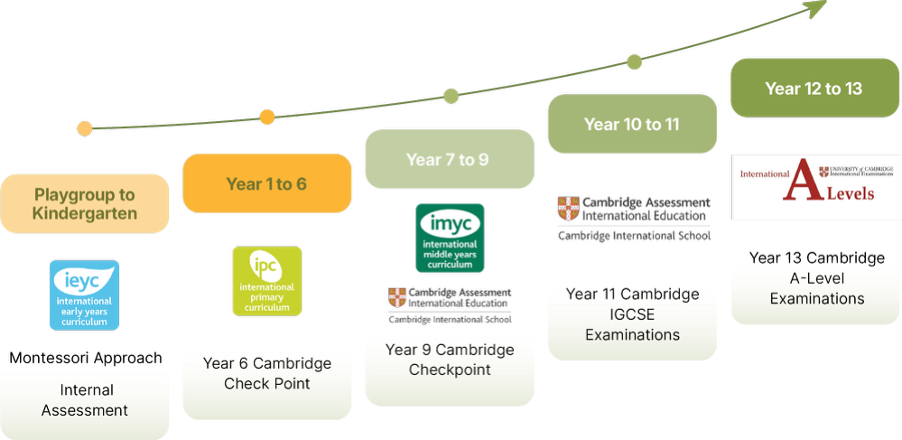
| 1. Curriculum | International Early Years Curriculum (IEYC) in Preschool; International Primary Curriculum (IPC) with Cambridge Primary from Year 1 to Year 6; International Middle Years Curriculum (IMYC), then Cambridge IGCSE and A Level, in Secondary. | Preschool Curriculum, Primary Curriculum, Secondary Curriculum |
| 2. Accreditation | A registered Cambridge International School for Primary and Lower Secondary, and authorised by the International Curriculum Association to teach the IEYC, IPC and IMYC. A Council of International Schools (CIS) member school since 2022, working towards full accredited status by 2027. | Accreditations and Memberships |
| 3. Class size | Up to 18 children per class in Preschool, 25 in Primary and 25 in Secondary . | Admissions Policy and Process Class Size & Classroom Diversity Policy |
| 4. Teachers | More than 100 educators and staff. All our teachers and administrative staff meet professional standards and have completed their annual training. Every class teacher holds. | Our Curriculum |
| 5. English support | Children whose first language is not English take an English proficiency assessment when they apply, and those who need it join our English as an Additional Language (EAL) support programme. Selected Primary students can also join an Afterschool English Programme. The Afterschool English Programme has a fee, listed in the Schedule of Fees; whether in-class EAL support has a fee: [school confirms], alongside high-quality in-class support from all teachers. | Admissions Policy and Process |
| 6. Languages | English is our main language of teaching. Vietnamese and Mandarin are taught as second languages; Vietnamese language, history and culture follow national requirements; Spanish is also offered at IGCSE. | Primary Curriculum |
| 7. Wellbeing | Health and Wellbeing runs through the Primary curriculum, Personal, Social and Health Education (PSHE) runs through Secondary, and 9 core values run across the school. Qualified nurses staff our sick bay. | Primary Curriculum |
| 8. Results | In the Year 6 Cambridge Checkpoint, May 2026, our students averaged 34.4 out of 50, the highest the school has recorded. English was 3 points and Maths 6 points above the international average. | Checkpoint Results 2026 |
| 9. Facilities | Primary: 15 classrooms of at least 60 m², each with a library corner. Preschool: a covered playground, water play, sandpit, gym and eco-garden. New secondary campus: a 25 m pool, 2 science labs and a 168 m² library. | Our Campuses |
| 10. Fees | The 2026-2027 fee schedule is a download on our fees page, paid in VND by cash or bank transfer, with red invoices on request. Financial help: AHI’s Bursary Programme offers tuition fee support to families facing unforeseen financial circumstances. | School Fees |
| 11. Transport | School buses serve several neighbourhoods, including Thao Dien and An Phu. After School Care runs until 5:00 PM for Primary and until 6:00 PM for Preschool, booked at least 24 hours ahead. | Additional School Services |
| 12. After the last year | Children move from our Preschool to our Primary School to our Secondary School. The Secondary pathway leads to Cambridge A Level; in 2026-2027 our classes run to Year 13. | Secondary Curriculum |
Questions parents ask
Which are the best international schools in Ho Chi Minh City?
We do not rank schools, and a ranking cannot know your child. If you searched for the best international school in Ho Chi Minh City, the right one for your family is the one whose answers to these 12 questions fit your child’s age, languages, next move and budget.
What is the difference between accredited and registered schools?
An accredited school has been reviewed as a whole by an outside body: for CIS International Accreditation, the school completes a self-study against 18 standards and a team of trained peers from other schools visits to evaluate it. A registered school has been approved by a curriculum or exam provider to teach its programmes; Cambridge, for example, makes an approval visit before it registers a school. Anne Hill is a registered Cambridge International School and a CIS member school working towards accreditation by 2027 [school confirms the current CIS status].
How many schools should we visit?
We suggest a shortlist of 2 or 3 schools that fit your budget and your daily journey, each visited with the same checklist. Bring your child if you can: how they react to a classroom tells you a great deal, and at Anne Hill a visit with parent and child is the first step of admission.
When should we start looking?
Start early enough to tour, complete the assessment and, if a year group is full, wait for a place. At Anne Hill, admission runs in steps: a visit, a placement interview and assessment, a check on class availability, then the school’s decision: an offer, a place on the waiting list if the year group is full, or a letter explaining the decision. We suggest starting 1 to 2 months before your child’s ideal enrolment date.
Bring Your 12 Questions to Anne Hill
Book a school tour: see the classrooms, meet the teachers and ask your questions.