


The question is no longer whether children should use technology, but how they can use it in a healthy and balanced way.
Screens are now a permanent part of childhood. From learning and friendships to play and creativity, technology is woven into almost every aspect of a child’s daily life. Yet for many families, facing this reality can feel overwhelming. Setting boundaries around screen time, understanding digital behaviours, and knowing how to start the right conversations at home are challenges that parents face more than ever before.
The Third Space: Children’s Digital Reality
According to Pahl and Rowsell (2005), in the framework of Literacy and Education, children today live across three spaces: school, home, and the digital space. The third space (or third place) is a hybrid learning and identity-building environment where the informal, cultural literacies of the home intersect with the formalised, institutional literacies of school. This third space is where friendships are maintained, creativity is expressed, and much of modern learning takes place. Teaching digital literacy begins with helping children understand what kind of space the digital world actually is. Unlike the first two, it has no physical walls, no natural closing time, and no built-in supervision.
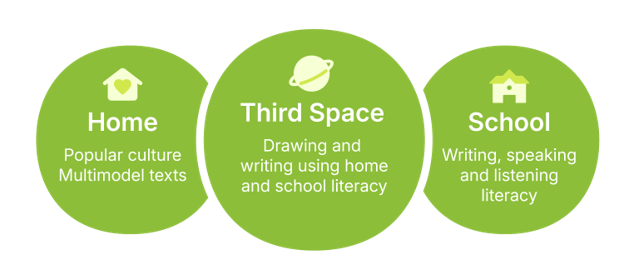
The third space model, according to Pahl and Rowsell (2005).
Research from Rideout et al. (2022) confirms that daily entertainment screen time for children aged 8 to 12 averages over 5.5 hours, while teenagers exceed 8 hours, with these figures nearly doubling over the past decade. The American Psychological Association and other experts emphasise that the quality and nature of content (active versus passive) are more critical indicators of impact than total time. As Ms Mili put it during the workshop, we cannot lock the door to the third space, but we can teach children how to navigate it. This is the heart of digital balance.
Regarding screen time, the quality and nature of content (active versus passive) are more critical indicators of impact than total time.
What is Digital Balance?
To understand digital balance, it helps to look at how much has changed. In 1990, a child’s everyday toolkit included heavy textbooks, handwritten diaries, a Walkman, a landline phone, a physical map, a camera, and board games. Today, every one of those tools has a digital equivalent: Google, Notes apps, Spotify, WhatsApp, Google Maps, Instagram, Minecraft, etc. The tools have changed. The human needs behind them have not. Children still need connection, creativity, learning, and play. Their devices are simply where they go to meet those needs now.
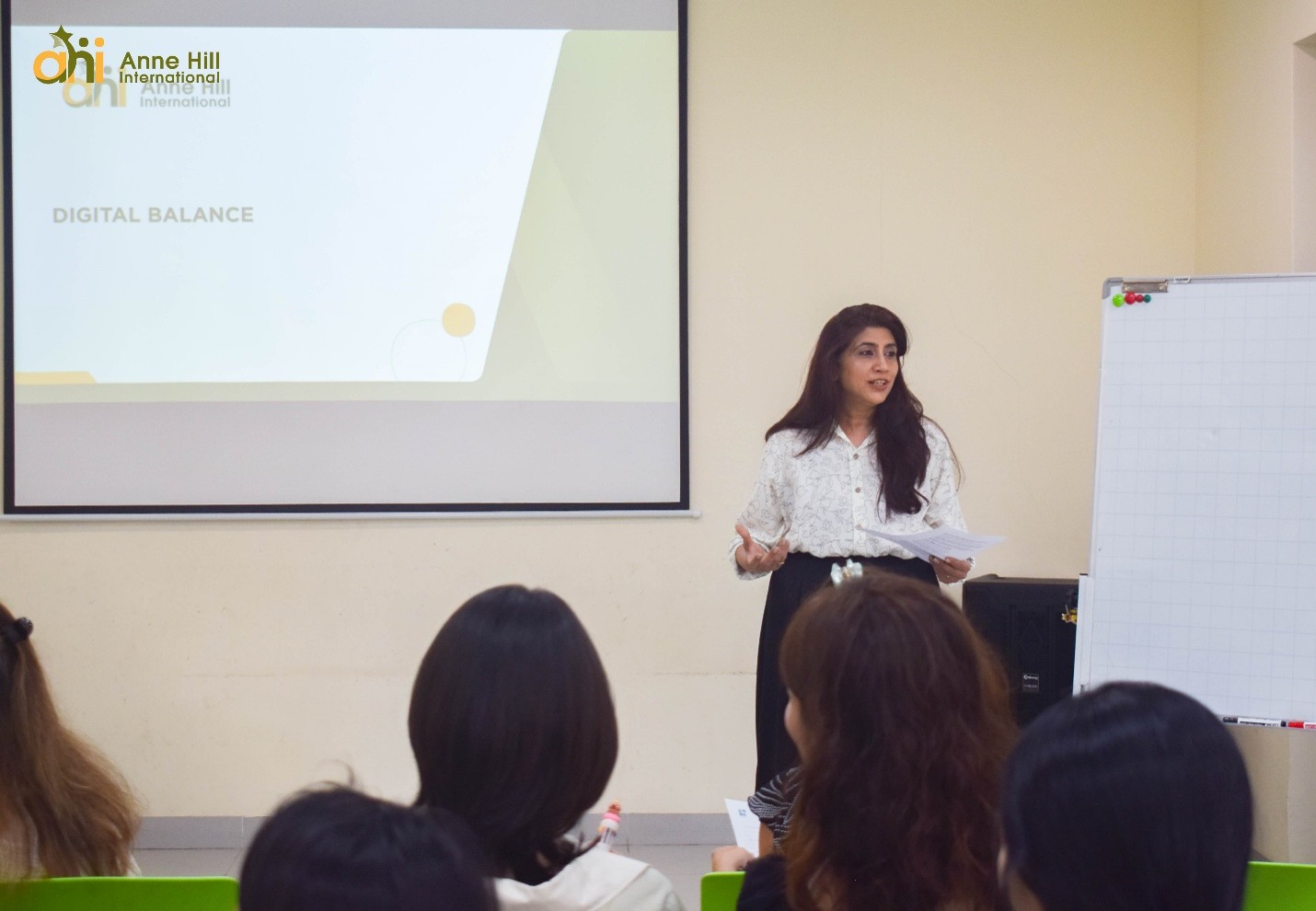
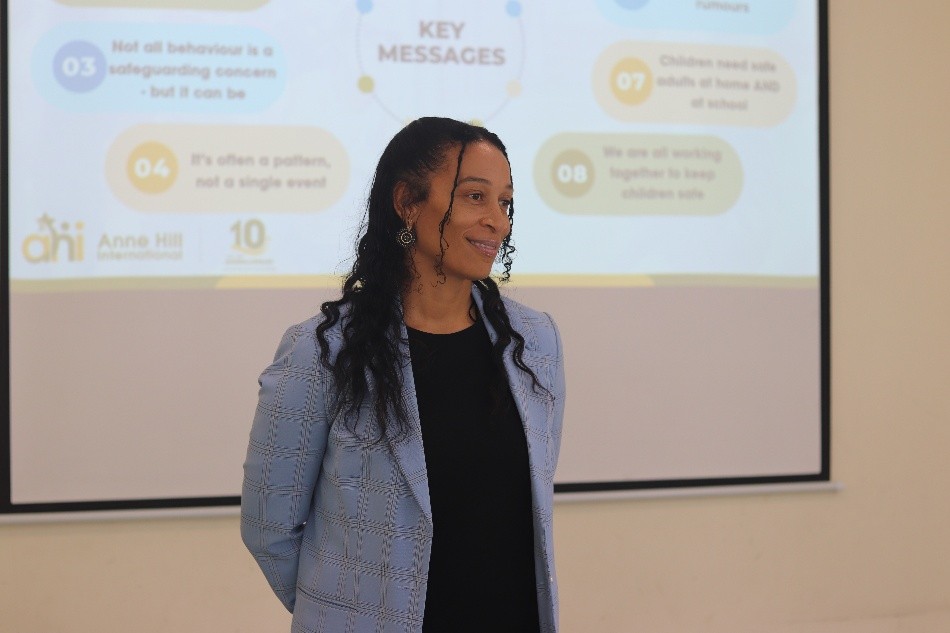
Ms Mili Manek leading the Digital Balance Parent Workshop at AHI’s Primary Campus, helping families build practical strategies for healthier screen time habits.
Digital balance is the foundation of digital literacy: the ability to use technology with awareness, intention, and critical thinking
This reframing was at the heart of Anne Hill International School (AHI)’s “Digital Balance” Parent Workshop, held on 7th May 2026 and led by Ms Mili Manek, Mental Health Counsellor and Educator with over 20 years of experience. As Ms Mili explained to parents, their devices are not their distractions. They are a destination for all the physical and human needs that children once met through physical tools. Understanding this changes the conversation entirely.
Explore highlights from the previous Emotional Resilience workshop, led by Ms Mili Manek
Digital Drainers and Digital Fillers
Not all time spent online supports a child’s wellbeing. One of the most practical frameworks introduced during the workshop was the distinction between digital drainers and digital fillers.
Digital drainers are passive, reactive, or emotionally depleting forms of screen use. Doom-scrolling, for example, creates a shallow, compulsive loop that research associates with increased anxiety and boredom rather than genuine satisfaction. Exposure to trolling or rage-bait content has been linked to heightened anger, low self-esteem, and emotional dysregulation in children and adolescents (Smith, 2025).
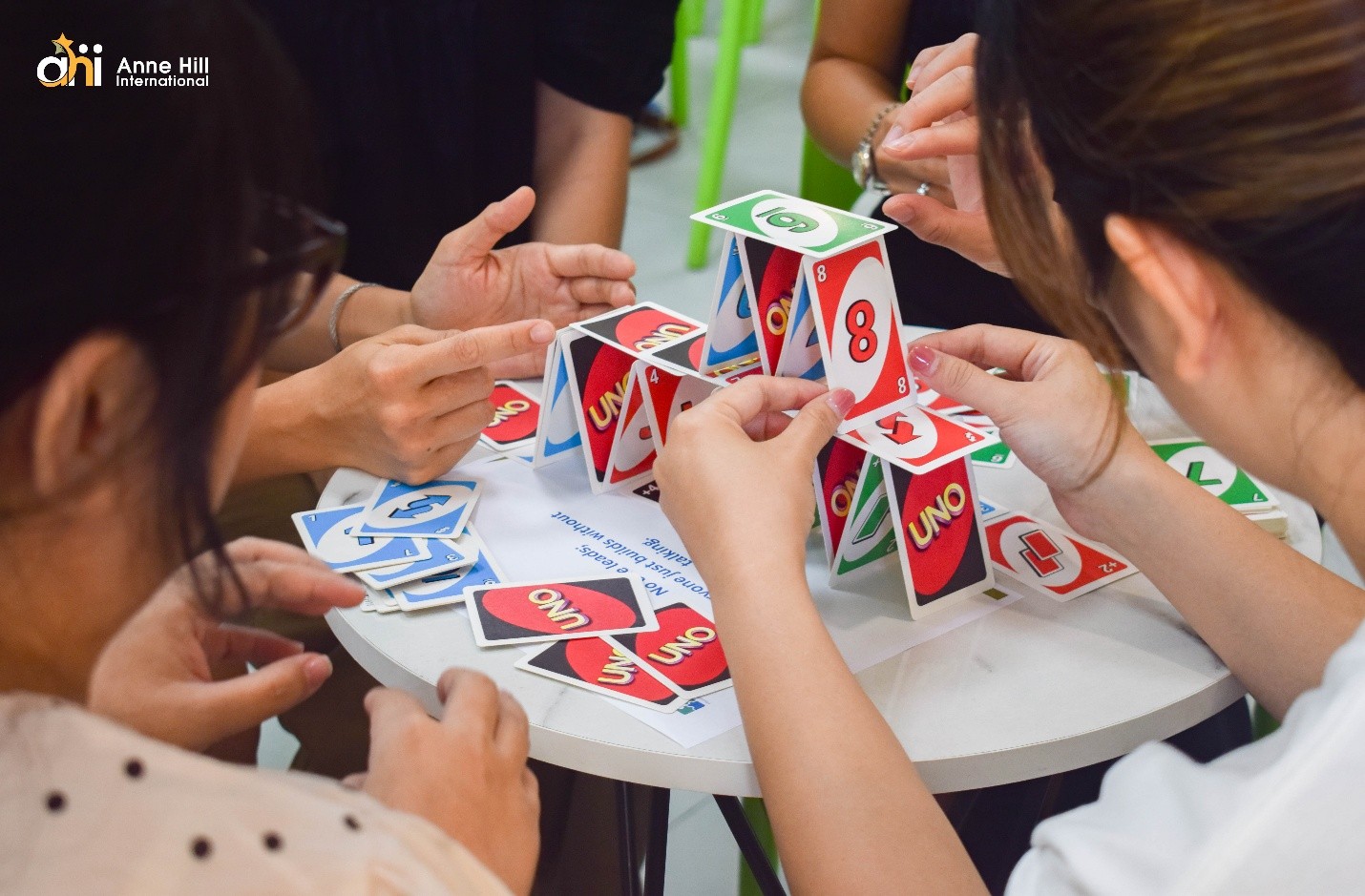
Parents sharing their perspectives on Digital Trainers and Digital Fillers while participating in the interactive “Build or Break” game during the Digital Balance Workshop at AHI (May 2026)
Digital fillers, on the other hand, are forms of engagement that genuinely nourish children. Creative coding, digital art, learning a new skill through video tutorials, and connecting with a grandparent overseas via video call are all experiences that support wellbeing, social connection, and cognitive development, even when they happen on a screen.
Teaching children to recognise what drains them and what fills them is one of the most important digital literacy skills they can develop, and one that begins with everyday conversations at home. This is worth building early. The digital habits formed during childhood have a tendency to persist into adolescence and adulthood, and awareness, once cultivated, tends to grow with the child.
From Policing to Mentoring: A Shift in Approach at Home
One of the most common patterns Ms Mili described during the workshop is what she called the Thought-Emotion-Behaviour Cycle. This is the loop many parents find themselves in around screens:
- Thought: “They’re always on that device. They’re irresponsible. They’re addicted to screens.”
- Emotion: Helplessness, anger, or fear, and often, guilt.
- Behaviour: Arguments, shouting, or shutting the conversation down entirely.
The result is more conflict and less connection, with no real change in the child’s digital habits. As Ms Mili explained during the workshop, this cycle does not begin with bad intentions. It begins with a thought that goes unchecked, and understanding that is the first step toward breaking it.
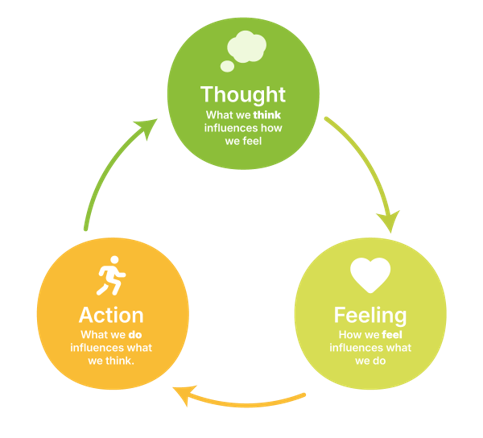
Thought-Emotion-Behaviour Cycle
The shift Ms Mili encouraged is from policing to mentoring. Rather than reacting to screen use with control or confrontation, mentoring means stepping into the role of a guide. This is someone who sets boundaries with empathy, explains the reasoning behind expectations, and keeps the relationship with the child at the centre. In practice, this looks like:
- Acknowledging what the child is doing before redirecting, rather than immediately taking the device away.
- Explaining why a boundary exists, such as the importance of sleep, rather than simply enforcing it.
- Involving children in setting their own screen time boundaries, so they develop ownership over their digital habits rather than just compliance.
- Staying curious about what children are doing online, rather than assuming it is harmful.
Research on authoritative parenting consistently shows that this approach produces better long-term outcomes for children’s self-regulation and digital wellbeing than control-based responses alone (Zulkarnain et al., 2025). Children who are mentored gradually develop the internal skills to manage their own screen time, which is ultimately the goal.
Digital Balance at School: Intentional, Not Accidental
A balanced approach to children and technology does not begin and end at home. Schools play an equally important role, and the most effective learning environments treat digital use as purposeful and guided rather than incidental.
In practice, this means technology is used as a tool for learning rather than passive consumption. Digital experiences such as research projects, creative digital storytelling, and collaborative presentations are integrated with discussion, reflection, and real-world application. They sit alongside rich offline learning, such as daily reading with physical books, hands-on science experiments, outdoor exploration, and unstructured social play.
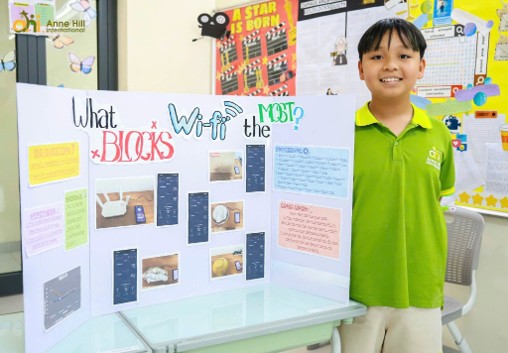

AHI students working on hands-on projects during Science Week 2026, reflecting the importance of rich offline learning experiences alongside purposeful digital engagement.
This balance reflects what developmental researchers describe as the importance of varied learning environments for healthy childhood development. Brown’s (2009) research on play highlights that unstructured, offline activity remains irreplaceable for developing creativity, emotional regulation, and social intelligence, capacities that no screen can replicate on its own.
The goal is not to limit what technology can offer children. It is to ensure that digital literacy develops alongside, and not at the expense of, the full range of human capacities they need to thrive.
The WE of Digital Balance: School and Home Together
Perhaps the most important insight from Ms Mili’s workshop was also the simplest: Digital balance is not a solo effort.
It is not us versus them, and not us versus the device. It is a WE, grounded in the connection, consistency, and mentoring that children, parents, and schools build together. When families and schools hold the same expectations and maintain open conversations, the guidance children receive becomes coherent and trustworthy rather than pulling in opposite directions.
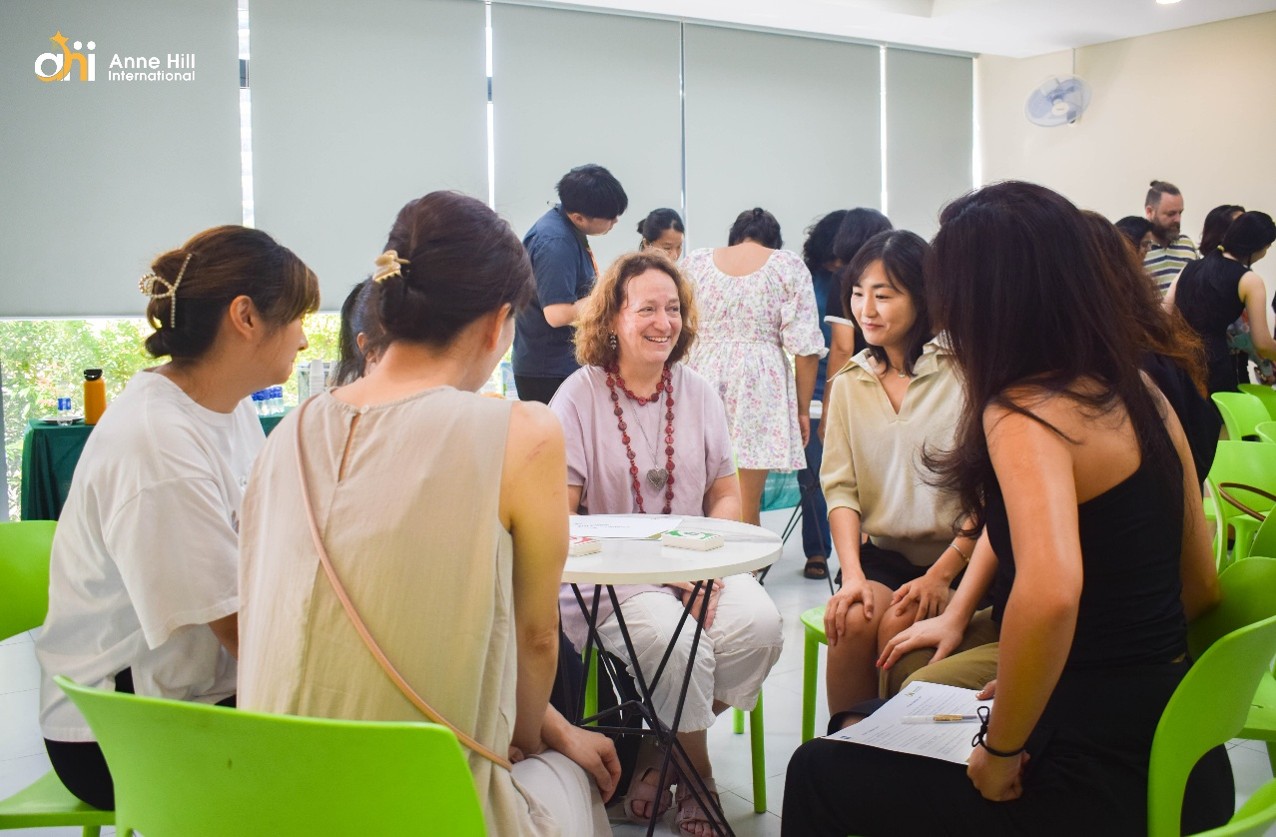
Ms Mili and AHI parents exchanging ideas and experiences on Digital Balance, creating a warm and collaborative environment built on connection and shared insights.
That coherence matters because the children growing up today are the first generation for whom the digital world has always existed. How they learn to navigate it will shape every aspect of their lives, and digital balance gives them the tools to do so with awareness and confidence, both online and off. That is the kind of well-rounded, globally minded, lifelong learner that this moment in childhood calls for, and it is something school and families can only build together.
Book a School Tour to discover how your child can grow in our caring community.

References:
Brown, S. (2009). Play: How it shapes the brain, opens the imagination, and invigorates the soul. Penguin Books.
Rideout, V., Peebles, A., Mann, S., & Robb, M. B. (2022). Common Sense census: Media use by tweens and teens, 2021. Common Sense. https://www.commonsensemedia.org/sites/default/files/research/report/8-18-census-integrated-report-final-web_0.pdf
Pahl, K., & Rowsell, J. (2005). Literacy and education: Understanding the new literacy studies in the classroom. Paul Chapman.
Smith, S. (2025, 3 November). Inside the psychology of doomscrolling: Why it happens and how to stop. Middle Georgia State University. https://www.mga.edu/news/2025/11/middle-georgia-state-university-facultyQandA-psychology-of-doomscrolling.php
Zulkarnain, Z., Tarmidi, T., Purwasih, E., & Bochaver, S. N. (2025). Parenting styles, loneliness and problematic internet use among adolescents: A cross-sectional analysis. Journal of Education Culture and Society, 16(1), 231–49. https://doi.org/10.15503/jecs2025.2.231.249