Inside Exit Points: Learning Through Real-World Projects

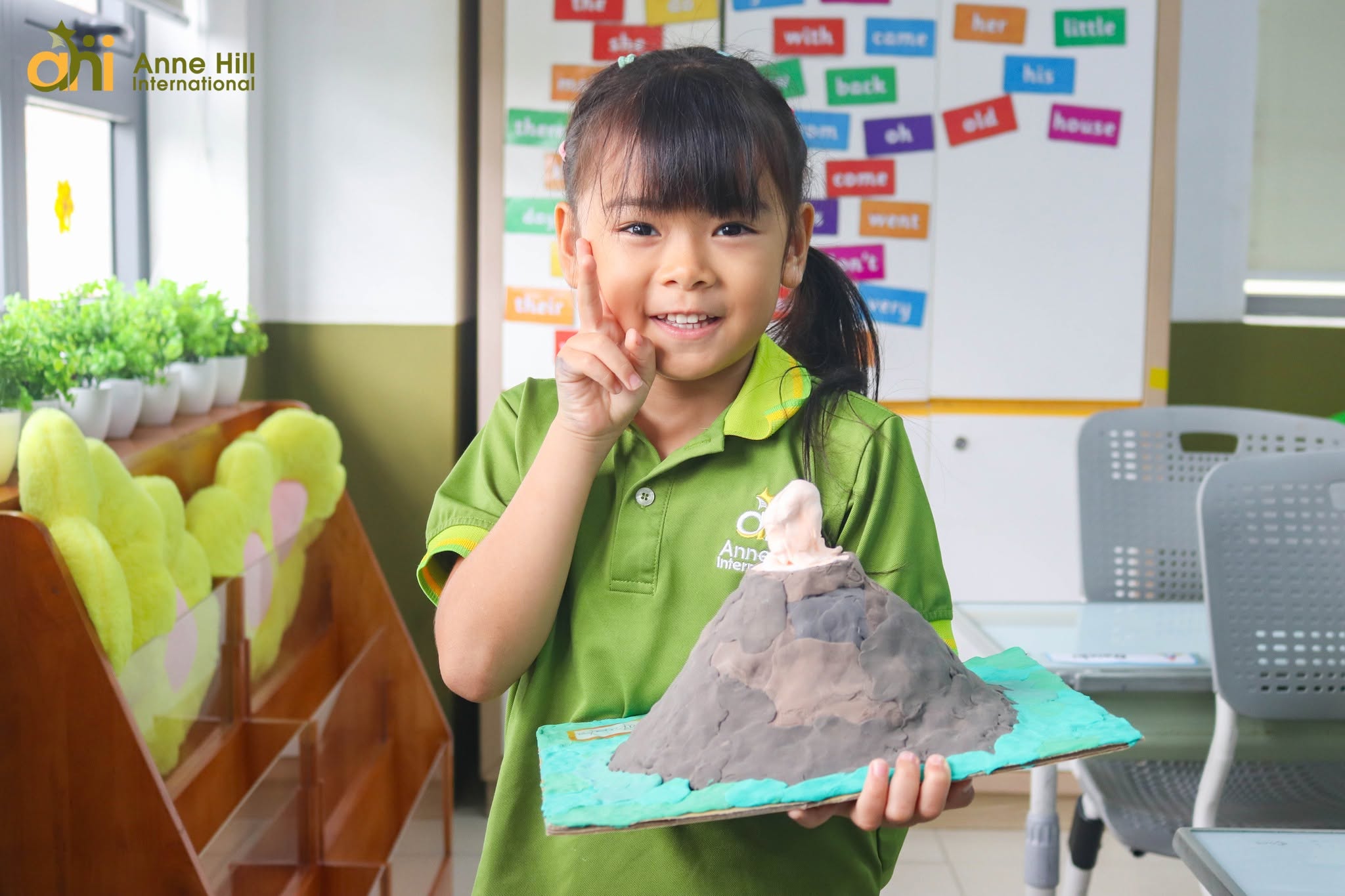
Exit Points are a celebration of learning at Anne Hill International School.

At Anne Hill International School (AHI), students demonstrate their learning in different ways, including through Exit Points, where they apply their knowledge and present their understanding through projects. However, as parents, it can sometimes be difficult to understand how these activities contribute to your child’s academic progress, especially when there is no traditional test involved. Understanding how Exit Points work, how students are assessed and how you can support your child can offer a clearer picture of this learning process.

What Is an Exit Point?

An Exit Point is the concluding stage of a unit in the International Primary Curriculum (IPC) and International Middle Years Curriculum (IMYC). It gives students an opportunity to bring together their learning, reflect on what they have understood and share their ideas with others. In the IPC, the International Curriculum Association (ICA) describes Exit Points as a way for children to consolidate their learning and celebrate their achievements.
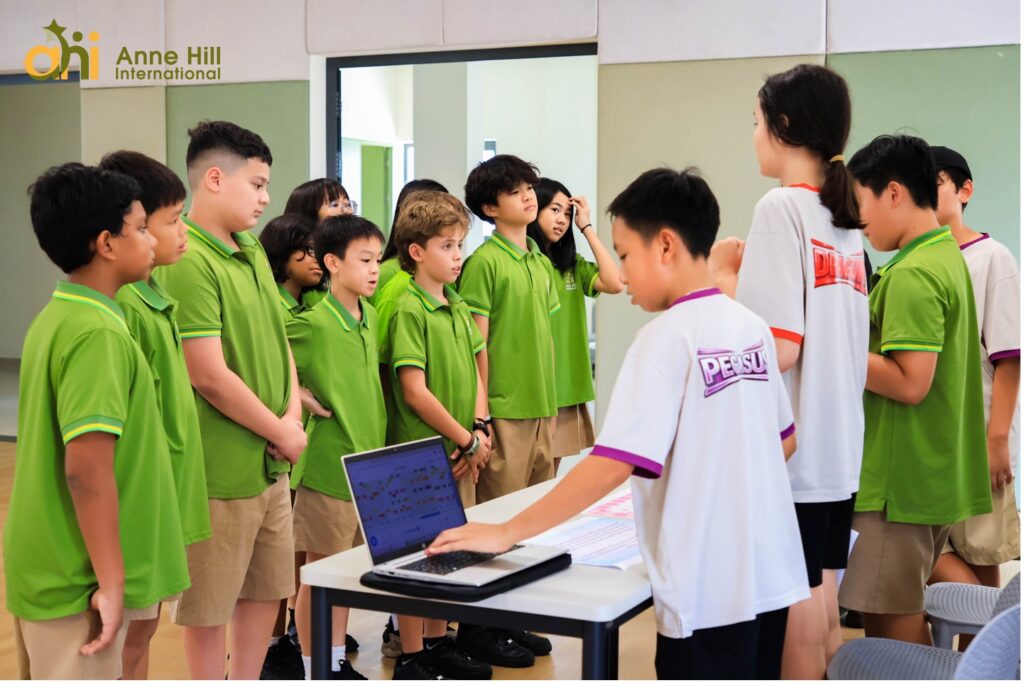
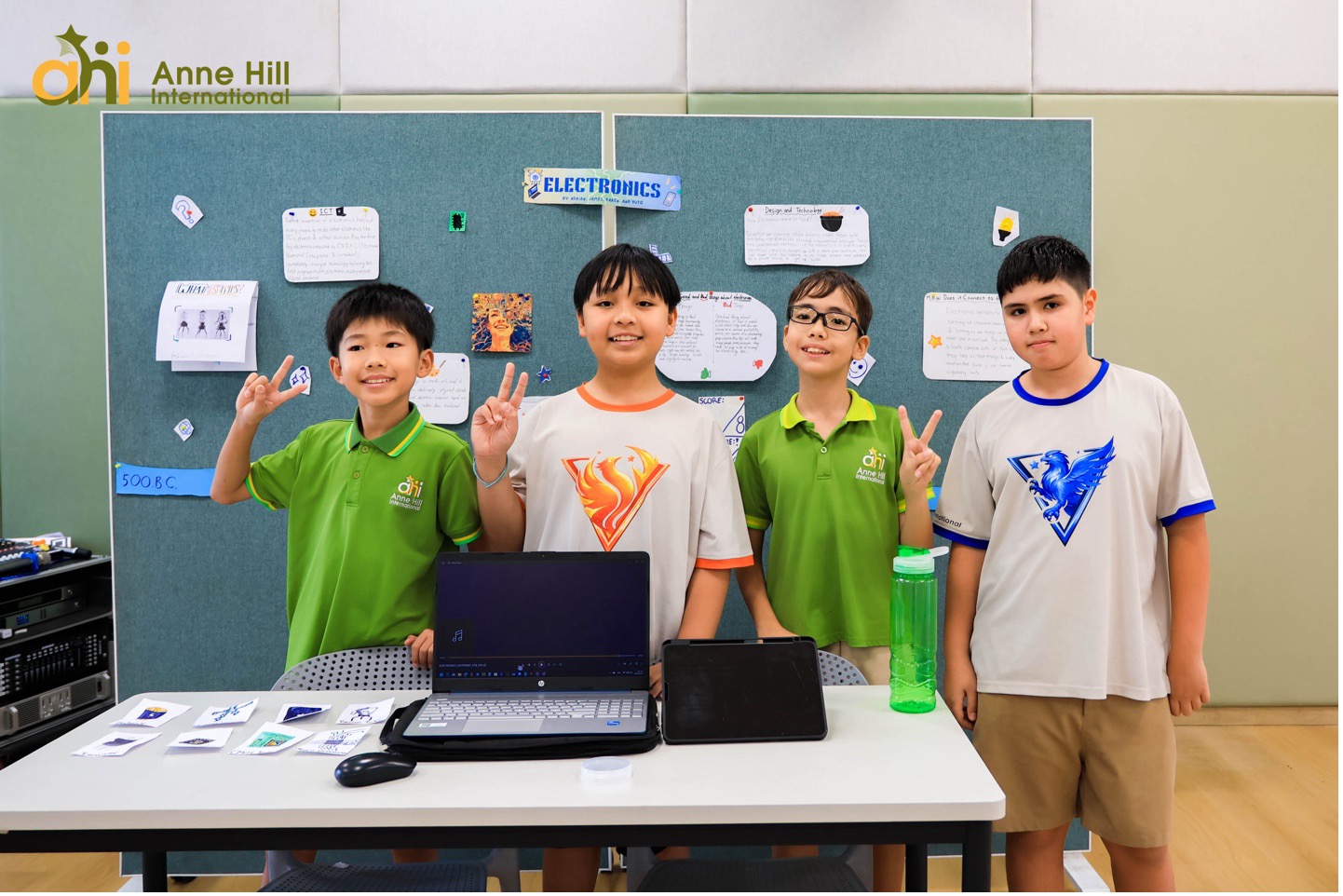
Photo: Year 7 students presenting on the topic of Relationships.

At AHI, Exit Points celebrate students’ learning at the end of each unit. Through project-based learning, students demonstrate their knowledge and skills while working towards their final presentations, performances or exhibitions. Projects like these help students develop critical thinking skills by making meaningful connections between different subjects and the unit’s Big Idea. Understanding how their learning applies to real-world contexts helps students transfer their knowledge to new situations and solve problems beyond the classroom (National Research Council, 2000).

Exit Points contribute to students’ overall summative assessment, which consists of an Exit Point evaluation and a subject assessment. Throughout the project, teachers observe and evaluate how effectively students collaborate, communicate and apply their learning from across the unit. In terms of grades, students receive an overall attainment judgement using four levels: Working Below, Working Towards, Working At or Greater Depth. Together, these provide a holistic measure of each student’s achievement.

Learn more about the International Middle Years Curriculum (IMYC) at AHI

Read more about the International Primary Curriculum (IPC) at AHI
View this reel to know what Exit Point looks like at AHI: https://www.facebook.com/reel/1108958372055080

Preparing for Exit Points: How Parents Can Help
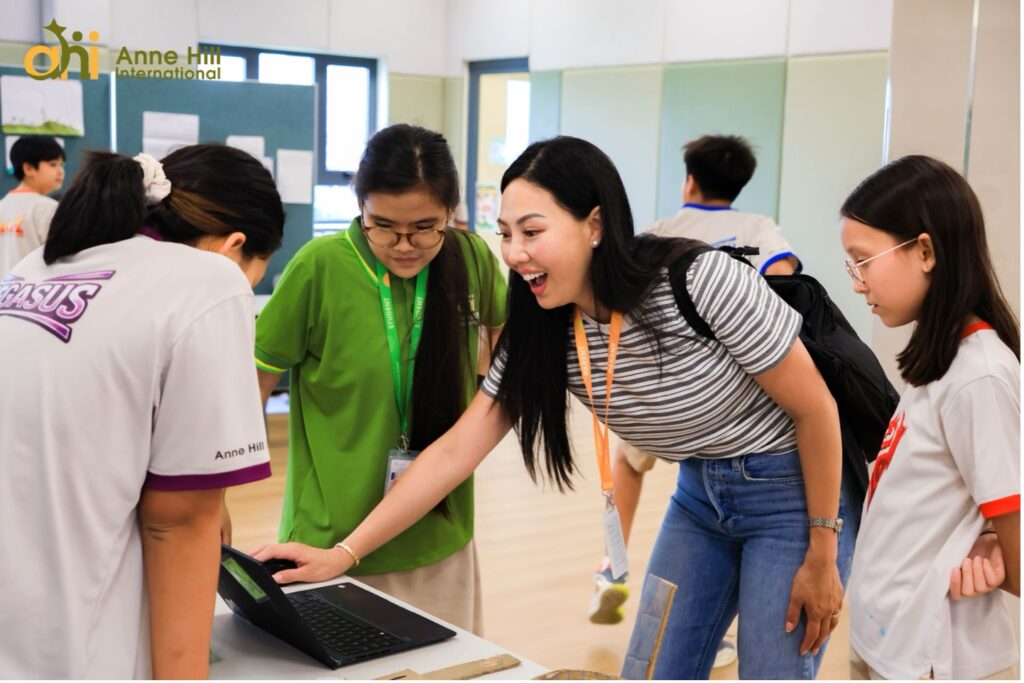
Photo: Year 8 students proudly presenting their group work to a parent.

IMYC Exit Points require a considerable amount of preparation, creativity and teamwork. Over the course of each unit, students work towards producing exhibitions that may include presentations, models, dioramas, posters, interactive displays and other creative projects. While students are given time in school to prepare, they are also expected to contribute to their Exit Point projects at home.

As Exit Points often involve group work, students need to take responsibility for their individual contributions. This may involve completing assigned tasks independently at home or arranging opportunities to meet and work collaboratively with their group members.
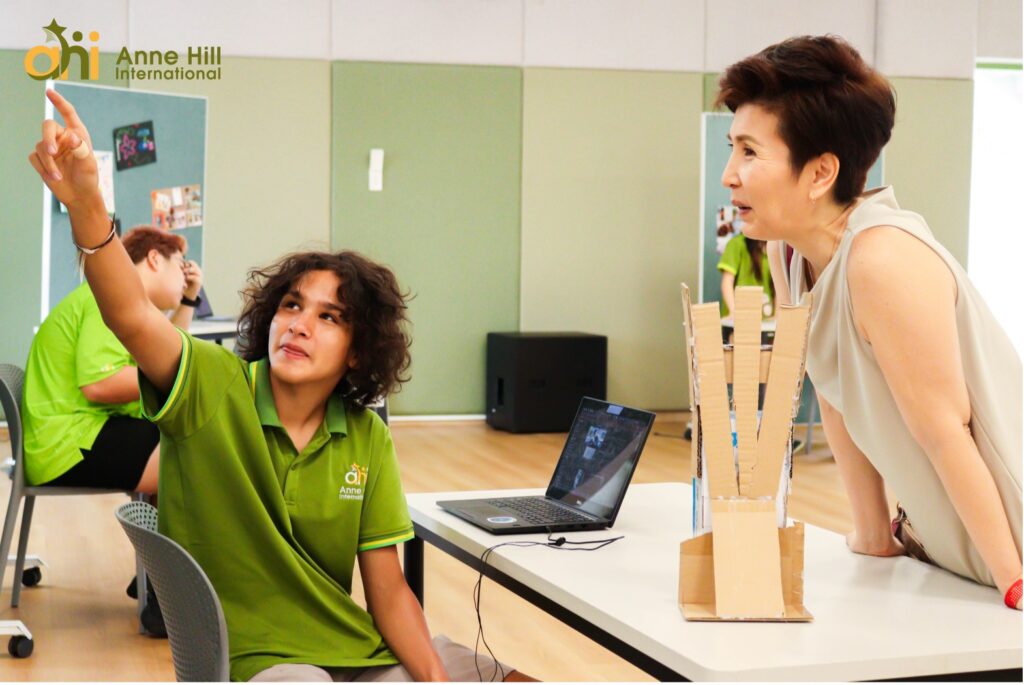
Photo: A parent supporting Year 9 students during their Exit Point.

Parents can support their children by encouraging them to manage their time, communicate with group members and share responsibilities fairly. They can also help with practical arrangements, such as gathering materials or organising group meetings. Lastly, show an interest in their child’s learning. Parents may ask questions about the project’s connection to the unit’s Big Idea or how it applies in a real-world context to spark your child’s curiosity and deepen their engagement with the topic.

As Mr. Matthew, Vice-Principal (Academic & Pastoral Care Y4–Middle Years), advises:

“Offer encouragement and guidance, but ensure the work remains your child’s own.”

Ultimately, Exit Points are an important opportunity for students to develop independence, responsibility and collaboration. With parental support and the freedom to take ownership of their work, students can build confidence in their abilities and take pride in their achievements.

Learning That Lasts: Holistic Education at AHI
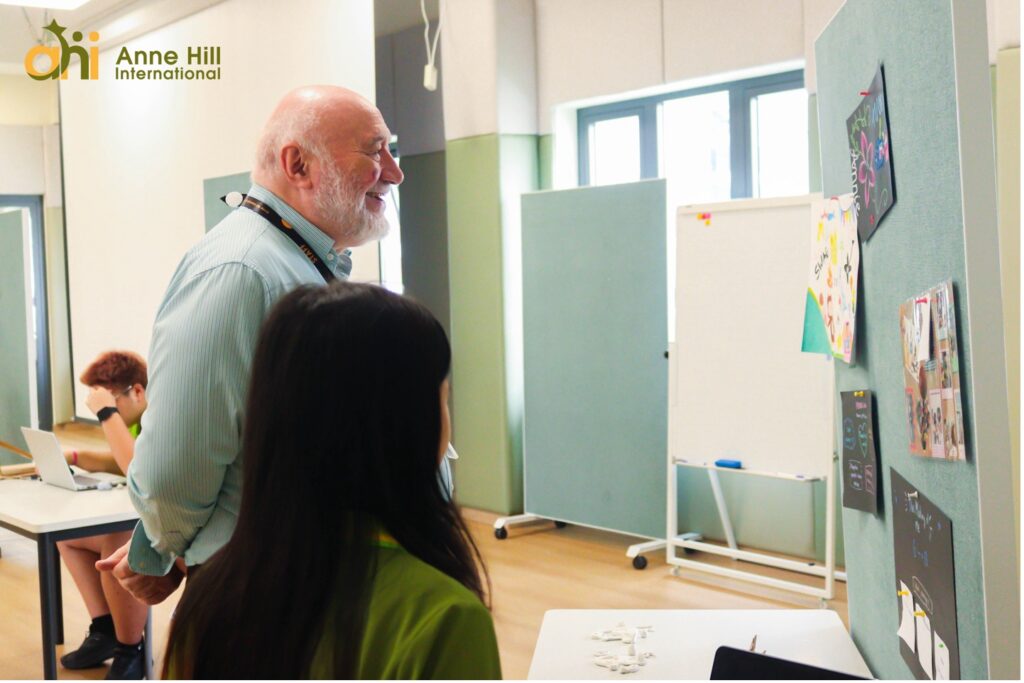
Photo: Mr Sean, Head of School, learning about the Year 9 students’ work and discoveries.

At AHI, holistic education is central to the school’s vision of nurturing “well-rounded, globally-minded, lifelong learners”. The IPC supports this vision by combining academic learning with personal and international development. Through Exit Points, students apply their knowledge to real-world contexts, make connections between subjects and explore different perspectives.

Learn more about Holistic Education at AHI.

As students develop their projects, they practise values such as resilience, empathy, collaboration and respect. Taking responsibility for their contributions, working through challenges with their peers and presenting their ideas also helps them build confidence, independence and communication skills.

These experiences extend beyond the completion of an Exit Point. By diligently preparing for and carrying out a group project, students develop the skills and values needed to navigate new challenges, understand different perspectives and continue growing as learners.

Discover AHI’s learning environment:

Book a School Tour at Anne Hill International School

Frequently Asked Questions (FAQs)

1. What is an Exit Point in school?

An Exit Point is the concluding stage of a unit in the International Primary Curriculum (IPC) or International Middle Years Curriculum (IMYC). Students bring together what they have learnt and share their understanding through projects, presentations, exhibitions or other creative activities.

2. How is an Exit Point different from a test?

Unlike a traditional written test, an Exit Point allows students to demonstrate their learning through practical projects and presentations. Students apply their knowledge, make connections across subjects and develop skills such as communication, collaboration and creative thinking.

3. Are Exit Points graded?

Yes. Exit Points contribute to students’ overall summative assessment. Teachers evaluate students’ work as part of the Exit Point assessment, which is considered alongside a subject assessment. Students receive an overall attainment judgement of Working Below, Working Towards, Working At or Greater Depth.

4. What is the difference between IPC and IMYC?

The International Primary Curriculum (IPC) is designed for primary-aged students, while the International Middle Years Curriculum (IMYC) is designed for students in the middle years. Both use thematic units to connect learning across subjects.

5. How can parents support their child before an Exit Point?

Parents can help their children plan their time, organise materials and communicate with group members. Most importantly, parents should offer guidance while allowing their children to take responsibility for their own contributions.

References

Holistic Education: Proven Practices from Anne Hill International School


At Anne Hill International School (AHI), we believe that preparing future generations to address emerging challenges requires an educational model that fosters both intellectual advancement and learning through experience. True education goes beyond textbooks and examinations – it shapes character, builds confidence, and equips students to engage meaningfully with the world around them.

The adoption of a holistic approach reflects our commitment to a more comprehensive vision of education and student development, one that values academic excellence alongside the personal, social, and emotional growth every child deserves.

About Holistic Education

Education that Nurtures the Whole Child

Holistic education focuses on developing the whole child, helping them grow into confident, well-rounded individuals who can contribute positively to their communities. (Drew, 2026). It recognises that students need opportunities to grow intellectually, emotionally, socially, physically, and morally in order to thrive. This approach moves beyond memorisation and test performance, emphasising meaningful learning experiences that help students understand themselves, build positive relationships, and develop a sense of purpose.

Beyond Academic Achievements

As a result, holistic education places equal importance on academic knowledge and essential life skills. Students are encouraged to develop critical thinking, creativity, emotional intelligence, communication, and collaboration skills through experiential learning and self-discovery. By valuing personal growth alongside academic success, holistic education aims to nurture confident, well-rounded individuals who are motivated to learn throughout their lives.

The learning environment plays an important role in supporting this approach. Rather than focusing solely on instruction, classrooms are designed to be welcoming, flexible, and student-centred. Learning spaces may include movable furniture, collaborative work areas, quiet reading corners, outdoor learning environments, and personalised learning stations that cater to different needs and learning styles. These features create a supportive and engaging atmosphere that encourages exploration, collaboration, and independent learning while fostering students’ confidence, social-emotional development, and academic success (Wideman-van der Laan, 2024).

Classrooms should be welcoming, flexible and student-centred to support a holistic education.

Another notable aspect of holistic education is its emphasis on physical wellbeing. Recognising that a healthy body supports both learning and daily life, holistic education encourages regular physical activity and health education to promote students’ overall development (Zhao et al., 2023).

Increasingly Embraced by Schools Worldwide

As academic knowledge alone is no longer sufficient to prepare students for a rapidly changing and interconnected world, schools are increasingly appreciating holistic education. Research has highlighted the need of skills such as critical thinking, creativity, collaboration, communication, and social responsibility to succeed in the future alongside subject knowledge (American University, n.d.).

Growing awareness of student wellbeing has also contributed to the popularity of holistic education. By supporting students’ emotional, social, and physical development alongside academic learning, schools can create environments that promote both personal growth and academic achievement (Global Partnership for Education, 2023).

In addition, holistic education aligns with growing international recognition that education should support the development of the whole child. Organisations such as UNESCO advocate educational approaches that nurture cognitive, social, emotional, physical, and ethical development, helping students become lifelong learners and active contributors to society (UNESCO, 2021; American University, n.d.).

By nurturing students’ emotional, social, and physical development alongside academics, schools can foster both personal growth and academic success.

Proven Practices at AHI

At AHI, holistic education lies at the heart of the school’s vision to nurture “well-rounded, globally-minded, lifelong learners.” This reflects a commitment to developing students not only academically, but also personally, socially, and emotionally. By helping students understand themselves, engage with the wider world, and build the skills needed for a changing future, AHI aims to prepare learners for success both in school and beyond.

This approach is trusted by families and has contributed to positive outcomes in students’ confidence, wellbeing, engagement, and overall development.

The Key Role of IPC

AHI students are encouraged to explore their interests, but they are also intentionally exposed to a broad range of subjects, cultures, ideas, and experiences. The International Primary Curriculum (IPC) plays a key role in supporting this approach. Alongside academic learning, the IPC promotes personal and international development through values such as resilience, empathy, collaboration, and respect. Students are encouraged to understand different perspectives, explore global issues, and consider their role within a wider international community.

This ensures that academic success is developed alongside character, social responsibility, and personal growth.

Read more about the International Primary Curriculum (IPC) at AHI

IPC encourages students to explore global issues and consider their role within a wider international community.

Connecting with the Real World

As Mr Benjamin Cracknell (Vice Principal – Lower Primary) explains, one of the key purposes of education is to expose students to a wide range of experiences, ideas, and opportunities, helping them discover their interests, strengths, and passions while also developing an understanding of what may not resonate with them.

Research also recognises that children learn most effectively when they can connect new knowledge to real experiences (Dewey, 1938). At AHI, educational visits, assemblies, exit points, events, and residential trips help bring learning to life by allowing students to see, experience, and better understand the concepts they encounter in lessons. These experiences build valuable background knowledge, enabling students to learn more effectively.

Extra-curricular activities provide another important dimension of holistic education. Through opportunities such as music, sports, performing arts, and clubs, students can develop confidence, creativity, teamwork, and resilience while exploring interests beyond the classroom.

Mr Ben highly appreciated that many AHI students are having access to activities such as joining a school band, roller skating, or participating in performance opportunities. These experiences broaden students’ horizons and help them develop skills and passions that may shape their future interests and aspirations.

Photo: AHI School Band performing in the 10th Anniversary School Concert in December 2025.

The Positive Impact

The impact of this approach can be seen in the attitudes and actions of AHI students. Mr. Ben highlighted examples of students organising donation drives following a typhoon and actively supporting initiatives such as the Kindness Machine project.

These experiences demonstrate growing awareness of issues beyond their immediate surroundings and a willingness to take positive action within their community. Such moments reflect the wider purpose of holistic education: helping children understand not only what is happening in the world, but also how they can contribute meaningfully to it.

Photo: AHI students participating in the 2024 Yagi Donation Appeal in support of families affected by Typhoon Yagi in Lao Cai.

Balancing with Academic Requirements

Importantly, holistic education does not diminish the importance of academic achievement. Rather, it recognises that strong academic foundations and personal development are equally important for long-term success.

Literacy, communication, critical thinking, and subject knowledge provide students with essential tools that open future opportunities and choices. At the same time, experiences beyond the classroom help students develop confidence, adaptability, resilience, and social awareness.

By combining academic excellence with broad learning experiences, holistic education aims to ensure that students leave school not only knowledgeable, but also equipped to navigate the opportunities and challenges of an ever-changing world.

Holistic education does not mean placing less value on academics.

Key Takeaways

  • Holistic education develops the whole child by supporting intellectual, emotional, social, physical, and moral growth, rather than focusing solely on academic achievement.
  • Learning extends beyond examinations and memorisation, helping students develop critical thinking, creativity, communication, collaboration, emotional intelligence, and lifelong learning habits.
  • The learning environment matters. Flexible, student-centred spaces encourage exploration, independence, collaboration, wellbeing, and deeper engagement with learning.
  • Physical wellbeing is an essential part of education. Holistic education recognises that health, movement, and physical development support both learning and overall quality of life.
  • Holistic education integrates the strengths of multiple educational philosophies, balancing academic, emotional, social, moral, and personal development to meet the diverse needs of learners.
  • No single educational model is sufficient on its own. Research suggests that holistic education combines the broad knowledge of liberal education, the expertise of specialised education, and the personal development focus of quality education.
  • Schools worldwide are increasingly embracing holistic education as future success requires skills such as creativity, collaboration, communication, adaptability, and social responsibility alongside subject knowledge.

Learn More About AHI Curriculum

Learn more about our holistic education programmes:

https://annehill.edu.vn/curriculum/

Book a School Tour to discover how your child can grow in our caring community.


FAQs

1. What is holistic education?

Holistic education focuses on developing the whole child rather than concentrating solely on academic achievement. It supports students’ intellectual, emotional, social, physical, and moral growth, helping them become confident, well-rounded individuals who can contribute positively to society.

2. Does holistic education mean academics are less important?

No. Holistic education values strong academic achievement while also recognising the importance of life skills such as critical thinking, communication, creativity, collaboration, resilience, and emotional intelligence. The goal is to prepare students for both examinations and life beyond school.

3. Why are more schools adopting holistic education?

Research suggests that academic knowledge alone is no longer enough in a rapidly changing world. Schools increasingly recognise the importance of developing transferable skills, wellbeing, adaptability, social responsibility, and lifelong learning habits alongside subject knowledge.

4. How is holistic education different from traditional education?

Traditional approaches often place greater emphasis on memorisation, examinations, and subject knowledge. Holistic education takes a broader view by combining academic learning with personal development, wellbeing, character education, real-world experiences, and global awareness.

5. How does AHI implement holistic education?

AHI integrates holistic education through its vision of nurturing well-rounded, globally-minded, lifelong learners. This includes the International Primary Curriculum (IPC), experiential learning opportunities, educational visits, assemblies, residential trips, extra-curricular activities, values education, and community engagement initiatives.

6. What role does the IPC play in holistic education at AHI?

The IPC supports academic learning while promoting personal and international development. Through its values and thematic units, students develop qualities such as empathy, resilience, collaboration, respect, and global awareness alongside strong subject knowledge.

7. What impact does holistic education have on students?

Holistic education helps students become more confident, socially aware, and engaged learners. At AHI, this can be seen through examples such as students organising donation drives, participating in kindness initiatives, and demonstrating a growing awareness of how they can make positive contributions to their community and the wider world.


References:

American University. (n.d.). What is holistic education?

https://www.american.edu/baker/graduate/articles/what-is-holistic-education.cfm

Dewey, J. (1938). Experience and education. Macmillan.

Forbes, S. H. (2003). Holistic education: An analysis of its ideas and nature. Foundation for Educational Renewal.

Global Partnership for Education. (2023). Learning in school and for life: A holistic approach to child development.

https://www.globalpartnership.org/blog/learning-school-and-life-holistic-approach-child-development

Miller, R. (2004). Educational alternatives: A map of the territory. Paths of Learning, 20.

UNESCO. (2021). Reimagining our futures together: A new social contract for education.

https://unesdoc.unesco.org/ark:/48223/pf0000379707

Wideman-van der Laan, Y. (2024, October 21). How schools should be: Holistic classroom designs that promote joy and confidence. EDspaces.

https://ed-spaces.com/news/how-schools-should-be-holistic-classroom-designs-that-promote-joy-and-confidence/987501866

Zhao, Y., Muhamad, M. M., Mustakim, S. S., Li, W., & Wu, X. (2023). Analyzing the comparison and integration of the holistic education approach with liberal, specialized, and quality educational modes. International Journal of Academic Research in Economics and Management Sciences, 12(4), 279–297.

https://doi.org/10.6007/IJAREMS/v12-i4/19778