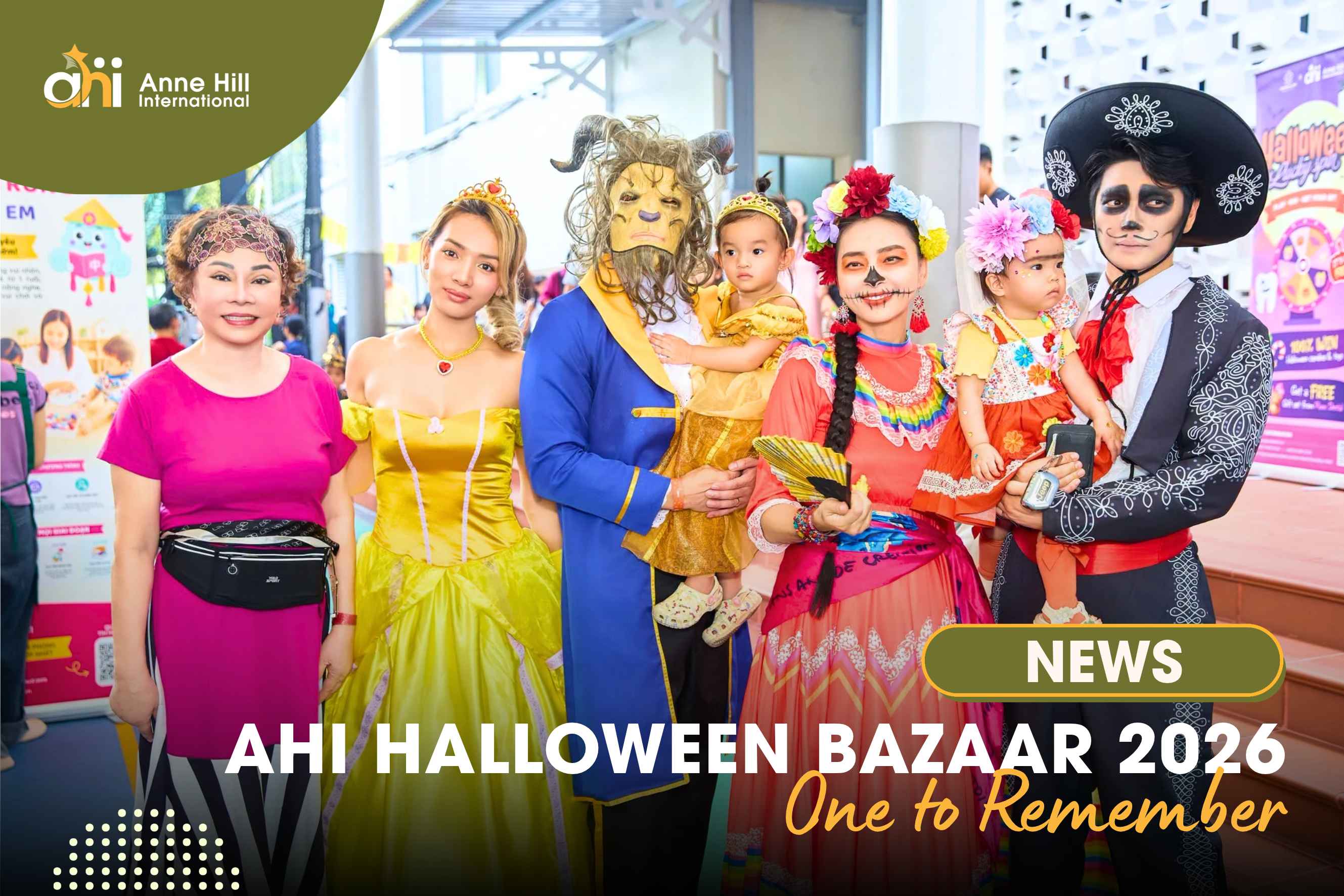
On Saturday, 31st October 2026, Anne Hill International School (AHI) welcomed over 4,500 visitors to its three campuses across Ho Chi Minh City for the AHI Halloween Bazaar 2026. The event brought together families, students and the wider community for a day of Halloween-themed activities, performances and festivities, marking the biggest Halloween Bazaar celebration in the school’s history. Visitors enjoyed a range of activities across the campuses, from haunted houses and the Best Costume Contest to food stalls and live entertainment.
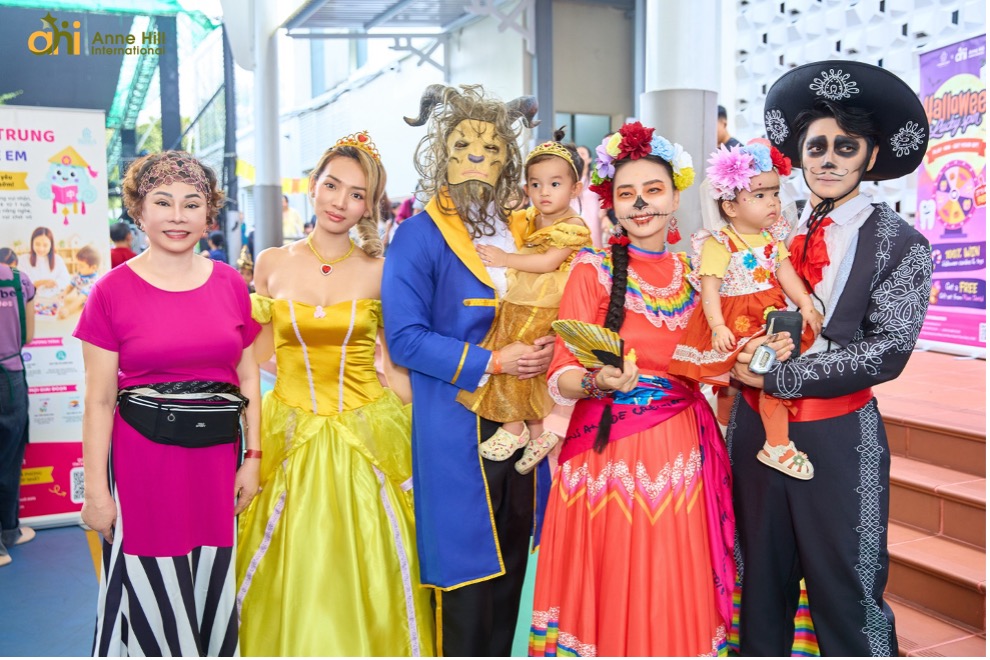
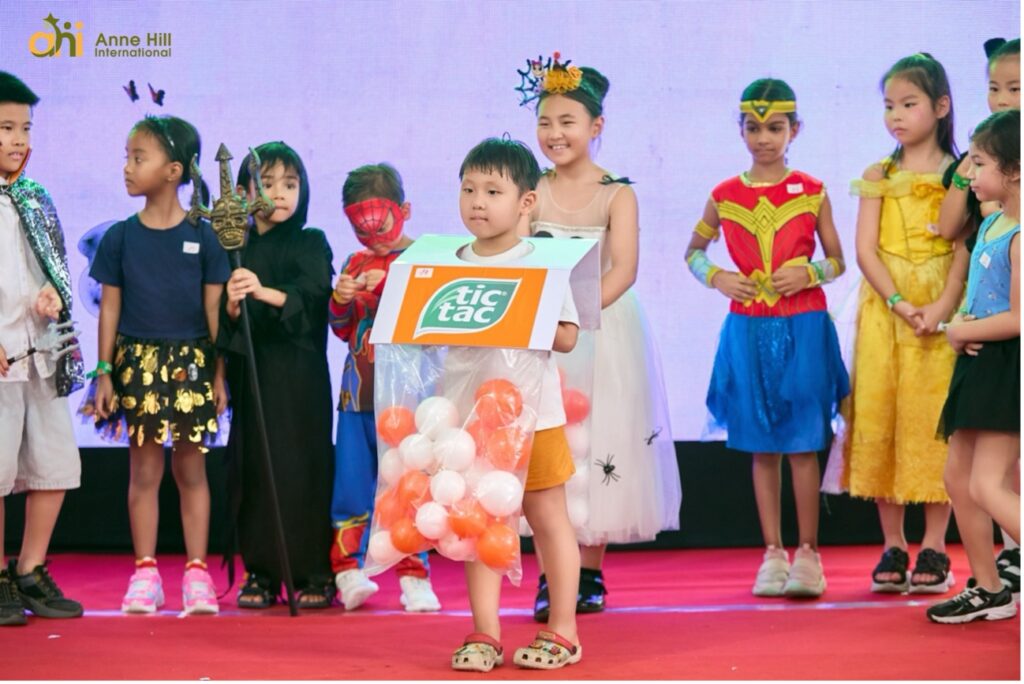
Photo: Families and members of the AHI community came together in their Halloween costumes to celebrate the occasion.
Our Biggest Halloween Bazaar Yet
The AHI Halloween Bazaar is an annual community event that welcomes everyone to join in the celebrations, with free admission for all visitors. Bringing together AHI families, students, staff, local businesses and members of the wider community, the bazaar offers a chance for people to connect and enjoy the festivities beyond the school day.
For the 2026 edition, the celebrations extended across all three AHI campuses, with activities and entertainment taking place in different event spaces. The main stage at 31 Giang Van Minh hosted a programme of performances and games, while the sub stage at 19 Giang Van Minh offered its own line-up of entertainment. Together, the venues created a full day of activities for visitors of different ages and interests.
The continued support of families, vendors and community partners played an important part in bringing this year’s bazaar to life. The excitement was shared by visitors of all ages, and one young visitor summed up the experience beautifully when they said:
“This is the best Halloween Bazaar ever!”
Halloween Bazaar Highlights
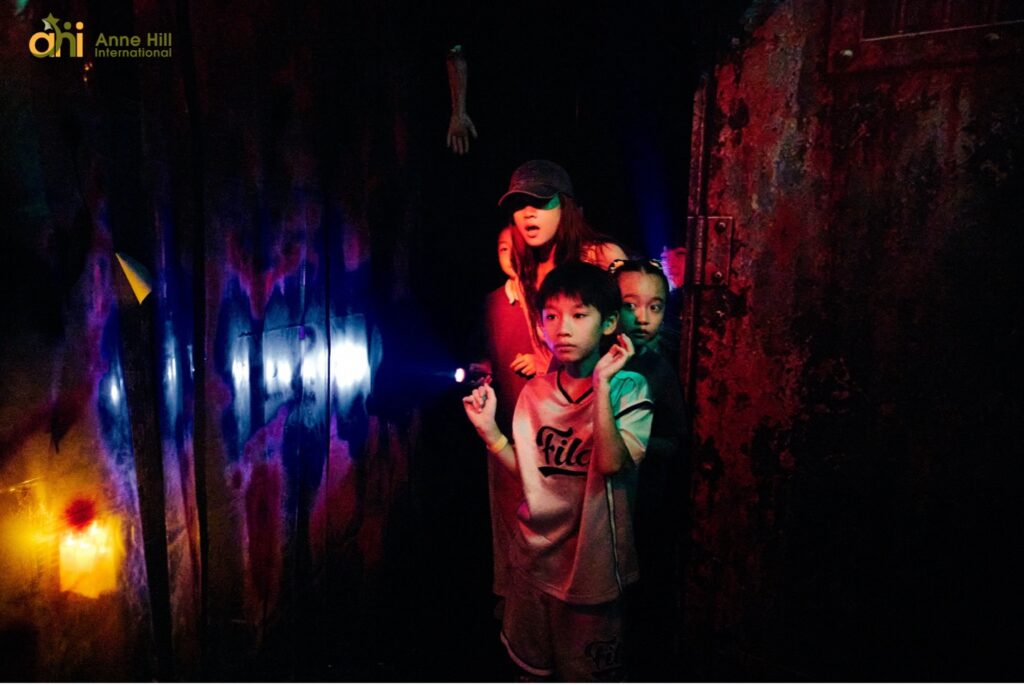
Photo: A family making their way through the haunted house at AHI Halloween Bazaar 2026.
There was plenty to keep visitors entertained throughout the day, with activities and attractions catering to different ages and interests. One of the highlights was the haunted house, where visitors stepped into a spooky setting filled with surprises. Members of the Student Council who took on the challenge shared their reactions after making their way through the attraction.
“Some of us felt scared and really nervous, but it was so fun!” the Student Council members shared.
One member added, “I tried not to admit it, but I did get a jump scare!”
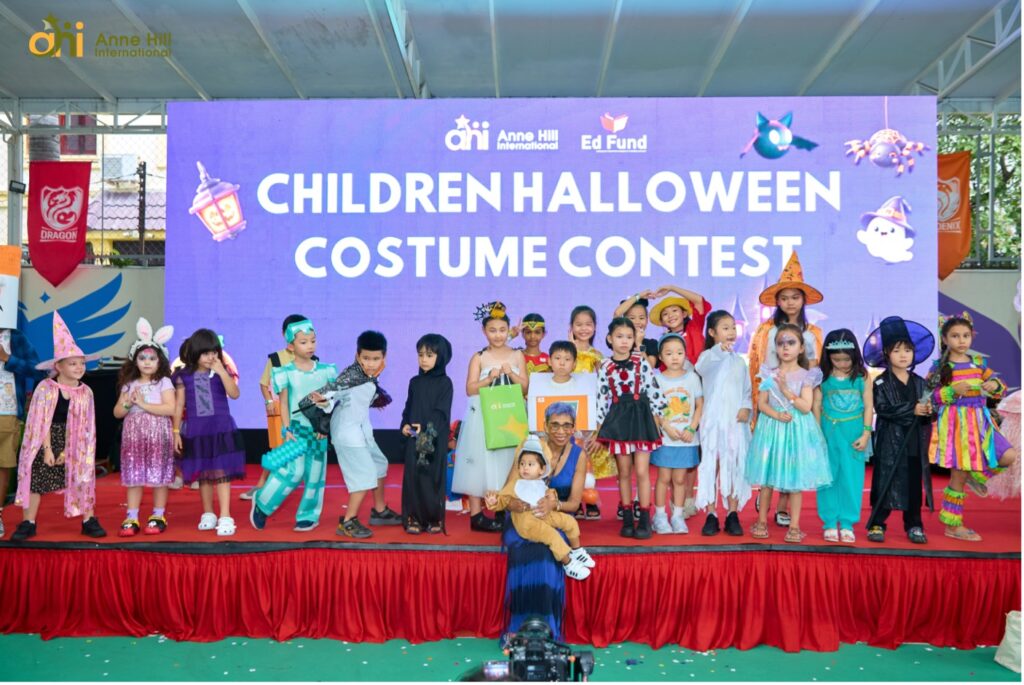
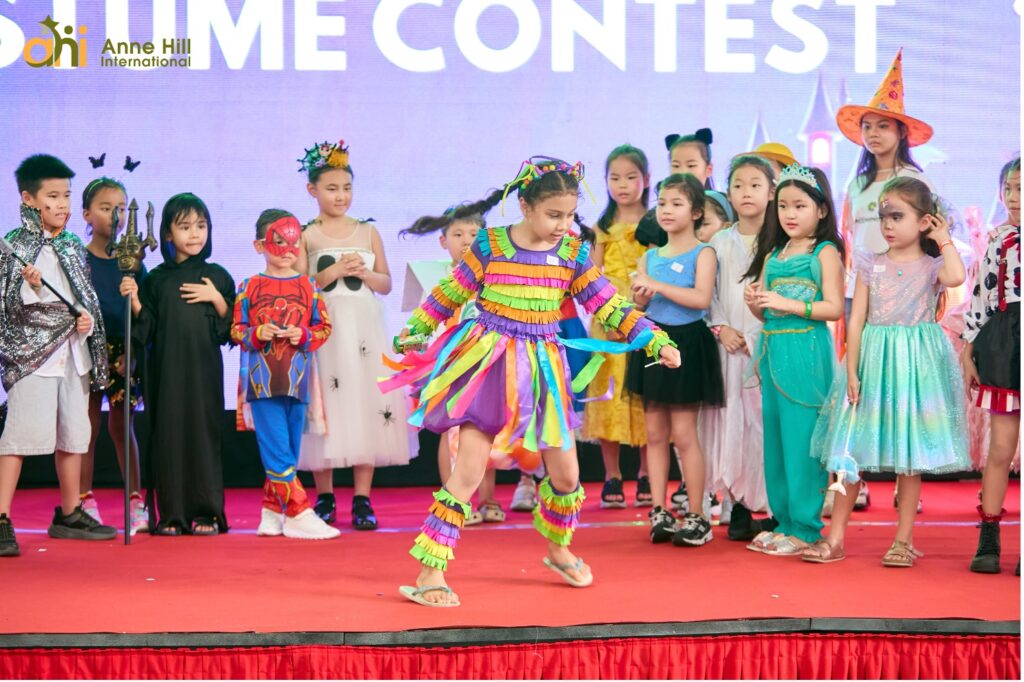
Photo: Participants showing off their Halloween costumes at the AHI Halloween Bazaar 2026 Best Costume Contest.
Creativity was on full display at the Best Costume Contest, where students and visitors arrived in an array of Halloween outfits. The costumes featured spooky characters and imaginative interpretations of their favourite Halloween looks, adding plenty of colour and personality to the celebrations.
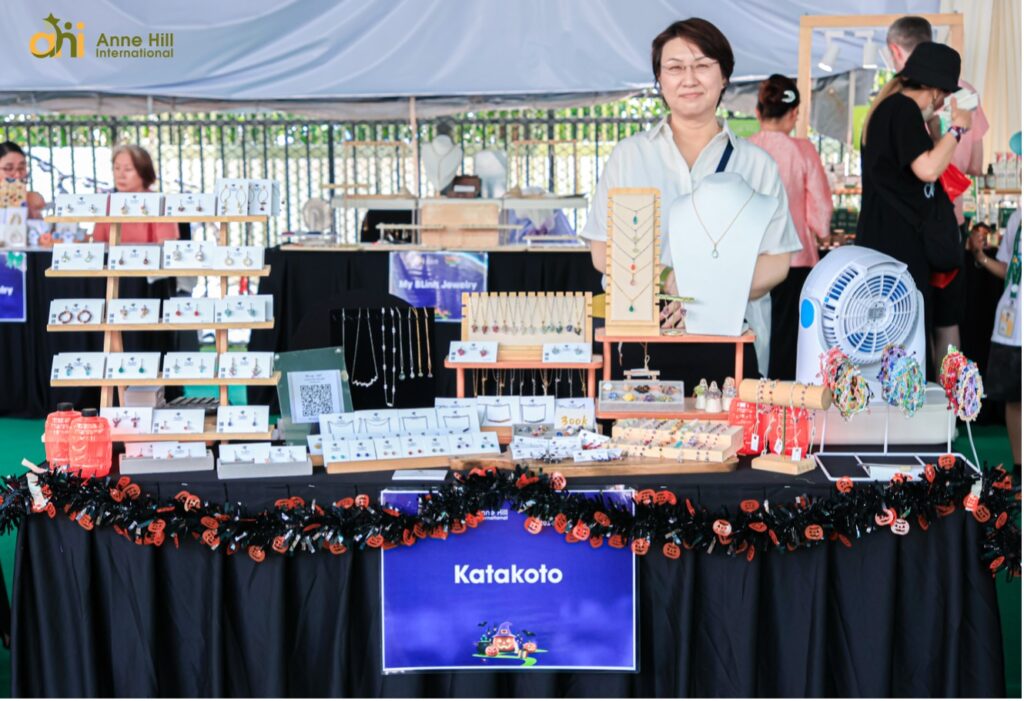
Photo: Dazzling pieces on display at Katako’s Jewelry stall.

Photo: Laws For Paws Vietnam’s stall featuring artwork, tote bags and other merchandise.
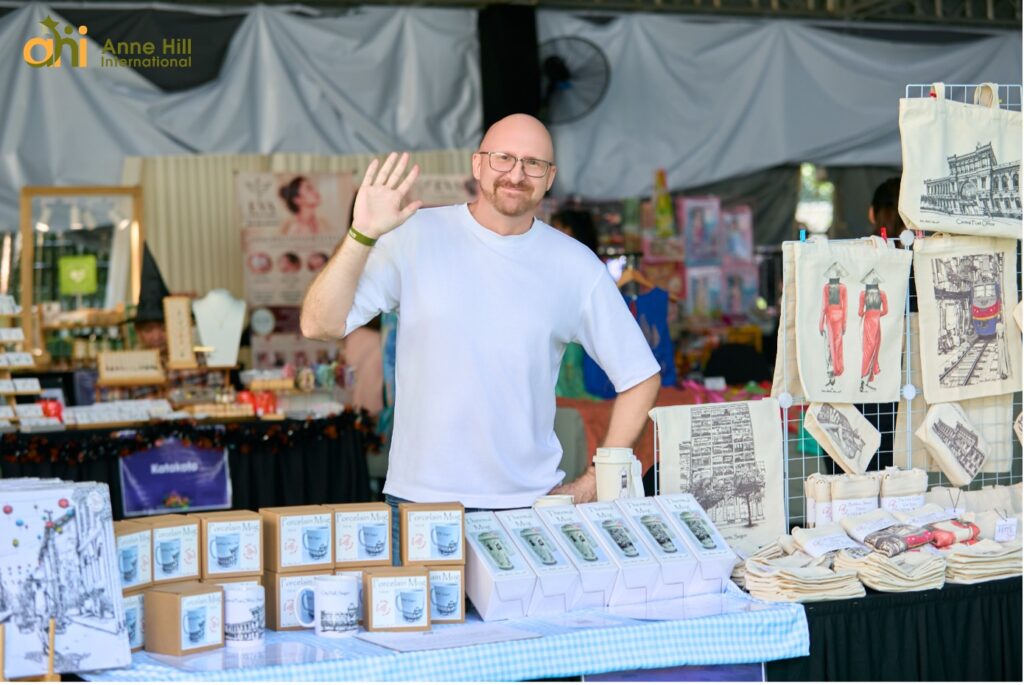
Photo: Ben’s Black Line Art showcasing a selection of hand-drawn souvenirs.
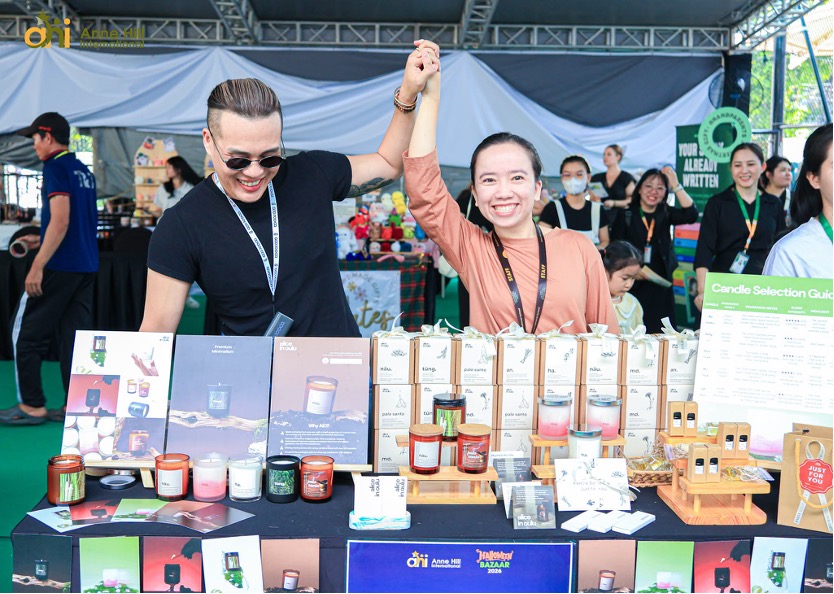
Photo: Alice in Oulu’s scented candle stall at Beetlejuice’s Market.
At the marketplace, local businesses, independent brands and community organisations came together to share their work with visitors. Animal welfare groups Laws For Paws Vietnam and Lucky Shelter Animals Rescue introduced visitors to their rescue efforts, with displays of artwork, merchandise and handmade crocheted plushies.
Shoppers could browse scented candles, crocheted keychains, jewellery, clothing and artwork by local vendors. Nearer to the main stage, food stalls by vendors such as Oven House and Mille Mille offered treats throughout the day.

Photo: Oven house serving up delicious baked goods at Pumpkin’s Feasts and Treats.
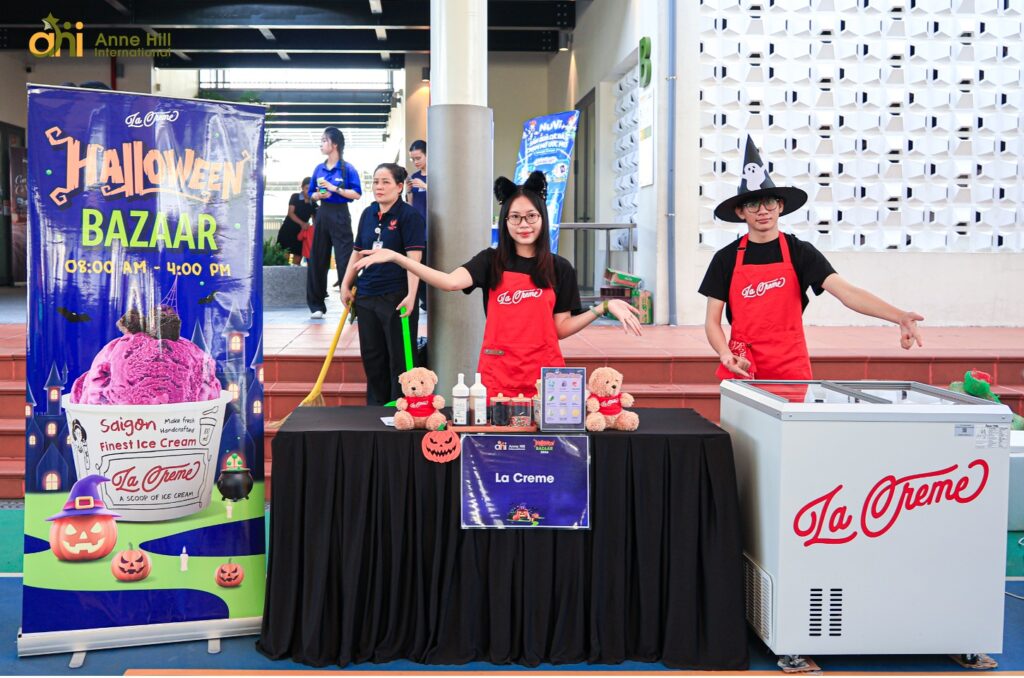
Photo: La Crème helping visitors beat the heat with a refreshing treat at AHI Halloween Bazaar 2026.
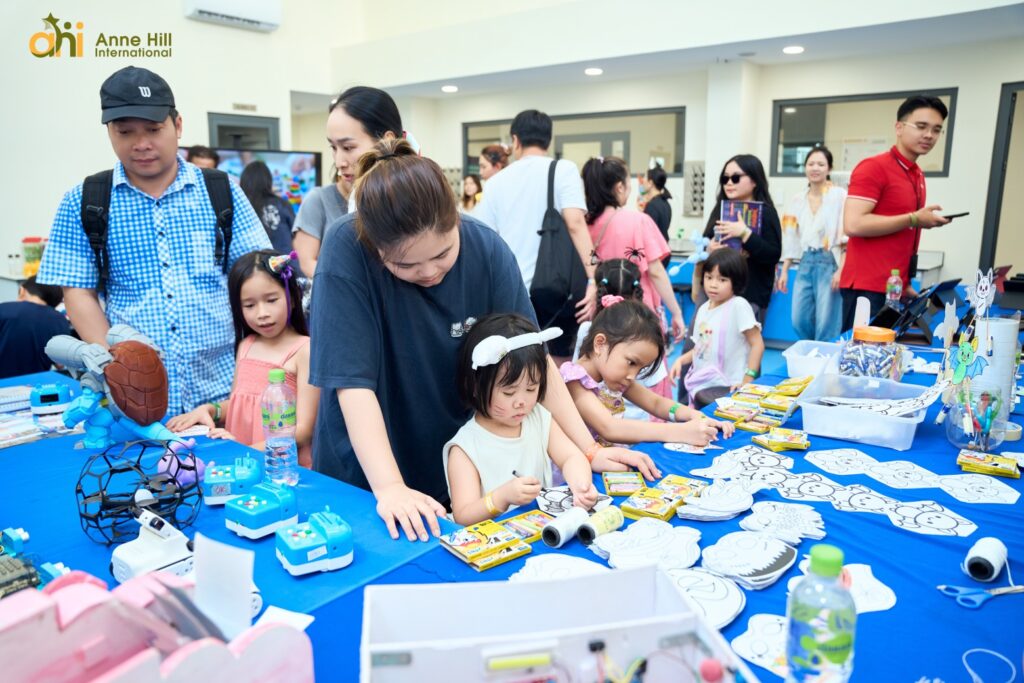
Photo: Children taking part in creative workshops at the Frankenstein Zone.
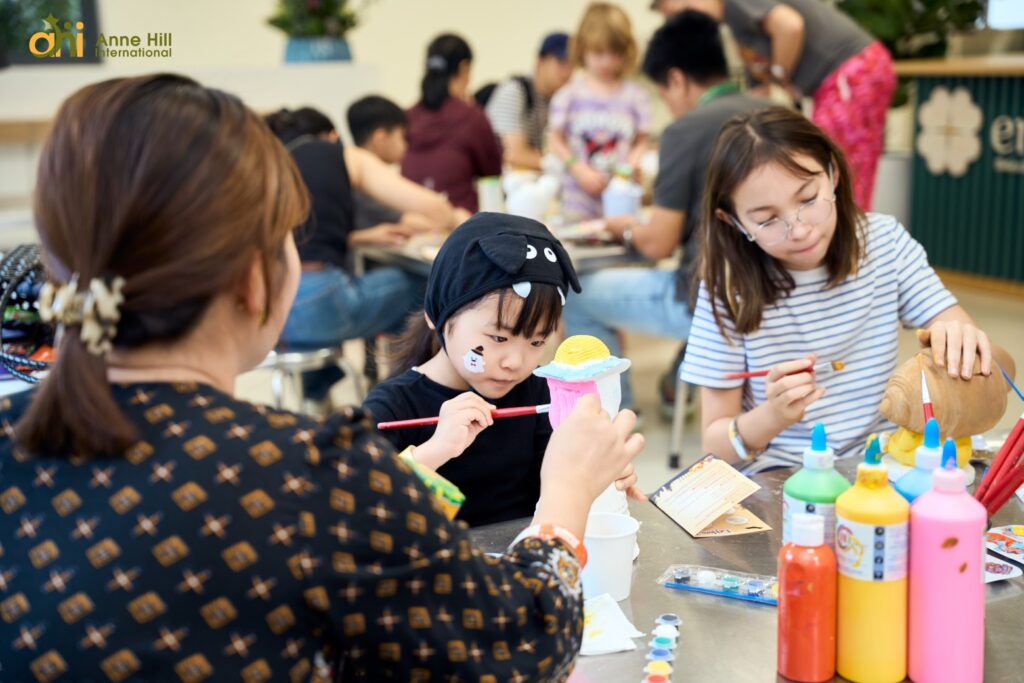
Photo: Participants getting creative with painting and craft activities at the Coraline Zone during AHI Halloween Bazaar 2026.
Visitors could get hands-on with a mix of activities at the Frankenstein and Coraline Zones. At the Frankenstein Zone, KDI and UI Lab encouraged participants to explore science and technology through practical STEM activities that put their problem-solving skills to the test. Over at the Coraline Zone, creative workshops by Tam Lâm Art, Blank Space and Aruma Candles gave visitors the chance to experiment with different materials and try their hand at making something of their own.
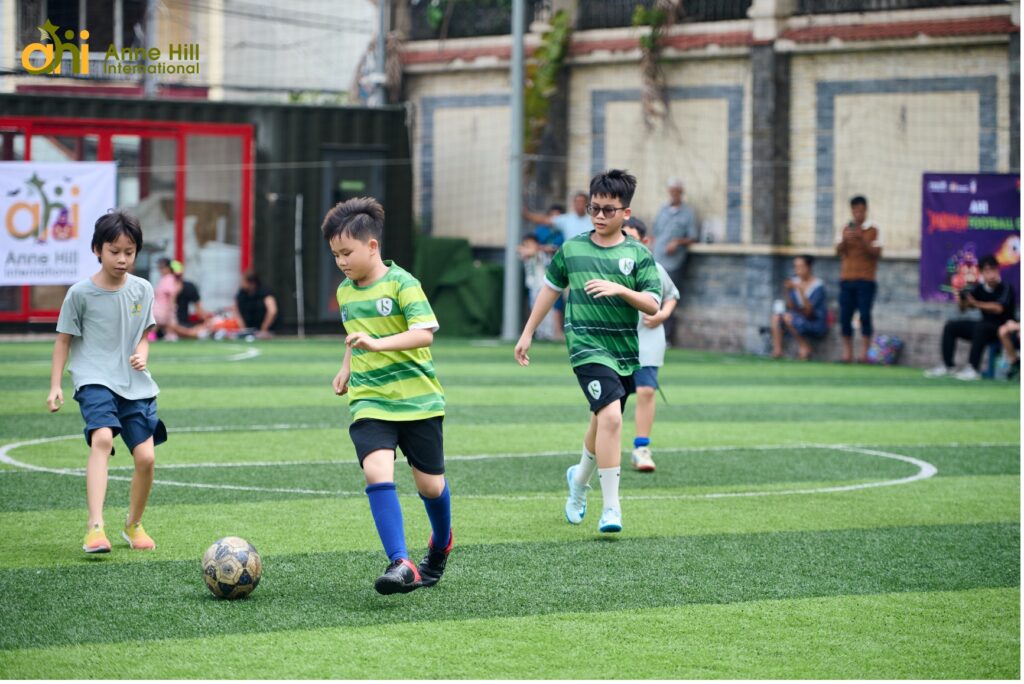
Photo: A game of football at the Goblin Zone during AHI Halloween Bazaar 2026.
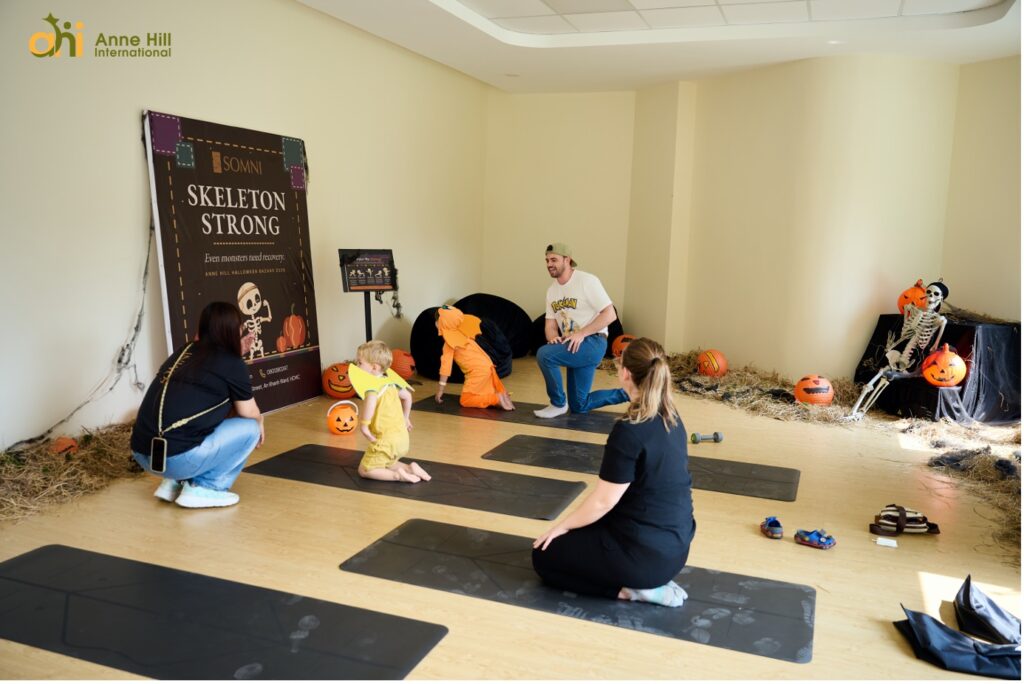
Photo: Visitors taking part in a wellness activity hosted by Somni at the Sally Zone.
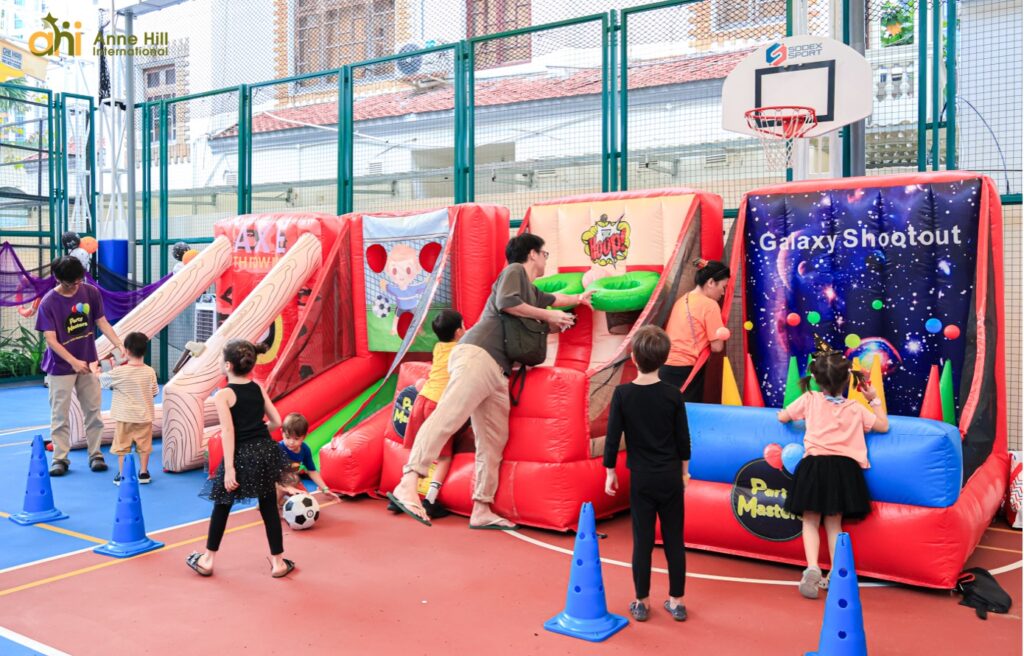
Photo: Families enjoying the carnival games at Casper Zone.
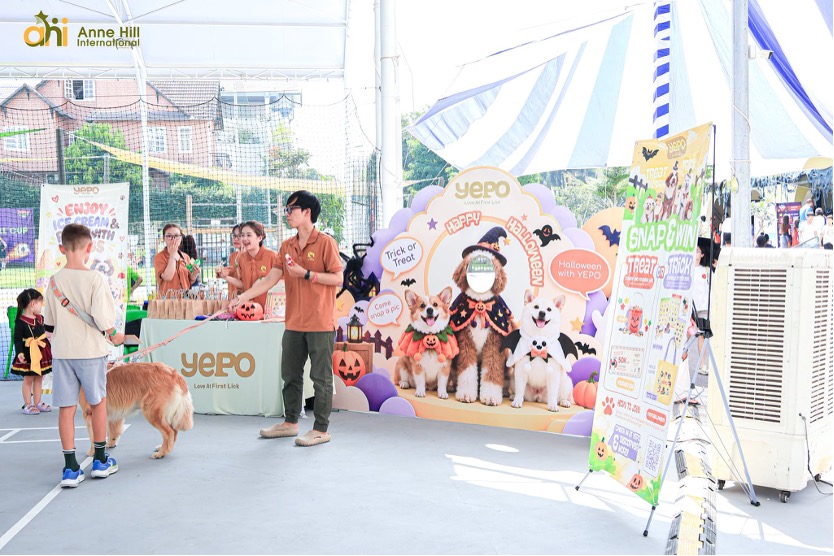
Photo: A look at the Scooby-Doo Pet Zone, where furry visitors got into the Halloween spirit.
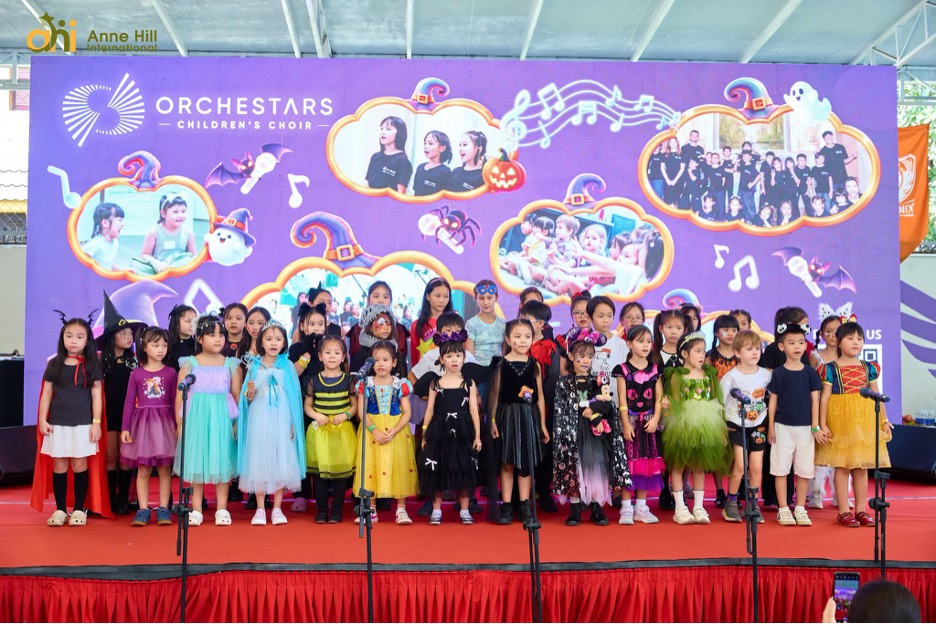
Photo: The Orchestars Children’s Choir performing at the AHI Halloween Bazaar 2026.
There was plenty happening on the main stage at 31 Giang Van Minh and the sub-stage at 19 Giang Van Minh. The Orchestars Children’s Choir delighted the audience with their singing, bringing a lovely musical touch to the celebrations. Taekwondo and Muay Thai performers impressed the crowd with their energetic demonstrations, while the circus juggling display showcased remarkable skill.
The Zumba Dance held by our AHI mothers and K-pop Random Dance sessions brought everyone together, with visitors joining in and enjoying the music. Each performance added its own special touch to the day, and it was lovely to see so many visitors cheering on the performers.
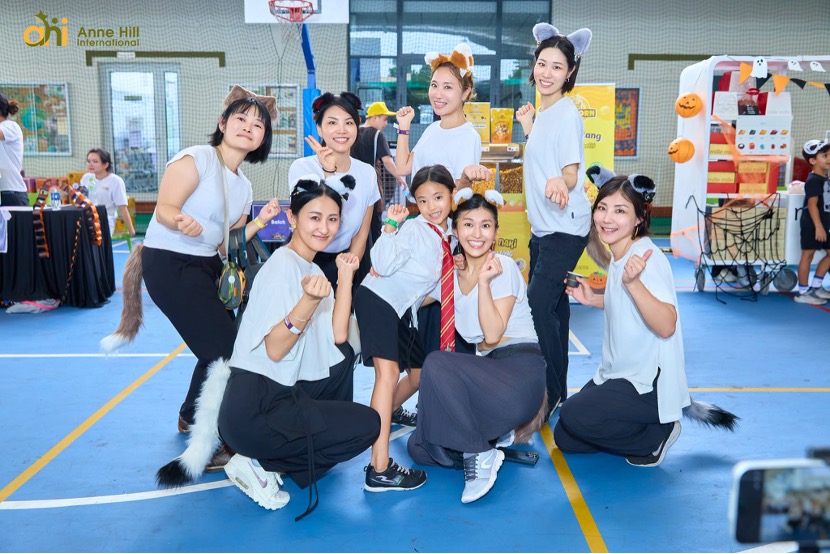
Photo: AHI mothers led a Zumba dance session at the Halloween Bazaar 2026.
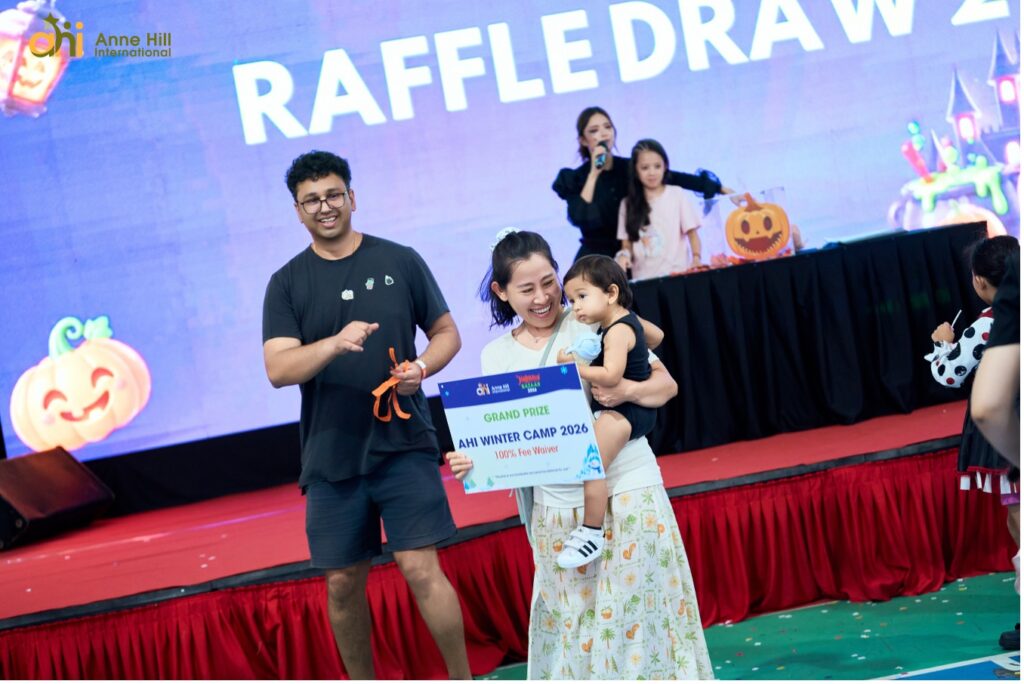
Photo: A family celebrating their raffle draw win of a full scholarship to AHI Winter Camp 2026.
The raffle draw added another highlight to the day’s celebrations, with winners announced throughout the event. Alongside a range of smaller prizes, two grand prizes were up for grabs: a brand-new iPad and a full scholarship to AHI Winter Camp. The audience was buzzing with excitement as the winners were announced, with each coming forward to receive their prizes and celebrate with their families.
Looking Ahead
The AHI Halloween Bazaar 2026 would not have been possible without the generous support of our sponsors, partners, vendors and the wider AHI community.
We extend our sincere thanks to Sacombank, our Presenting Sponsor, and NuVi, our Official Sponsor, for their generous contributions and continued support of AHI events. We are grateful to the Singapore Chamber of Commerce Vietnam for its valued partnership and media support, helping us reach more families across the community. Our appreciation goes to all 70+ participating vendors and businesses for bringing their products, activities and enthusiasm to the bazaar.
A heartfelt thank you goes to the families who joined us and embraced the Halloween spirit, making the day so lively and memorable. We would also like to recognise the dedication of our students, staff, volunteers and Event team, whose time and hard work helped bring the celebrations together across all three campuses.
Thank you to everyone who played a part in making this year’s bazaar such a special occasion. We look forward to welcoming our community back for the next one!
>> Want to explore more? Take a look at our Events Calendar.

Book a School Tour to discover our Welcoming Community.
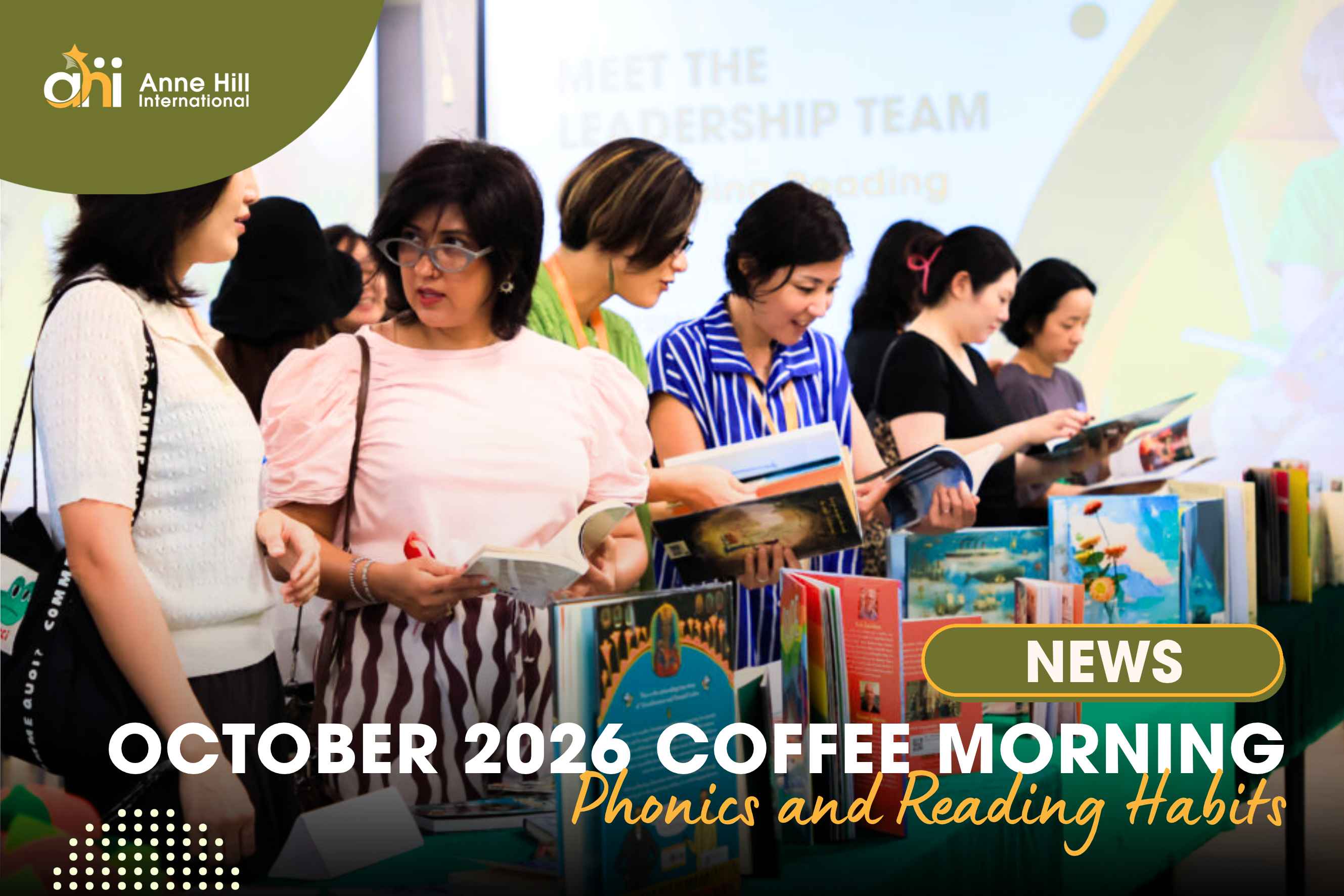
Anne Hill International School (AHI) held its October Coffee Morning sessions on 6 and 8 October 2026 at An Phu Campus (Preschool) and Vo Truong Toan Campus (Primary & Secondary), Ho Chi Minh City. The two sessions, “Helping Your Child to Read: The Power of Phonics” for Preschool parents and “Developing Reading Habits” for Primary parents, offered practical insights and group discussions on supporting children’s reading development at different stages. As part of Coffee Morning at AHI, parents also connected with the Academic Leadership Team and explored ways to encourage learning beyond the classroom.
Photo: Mr Benjamin Cracknell, Vice-Principal (Lower Primary), introducing the topic of developing reading habits during the Primary Coffee Morning at AHI Multi-purpose Hall.
Coffee Morning with the Leadership Team: Connecting Home and School
Coffee Morning at AHI is held monthly across the school’s three campuses, giving parents opportunities to connect with the Academic Leadership Team (ALT). In addition, quarterly sessions with the Executive Management Board (EMB) provide first-hand updates on key school initiatives and developments, alongside insights into upcoming plans and strategic priorities. Parents can also share their perspectives through two-way discussions, with their feedback helping shape AHI’s continued growth and development.
Photo: Coffee and refreshments prepared for parents during Coffee Morning at AHI.
In October, the Preschool session explored the role of phonics in early reading, while the Primary session focused on developing reading habits and motivating children to read. Led by Ms Leean Woodland, Vice-Principal (Preschool), and Mr Benjamin Cracknell, Vice-Principal (Lower Primary), respectively, the sessions combined insights from the hosts with group discussions. Over coffee and refreshments, parents shared their experiences and discussed practical ways to support their children’s learning at home. The intimate, small-group setting also gave parents opportunities to hear different perspectives and learn from other families’ experiences.
One parent shared how much they appreciated the opportunity to exchange ideas and learn from other families facing similar situations. The sessions deepened parents’ understanding of their children’s development and how to support their growth both in and beyond the classroom.
Preschool Coffee Morning (6 October): The Power of Phonics
Photo: Ms Leean Woodland introducing phonics at the Preschool Coffee Morning.
Fun and laughter filled the Preschool Coffee Morning workshop on 6 October at Room F.004, An Phu Campus. Hosted by Ms Leean Woodland, the session, “Helping Your Child to Read: The Power of Phonics”, introduced parents to practical approaches for supporting their children’s early reading development.
Ms Leean first introduced parents to basic yet effective guidelines for helping children learn to read more quickly and enjoy the process. She then demonstrated the approach by guiding parents through reading unfamiliar Russian letters, showing how quickly adults could learn when using the right techniques. For parents, the task offered a glimpse of the challenges children face when first learning the alphabet and blending phonetic sounds into words.
Through this exercise, parents experienced first-hand the challenges of learning an unfamiliar writing system. Ms Leean’s demonstration showed how the right techniques can make reading feel less daunting, highlighting the value of patience and encouragement as children build confidence and develop a lasting enjoyment of reading. Parents left the workshop feeling empowered to support their children on their reading journey.
In the “Developing Reading Habits” session, Mr Benjamin Cracknell, Vice-Principal (Lower Primary), explored why some children read independently while others need more encouragement. He highlighted that developing reading skills is only part of the journey. Motivation, curiosity and autonomy are equally important in helping children become regular readers. Rather than following a rigid routine, families were encouraged to find what works best for their child. As Mr Ben explained, “There is not one perfect reading routine. The best one is the one that works for you, your child and your family.”
Photo: A selection of books used in the Primary curriculum at AHI.
Photo: Parents connecting over discussions about books at the Primary Coffee Morning at AHI.
Finding the right time is a crucial part of establishing a reading routine. One parent reflected on how children’s energy levels affect their willingness to read, sharing, “That also correlates to energy levels. It is much harder to get them to read after a long day at school, whereas it is easier if it is a weekend activity like spending a Saturday afternoon at a bookstore.”
The discussion highlighted how reading can become a more natural part of family life when it fits a child’s interests and daily schedule.
Parents put these ideas into practice through a role-play activity, working in smaller groups to discuss scenarios involving students with different reading habits. These included a Year 1 student who enjoyed being read to but avoided reading independently, a Year 3 student who preferred comics and graphic novels, and older children who had lost interest in books or increasingly turned to screens. The activity encouraged parents to consider what might be behind a child’s reluctance to read and how they could respond to their individual needs.
Photo: Parents taking part in a role-play activity, exchanging ideas and perspectives.
Mr Ben encouraged parents to let children explore different types of reading material, including comics, graphic novels and magazines, rather than limiting them to chapter books. As he put it, “Life is too short to read books that do not interest you.”
Giving children the freedom to choose what they read can help sustain their interest, while reading together allows parents to share that enjoyment with them. Even when children can read independently, sharing stories introduces new vocabulary and more complex texts without the pressure of reading alone. Together, these approaches can help make reading an enjoyable and lasting part of family life.
A Shared Conversation: Building Home-School Partnerships
Photo: Parents presenting their key takeaways following small-group discussions.
Coffee Mornings at AHI reflect the value of a strong home-school partnership. By exploring relevant topics together, these sessions encourage parent engagement and help families gain a clearer understanding of how children learn and the different ways they can be supported at home and at school.
Thank you to all the parents who joined us and contributed to the October Coffee Mornings. We look forward to welcoming more families to future sessions as we continue learning and growing together as one community.
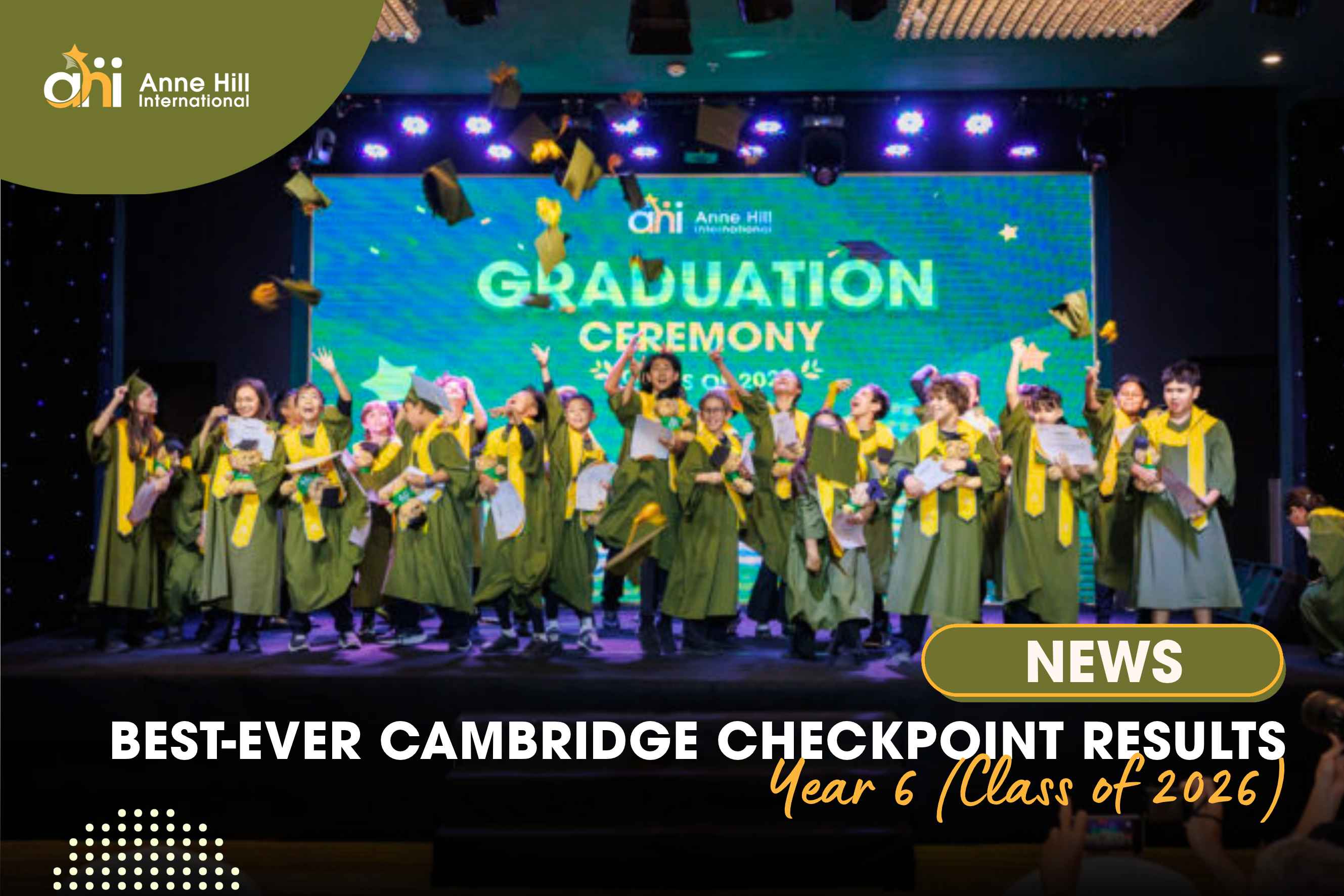
In August 2026, Anne Hill International School (AHI) received the Year 6 Cambridge Checkpoint results for the May 2026 examinations. This year’s results mark a significant milestone for AHI, with the highest Cambridge Checkpoint performance ever recorded at the school.
A Successful Year of Academic Progress
Infographic: Impressive figures from this year’s Cambridge Checkpoint results.
Across all three subjects – English, Mathematics, and Science – our Year 6 students (AY 2025-2026) achieved an average score of 34,4 – 16% higher than the average score in 2025, and also the highest ever recorded at AHI. This reflects strong academic growth over the past year.
In English, our students achieved an average score of 36, an increase of 3 points from 2025 and 3 points above the International Average. Mathematics delivered another particularly strong result, with an average score of 36 – also 3 points higher than last year and an impressive 6 points above the International Average. This result highlights the strength of the cohort’s mathematical achievement. In Science, the average score reached 31, representing the most significant year-on-year improvement, with a remarkable 9-point increase from 2025.
Exceptional Individual Achievement
This year also witnessed many excellent individual achievements across the cohort.
Infographic: Many excellent students at Anne Hill International School achieved all outstanding and perfect scores.
Five students achieved perfect scores (50/50) in English and Mathematics, including three perfect scores in Mathematics and two in English. This makes Mathematics a particular highlight of this year’s results.
In addition, five students achieved Outstanding results for all three subjects, demonstrating exceptional academic performance across the full range of the Cambridge Checkpoint curriculum. Looking at the cohort as a whole, 68% of students achieved a combined score of more than 100 out of 150 across the three subjects.
Infographic: A large proportion of scores are High or Outstanding scores.
Beyond individual excellence, the results also highlight a strong consistency of achievement among all students. More than three-quarters of our students (76.6%) achieved High or Outstanding results across all three subjects, demonstrating that strong academic performance was not limited to a small group of students. Mathematics recorded the highest proportion of High or Outstanding results at 84%, closely followed by English at 81%, while 65% of students achieved these levels in Science. Together, these figures reflect a broad and balanced level of achievement across the cohort, with the majority of students performing strongly across the full range of subjects.
Celebrating the Results Together
Photo: Mr. Matthew announced the Cambridge Checkpoint results to Year 7 students during the assembly.
The results were shared with our Year 7 students during their first Secondary School Assembly.
Mr. Matthew Mayne, Vice-Principal (Academic & Pastoral Care for Year 4 – Middle Years), personally presented the results to each student. As their results were revealed, our students celebrated the moment surrounded by the applause and encouragement of their teachers, friends, families and senior students.
Photo: Students celebrating the remarkable results with parents and friends.
These achievements are a testament to the hard work, determination and commitment of our Year 6 students, alongside the dedication of their teachers and the continued support of their families.
We are incredibly proud of the Class of 2026 and the strong academic foundation they have built. As they take their next steps into Secondary School, we look forward to seeing them continue to grow, challenge themselves, and achieve even more.
Learn More About AHI
Discover how Anne Hill International School supports students in developing strong academic foundations while preparing them for future success:
As another school year draws to a close, summer arrives with a welcome shift in pace—and a priceless opportunity for parents to reconnect with their children.
Yet, with empty calendar pages comes a subtle challenge: how do we make this extra time truly count? Without a bit of intention, the weeks can easily drift by.
To help you shape a summer that is both refreshing and meaningful, Anne Hill International School is pleased to share a few thoughtful ideas for your family.
Making the Most of Summer with Your Child
Stepping Outdoors: Sunshine, Movement, and Shared Joy
Summer is the perfect time to spend more hours outdoors, enjoying the fresh air and the simple joy of unstructured play. Families can head to a nearby park for a weekend picnic, go for a bike ride together, or enjoy an active outdoor game as a group.
Photo: AHI Preschoolers enjoying open air in our signature grass field.
These moments bring children a sense of ease and refreshment, a welcome contrast to the pressures of the school year. Sunshine and fresh air have also been shown to support children’s physical and social and emotional development.
As a family, you might create a simple summer “check-in” list together. There is no need to travel far — parents can put together a list of green, open spaces nearby with clean air, and simply dive into outdoor activities with their children!
Volunteering Together: Cultivating Kindness and Connection
During the school year, students may have already taken part in charity trips organised by the school — and there is no reason this spirit of giving should pause just because summer has arrived.
To make summer volunteering more meaningful, parents can start by talking with their children about what these activities mean to them and how they see their own role in helping others. Encourage them to suggest their own ideas — there are countless ways to make the world a little better, and children often surprise us with what they come up with.
It could be as simple as an afternoon spent picking up litter in the park, helping a neighbour fix something around the house, or organising a fun little workshop for younger children. It could also mean venturing further, with a visit to an SOS village outside the city. Since children are free from the constraints of a school timetable, summer is the perfect season for these bold, creative ideas.
Photo: AHI Secondary students donating Christmas gifts to St. Joseph’s Charity School in 2025.
Through these experiences, children learn empathy in a tangible, lasting way. And when families volunteer together, kindness becomes a shared value — showing children that spending quality time on something meaningful can be its own kind of joy.
Nurturing a Garden: Quiet Lessons in Patience and Care
Watching a tiny seed push through the soil is one of the most rewarding everyday miracles a child can experience — yet during the busy school year, there may be little time to enjoy it.
Tending to a small windowsill garden or a backyard patch teaches children about science, the life cycle of a tree, and the quiet beauty that green brings into our lives. As they measure daily growth, water fragile leaves, and wait patiently for blossoms, children develop a gentle curiosity and a deeper appreciation for the rhythms of nature. In terms of values, this simple activity teaches consistency and the importance of patience in a fast-paced world.
Photo: AHI Preschoolers nurturing their own Eco Garden on campus.
To deepen these lessons, parents can take their children to a botanical garden or forest to experience nature firsthand, or read books and watch films about trees and the importance of greenery in our cities. This helps children see trees not just as plants, but as friends — before, naturally, they start dreaming of growing their own little forest at home.
Documentary Evenings: Igniting Curiosity and Thoughtful Dialogue
Rainy afternoons or quiet evenings provide a wonderful backdrop for cozy documentary nights.
Exploring topics like deep-sea wildlife, space exploration, or ancient history opens up whole new worlds right from your living room.
You can also refer to some recommended lists on the internet, including an IMDb list of over 300 documentaries and educational series for kids — covering science, nature, history, and world cultures, from Bill Nye and Cosmos to nature films like Winged Migration. It is a great starting point for families looking to mix screen time with genuine learning.
Photo: A variety of engaging digital content that supports children’s learning.
Rather than passive screen time, these shared viewing experiences spark wonder, encourage big questions, and lead to lively family discussions that keep young minds actively engaged.
Local Excursions: Turning the City into an Open Classroom
Learning does not pause when the school doors close—it simply changes scenery.
Our Year 4 Students’ Trip to Saigon Zoo and Botanical Gardens: Learning Through Nature.
A family trip to a local museum, art gallery, science centre, or historic site turns a summer day into a hands-on adventure.
For families in Ho Chi Minh City, children can explore nature at farms and parks such as Thảo Cầm Viên Sài Gòn, Green Noen Farm in Củ Chi, Vườn Xoài in Đồng Nai, or Bò Cạp Vàng Tourist Area in Đồng Nai. For a mix of learning and fun, kids can also visit museums like the Ho Chi Minh City Museum, the Áo Dài Museum, the Vietnam Museum of Nature, or the Fine Arts Museum.
For a deeper dive into culture and history, families can visit historical places such as the Independence Palace, Saigon Central Post Office, Notre-Dame Cathedral, the Vietnam History Museum, the Ho Chi Minh Museum at Nhà Rồng Wharf, Bửu Long Pagoda, Vĩnh Nghiêm Pagoda, or Lăng Ông Bà Chiểu.
These short excursions bridge the gap between textbook knowledge and real-world discovery, encouraging children to observe, ask questions, and see learning as an exciting lifelong pursuit.
At Anne Hill International School (AHI), we believe that preparing future generations to address emerging challenges requires an educational model that fosters both intellectual advancement and learning through experience. True education goes beyond textbooks and examinations – it shapes character, builds confidence, and equips students to engage meaningfully with the world around them.
The adoption of a holistic approach reflects our commitment to a more comprehensive vision of education and student development, one that values academic excellence alongside the personal, social, and emotional growth every child deserves.
About Holistic Education
Education that Nurtures the Whole Child
Holistic education focuses on developing the whole child, helping them grow into confident, well-rounded individuals who can contribute positively to their communities. (Drew, 2026). It recognises that students need opportunities to grow intellectually, emotionally, socially, physically, and morally in order to thrive. This approach moves beyond memorisation and test performance, emphasising meaningful learning experiences that help students understand themselves, build positive relationships, and develop a sense of purpose.
Beyond Academic Achievements
As a result, holistic education places equal importance on academic knowledge and essential life skills. Students are encouraged to develop critical thinking, creativity, emotional intelligence, communication, and collaboration skills through experiential learning and self-discovery. By valuing personal growth alongside academic success, holistic education aims to nurture confident, well-rounded individuals who are motivated to learn throughout their lives.
The learning environment plays an important role in supporting this approach. Rather than focusing solely on instruction, classrooms are designed to be welcoming, flexible, and student-centred. Learning spaces may include movable furniture, collaborative work areas, quiet reading corners, outdoor learning environments, and personalised learning stations that cater to different needs and learning styles. These features create a supportive and engaging atmosphere that encourages exploration, collaboration, and independent learning while fostering students’ confidence, social-emotional development, and academic success (Wideman-van der Laan, 2024).
Classrooms should be welcoming, flexible and student-centred to support a holistic education.
Another notable aspect of holistic education is its emphasis on physical wellbeing. Recognising that a healthy body supports both learning and daily life, holistic education encourages regular physical activity and health education to promote students’ overall development (Zhao et al., 2023).
Increasingly Embraced by Schools Worldwide
As academic knowledge alone is no longer sufficient to prepare students for a rapidly changing and interconnected world, schools are increasingly appreciating holistic education. Research has highlighted the need of skills such as critical thinking, creativity, collaboration, communication, and social responsibility to succeed in the future alongside subject knowledge (American University, n.d.).
Growing awareness of student wellbeing has also contributed to the popularity of holistic education. By supporting students’ emotional, social, and physical development alongside academic learning, schools can create environments that promote both personal growth and academic achievement (Global Partnership for Education, 2023).
In addition, holistic education aligns with growing international recognition that education should support the development of the whole child. Organisations such as UNESCO advocate educational approaches that nurture cognitive, social, emotional, physical, and ethical development, helping students become lifelong learners and active contributors to society (UNESCO, 2021; American University, n.d.).
By nurturing students’ emotional, social, and physical development alongside academics, schools can foster both personal growth and academic success.
Proven Practices at AHI
At AHI, holistic education lies at the heart of the school’s vision to nurture “well-rounded, globally-minded, lifelong learners.” This reflects a commitment to developing students not only academically, but also personally, socially, and emotionally. By helping students understand themselves, engage with the wider world, and build the skills needed for a changing future, AHI aims to prepare learners for success both in school and beyond.
This approach is trusted by families and has contributed to positive outcomes in students’ confidence, wellbeing, engagement, and overall development.
The Key Role of IPC
AHI students are encouraged to explore their interests, but they are also intentionally exposed to a broad range of subjects, cultures, ideas, and experiences. The International Primary Curriculum (IPC) plays a key role in supporting this approach. Alongside academic learning, the IPC promotes personal and international development through values such as resilience, empathy, collaboration, and respect. Students are encouraged to understand different perspectives, explore global issues, and consider their role within a wider international community.
This ensures that academic success is developed alongside character, social responsibility, and personal growth.
IPC encourages students to explore global issues and consider their role within a wider international community.
Connecting with the Real World
As Mr Benjamin Cracknell (Vice Principal – Lower Primary) explains, one of the key purposes of education is to expose students to a wide range of experiences, ideas, and opportunities, helping them discover their interests, strengths, and passions while also developing an understanding of what may not resonate with them.
Research also recognises that children learn most effectively when they can connect new knowledge to real experiences (Dewey, 1938). At AHI, educational visits, assemblies, exit points, events, and residential trips help bring learning to life by allowing students to see, experience, and better understand the concepts they encounter in lessons. These experiences build valuable background knowledge, enabling students to learn more effectively.
Extra-curricular activities provide another important dimension of holistic education. Through opportunities such as music, sports, performing arts, and clubs, students can develop confidence, creativity, teamwork, and resilience while exploring interests beyond the classroom.
Mr Ben highly appreciated that many AHI students are having access to activities such as joining a school band, roller skating, or participating in performance opportunities. These experiences broaden students’ horizons and help them develop skills and passions that may shape their future interests and aspirations.
Photo: AHI School Band performing in the 10th Anniversary School Concert in December 2025.
The Positive Impact
The impact of this approach can be seen in the attitudes and actions of AHI students. Mr. Ben highlighted examples of students organising donation drives following a typhoon and actively supporting initiatives such as the Kindness Machine project.
These experiences demonstrate growing awareness of issues beyond their immediate surroundings and a willingness to take positive action within their community. Such moments reflect the wider purpose of holistic education: helping children understand not only what is happening in the world, but also how they can contribute meaningfully to it.
Photo: AHI students participating in the 2024 Yagi Donation Appeal in support of families affected by Typhoon Yagi in Lao Cai.
Balancing with Academic Requirements
Importantly, holistic education does not diminish the importance of academic achievement. Rather, it recognises that strong academic foundations and personal development are equally important for long-term success.
Literacy, communication, critical thinking, and subject knowledge provide students with essential tools that open future opportunities and choices. At the same time, experiences beyond the classroom help students develop confidence, adaptability, resilience, and social awareness.
By combining academic excellence with broad learning experiences, holistic education aims to ensure that students leave school not only knowledgeable, but also equipped to navigate the opportunities and challenges of an ever-changing world.
Holistic education does not mean placing less value on academics.
Key Takeaways
Holistic education develops the whole child by supporting intellectual, emotional, social, physical, and moral growth, rather than focusing solely on academic achievement.
Learning extends beyond examinations and memorisation, helping students develop critical thinking, creativity, communication, collaboration, emotional intelligence, and lifelong learning habits.
The learning environment matters. Flexible, student-centred spaces encourage exploration, independence, collaboration, wellbeing, and deeper engagement with learning.
Physical wellbeing is an essential part of education. Holistic education recognises that health, movement, and physical development support both learning and overall quality of life.
Holistic education integrates the strengths of multiple educational philosophies, balancing academic, emotional, social, moral, and personal development to meet the diverse needs of learners.
No single educational model is sufficient on its own. Research suggests that holistic education combines the broad knowledge of liberal education, the expertise of specialised education, and the personal development focus of quality education.
Schools worldwide are increasingly embracing holistic education as future success requires skills such as creativity, collaboration, communication, adaptability, and social responsibility alongside subject knowledge.
Learn More About AHI Curriculum
Learn more about our holistic education programmes:
Book a School Tour to discover how your child can grow in our caring community.
FAQs
1. What is holistic education?
Holistic education focuses on developing the whole child rather than concentrating solely on academic achievement. It supports students’ intellectual, emotional, social, physical, and moral growth, helping them become confident, well-rounded individuals who can contribute positively to society.
2. Does holistic education mean academics are less important?
No. Holistic education values strong academic achievement while also recognising the importance of life skills such as critical thinking, communication, creativity, collaboration, resilience, and emotional intelligence. The goal is to prepare students for both examinations and life beyond school.
3. Why are more schools adopting holistic education?
Research suggests that academic knowledge alone is no longer enough in a rapidly changing world. Schools increasingly recognise the importance of developing transferable skills, wellbeing, adaptability, social responsibility, and lifelong learning habits alongside subject knowledge.
4. How is holistic education different from traditional education?
Traditional approaches often place greater emphasis on memorisation, examinations, and subject knowledge. Holistic education takes a broader view by combining academic learning with personal development, wellbeing, character education, real-world experiences, and global awareness.
5. How does AHI implement holistic education?
AHI integrates holistic education through its vision of nurturing well-rounded, globally-minded, lifelong learners. This includes the International Primary Curriculum (IPC), experiential learning opportunities, educational visits, assemblies, residential trips, extra-curricular activities, values education, and community engagement initiatives.
6. What role does the IPC play in holistic education at AHI?
The IPC supports academic learning while promoting personal and international development. Through its values and thematic units, students develop qualities such as empathy, resilience, collaboration, respect, and global awareness alongside strong subject knowledge.
7. What impact does holistic education have on students?
Holistic education helps students become more confident, socially aware, and engaged learners. At AHI, this can be seen through examples such as students organising donation drives, participating in kindness initiatives, and demonstrating a growing awareness of how they can make positive contributions to their community and the wider world.
References:
American University. (n.d.). What is holistic education?
Zhao, Y., Muhamad, M. M., Mustakim, S. S., Li, W., & Wu, X. (2023). Analyzing the comparison and integration of the holistic education approach with liberal, specialized, and quality educational modes.International Journal of Academic Research in Economics and Management Sciences, 12(4), 279–297.
At Anne Hill International School, global citizenship and intercultural learning are implemented across all aspects of school life, from the curriculum to community events and daily interactions. AHI students are encouraged to explore different perspectives to grow into open-minded, globally aware individuals who could thrive in an interconnected world.
What is Global Citizenship Education
According to UNESCO, global citizenship is:
“The understanding that we are connected not only to one country, but also to a wider global community, where individuals can contribute positively through their mindset and everyday actions” (UNESCO, 2026).
Global citizenship education equips students with the knowledge, skills, and values to engage with global challenges such as climate change, poverty, sustainability, and inequality. It helps learners become adaptable, collaborative, and critical thinkers in an increasingly global society.
For young people, it promotes respect, tolerance and appreciation of diversity. It also helps them understand how their actions impact others, while building confidence, teamwork, communication, and problem-solving skills. These experiences support personal, educational and future professional growth. (Yassin, 2026).
As Parry (2025) highlights, international schools are uniquely positioned to develop global citizenship through multicultural environments that expose students to different perspectives from an early age, compared to a more local context.
Global Citizenship Education at the Heart of AHI’s Guiding Statements
As part of our guiding statements, we are committed to nurturing globally minded learners who are confident, compassionate, and culturally aware. By aligning our curriculum and learning experiences with UNESCO Sustainability Goal 4.7 on Education for Sustainable Development, we equip students to engage positively with the world.
These principles shape how we teach, connect, and grow as a diverse learning community. Through meaningful learning experiences, students develop the understanding, skills, and perspectives needed to thrive in an interconnected world.
At Anne Hill International School, global mindedness lies at the heart of everything we do.
From Global Educators to Globally Minded Learners
Coming from diverse cultural and professional backgrounds, AHI educators play an important role in nurturing global citizenship education within the school community. Through real-life stories and cultural discussions drawn from their own international experiences, teachers inspire students to become more open-minded, adaptable, and globally aware. They also serve as authentic role models, demonstrating what it means to be true global citizens in today’s interconnected world.
Beyond the classroom, teachers also contribute to teaching the co-curricular activities, as well as organising school events, creating authentic opportunities for collaboration and cultural exchange.
Nurtured by an international faculty, students develop critical thinking, confident communication skills, and a deeper appreciation for diversity.
A Diverse Team of Global Educator at AHI (Data analysed in May 2026)
The connection between Global Citizenship Education with the ICA curriculum
At AHI, global citizenship is embedded within the International Primary Curriculum (IPC). Through engaging thematic units, students explore subjects such as science, history, geography, humanities, and the arts from international perspectives.
The IPC encourages inquiry-based learning, allowing students to make meaningful connections across subjects while developing collaboration, communication, and intercultural understanding. They are also exposed to global issues, diverse cultures, and different perspectives through classroom learning, reading programmes, and co-curricular activities.
Students further apply their learning through engaging projects and exit points. For example, in the Year 1 Treasure Island Exit Point, students apply their geography knowledge through map reading, explore history through pirate stories, experience science through learning how earth, sun and the moon helps navigation, and build international understanding by learning about different ways of life and cultures around the world.
Year 1 students admiring the treasure they have discovered during the Exit Point “Treasure Island” (April 2026)
Learning in a Truly International Community
AHI students come from more than 30 different nationalities. AHI students do not need to travel overseas to begin experiencing the richness of a multicultural world. Every classroom becomes a miniature version of the global community, where children grow up surrounded by diversity from their very first years of life.
From a very young age, AHI students naturally learn that people may look, sound, think, and live differently from themselves. They encounter different hair colours, skin tones, accents, beliefs, traditions, and perspectives as part of their everyday learning environment. These differences are not presented as something unusual, but simply as a natural reflection of the world we live in.
Beyond academic learning, students at AHI are encouraged to cultivate kindness, compassion, and a sense of responsibility towards the wider world. Even at a young age, they begin to understand that the world is vast, interconnected, and filled with opportunities for them to make a positive difference.
Our Students Come from All Around the World
Bringing Global Learning to Life
Each academic year, Anne Hill International School organises around 30 events that give students meaningful opportunities to explore different cultures. Signature events such as International Day promote intercultural learning through cultural booths, performances, collaborative activities, and shared celebrations.
Beyond the classroom, students participate in assemblies, World Book Day, and cultural celebrations such as Diwali, Songkran, and Tết. These experiences spark curiosity, encourage active participation, and deepen students’ appreciation of different cultures and traditions.
Students also take part in events that celebrate diversity and inclusion. During Anti-Bullying Week, they join activities such as Odd Socks Day and Old Shoes Day. By wearing fun, mismatched socks and shoes, students learn that differences should be valued and respected. These activities encourage kindness, individuality, and the confidence to stand up against bullying.
Our international mums and dads also help nurture globally minded learners through language and cultural sharing. On International Mother Language Day, parents introduced nine different languages through interactive activities and cultural experiences. Their contributions helped students appreciate linguistic diversity and gain a deeper understanding of the multilingual world around them.
Students performing during Tet Celebration
Our student showcasing his socks
A parent teaching how to count in Malay using UNO cards
Through intercultural learning, diverse educational experience, and strong partnerships between educators, families and the wider school community, AHI students are guided to become respectful, adaptable and socially responsible global citizens.
Book a School Tour to discover how your child can grow in our caring community.
At Anne Hill International School (AHI), assemblies are where our students come together to celebrate their learning and listen to news and updates. They also provide opportunities to appreciate the community, celebrate achievements, and engage in discussions around meaningful topics. These experiences go beyond academics, helping to educate our students to be respectful, responsible and creative learners. Furthermore, AHI assemblies nurture future global citizens who understand and appreciate diversity.
Embracing AHI Values
Assemblies play an important role in reinforcing the AHI values of empathy, respect, humility, ethics,resilience, communication, adaptability, collaboration, and critical thinking. These values shape our student’s character and guide them towards becoming global citizens. By practising these values in real situations, students learn to view the world from a broader perspective, which strengthens intercultural learning and helps them connect meaningfully with diverse cultures.
Assemblies such as the Anne Hill Values Assembly, United Nations Day Assembly, and World Kindness Day Assembly provide opportunities for students to practise these values. The United Nations Day Assembly introduces students to the principles recognised internationally, encouraging them to become adaptable communicators across cultures. The World Kindness Day Assembly highlights empathy and respect, encouraging students to practise kindness in their daily lives. As a student‑led event, it demonstrates resilience and collaboration, showing how students take ownership of their learning.
Together, these assemblies provide a powerful platform for intercultural learning and the development of global citizenship, while embracing the AHI values that guide our students every day.
Teachers introducing the member states of the United Nations (UN) to students during the UN Day assembly
Students introducing the meaning behind World Kindness Day Assembly
Celebrating Cultural Diversity
Understanding and respecting different cultures is a key foundation of global education at Anne Hill International School. By celebrating festivals in assemblies, students discover traditions from around the world and gain opportunities for intercultural learning. Assemblies such as the Mid‑Autumn Festival, St Patrick’s Day, Songkran, Diwali, and Vietnamese Teachers’ Day introduce practices from different cultures and highlight values such as respect and gratitude. These occasions allow students to see, experience, and learn from the customs of others, building their knowledge and appreciation of diversity.
Students performing in traditional outfits that represent their own cultures during the Mid‑Autumn Assembly
Students performing a festive dance during the St Patrick’s Day assembly
Students sharing what Diwali means during the Diwali Assembly
With more than thirty nationalities represented at AHI, diversity is reflected in every assembly. Experiencing festivals across cultures helps students develop empathy and respect as they compare different practices and values. This cultural exchange encourages them to recognise both differences and common ground, fostering a broader perspective and a global mindset. Through these assemblies, students learn that diversity strengthens community and enriches learning, preparing them to become global citizens who embrace intercultural understanding.
Fostering Creativity and Joy in Learning
For our students, assemblies are moments where imagination and learning come together in fun ways. They give children the chance to step outside the classroom and try new things. On World Book Day, students and teachers dressed up as their favourite book characters, turning the assembly into a colourful celebration of stories. This playful activity encouraged a love for reading and showed that learning can be exciting and enjoyable.
Our Public Speaking Competition gave students another way to shine. Our students shared poems with their classmates and parents. Some chose well‑known pieces, while others wrote their own. Standing on stage gave them a chance to practice speaking clearly and confidently. Assemblies like this help students express themselves both visually and verbally, helping them build confidence, creativity, and communication skills. By mixing fun with learning, students become more curious and find joy in their studies. These experiences help them grow into caring learners who value diversity and intercultural understanding, preparing them to take their place as global citizens.
Our winners of the Best Costume Award during the World Book Day assembly
A student sharing a poem about firefighters during an assembly
Parents as Partners
At Anne Hill International School, assemblies are enriched by the involvement of families. Parents are always invited to attend, encourage their children, and witness their performances during assemblies. Their presence strengthens the bond between home and school, giving children confidence and allowing parents to be present in their learning journey.
Parents also support the organising of assemblies such as Sakura Hanami assembly, Diwali assembly and St. Patrick’s Day assembly. These contributions help bring traditions and perspectives that broaden students’ understanding of diversity.
Whether it is attending, encouraging, or supporting, parents are true partners in our assemblies, helping us build meaningful experiences that connect home and school.
Parents capturing their children’s dance during the St. Patrick’s Day Assembly
Japanese mothers dancing with their children at Sakura Hanami Assembly
Parents gathering for a thank‑you breakfast, recognising their support in assemblies and school events throughout the year
Each assembly is a stepping stone, nurturing creativity and shaping students into global citizens. By carrying forward values of collaboration, diversity and responsibility, students learn that intercultural understanding is built daily through respect, empathy and community.
Learn More About School Life at AHI
Take a look at our Events Calendar and discover the activities we have planned.
Anne Hill International School (AHI) is proud to announce an exciting new milestone in its development, with the expansion of its new campus in An Khanh Ward (Ho Chi Minh City), for the Academic Year 2026–27. This strategic development reflects AHI’s ongoing commitment to delivering high-quality international education within a dynamic and supportive school community.
A Purpose-Built Modern Learning Environment
Conveniently located at 12 Vo Truong Toan, the new campus offers easy access to surrounding residential areas such as Lumiere Rivers, Masteri An Phu, Parkland and The Vista An Phu, etc. It also has seamless connectivity to AHI’s current campus on Giang Van Minh Street. Designed as a modern learning environment, the purpose-built campus will support both academic excellence, student development and well-being.
The campus will comprise four main buildings equipped with a comprehensive range of school facilities, including:
Main buildings
On-campus 25-meter swimming pool
Spacious outdoor field
Modern 272m² multi-purpose hall for performances, events, and school gatherings
A 100m² Design & Technology Lab equipped for future-ready, Cambridge-aligned learning
Two fully equipped 100m² Science labs meeting the highest safety standards for student exploration
A thoughtfully designed 168m² library space featuring a rich collection of books
Spacious 65m² classrooms, bathed in natural light and thoughtfully fitted with contemporary equipment
These school facilities are thoughtfully designed to support diverse learning experiences, empowering students to grow as well-rounded, confident, capable, and globally-minded learners.
A Complete Learning Journey – Now Through Year 10
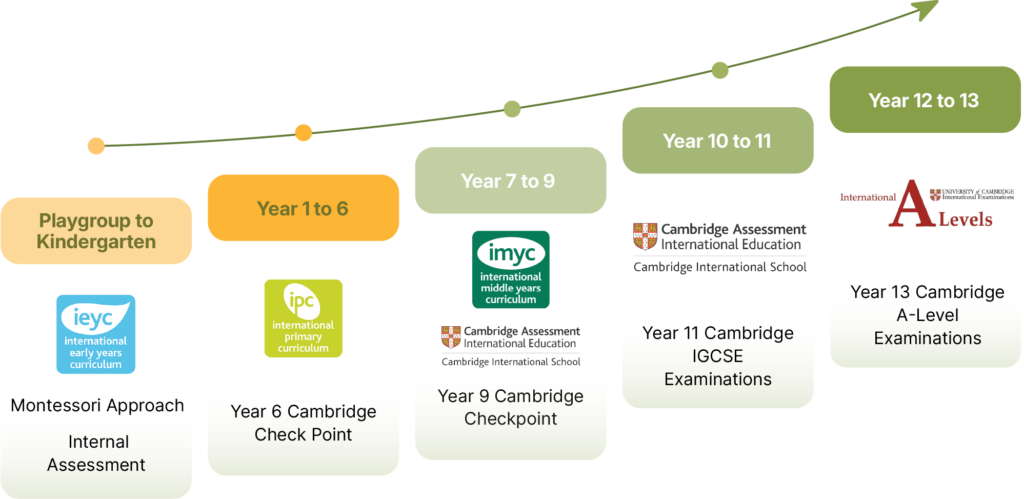
For the past 10 years, Anne Hill International School has proudly nurtured confident, curious learners through its Preschool and Primary programmes. From the Academic Year 2026–27, AHI will extend its educational pathway to include Year 10, offering families greater continuity as students progress through each stage of their learning journey.
The new Secondary programme represents the natural continuation of the AHI experience, building on the school’s strong foundation while maintaining the same commitment to academic excellence, student wellbeing, and inquiry-based learning.
Construction is progressing as planned, with the new campus expected to be operational in Semester 1 – Academic Year 2026–27. Prior to the start of the academic year, parents and families will be invited to visit and experience the Vo Truong Toan campus firsthand. Further updates on academic and operational arrangements, including class allocations and pick-up and drop-off procedures, will be shared in due course.
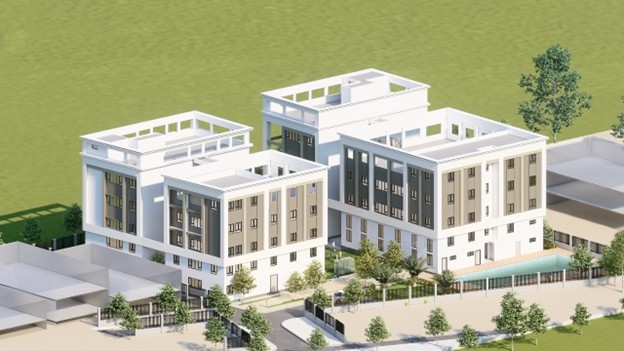
3D front view rendering of the Vo Truong Toan campus
Strengthening the AHI School Community
This expansion marks a significant step forward in the growth of Anne Hill International School and Anne Hill Education Group, made possible through the continued trust and partnership of its parent community. It reflects our commitment to continuous improvement—enhancing teaching and learning quality while strengthening its holistic approach to international education.
As Anne Hill International School enters this new chapter, the school remains dedicated to creating a safe, inspiring, and future-ready environment where students can thrive academically, socially, and emotionally in a global context.