



Discover how setting healthy boundaries with children can help families communicate their needs and build stronger, more respectful relationships.
Saying “No” to your child can sometimes lead to tears, tantrums or endless negotiations. On the other hand, hearing “No” from your child can be equally frustrating, especially when you have their best interest at heart. Parents must balance firmness with empathy, making space for their children’s feelings without compromising on their stand. However, setting boundaries is easier said than done. But with the right approach, families can learn to communicate their needs, respect each other’s limits and build healthier relationships.
What Are Boundaries?
According to Psychology Today (2022), boundaries are where individuals draw the line between themselves and others. During the Parent Workshop “No is a Two-Way Street” held on 21st October 2026 at the Vo Truong Toan campus, Ms Mili Manek defined boundaries as the emotional, physical and mental space between you and another person that enables connection without collision.
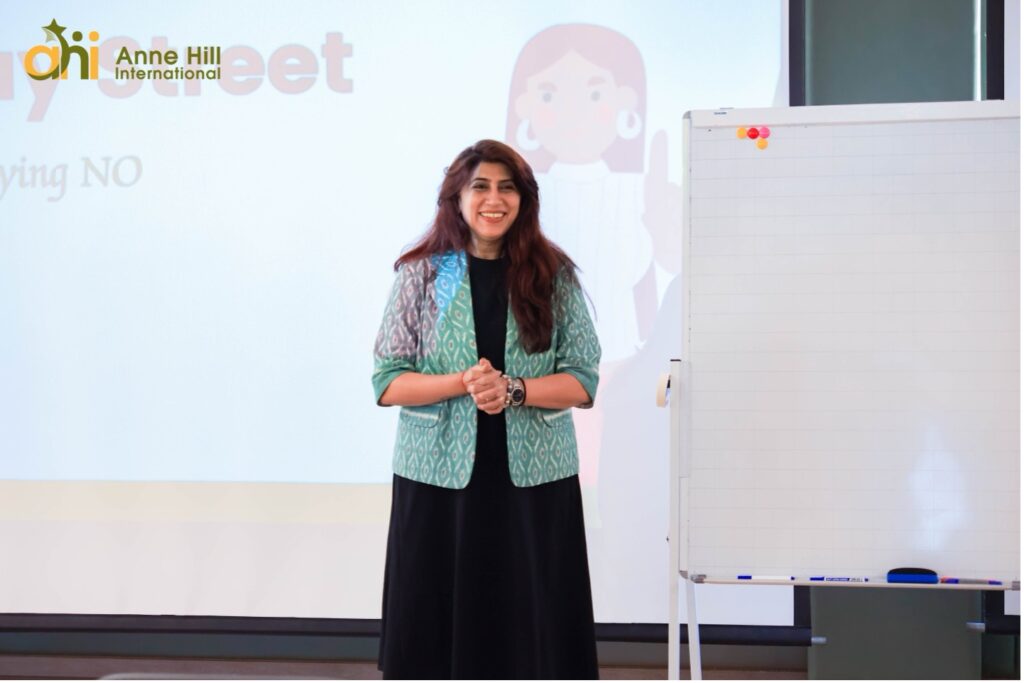
Photo: “No is a Two Way Street” Parent Workshop led by Ms Mili Manek, a Mental Health Counsellor and Educator with over 20 years of experience.
There are three categories of boundaries: Personal boundaries refer to physical space; mental boundaries relate to your thoughts, values and decisions; and emotional boundaries are all about your feelings and needs, and how they interact with others.
As Ms Mili emphasised, it is important to build and maintain healthy boundaries not only to protect your peace of mind, but to prevent exhaustion or resentment, along with having mutual respect and emotional safety with others. Recognising when boundaries are crossed can also help us better understand our own needs and limits. Signs of crossed boundaries may include feeling uncomfortable or guilty, experiencing invasions of personal space, or feeling pressured to please others at your own expense.
Becoming aware is the first step towards change. With the help of communication frameworks shared by Ms Mili, parents can learn to set healthy boundaries and communicate them with confidence and empathy.
Explore highlights from Ms Mili’s Digital Balance Parent Workshop.
The B.A.L.L. Framework: The Art of Saying ‘No’
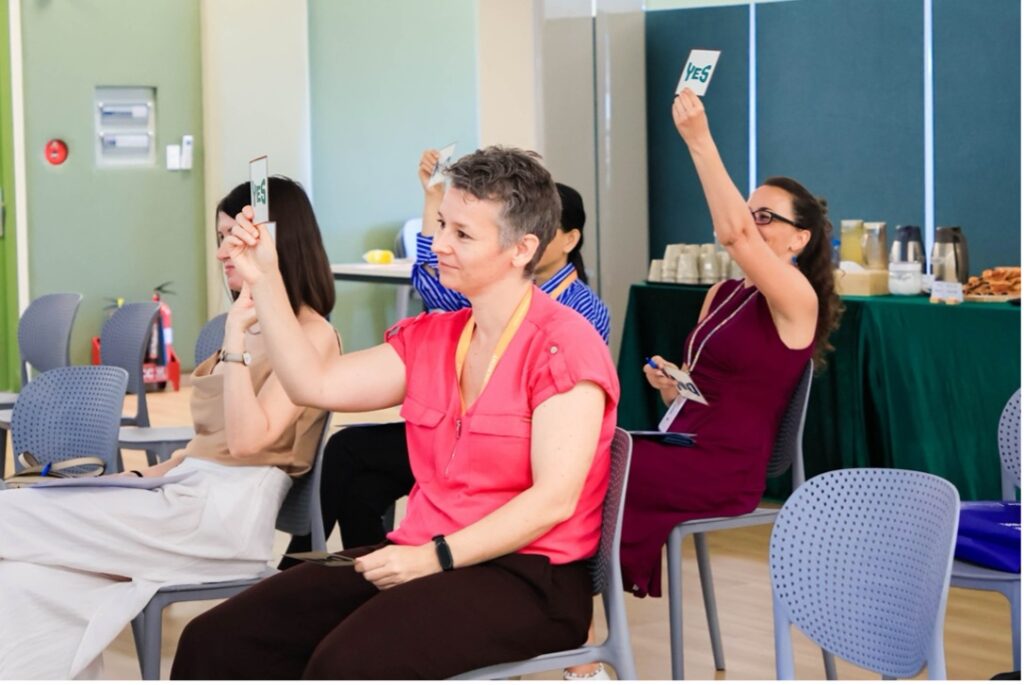
Photo: Parents respond to questions about setting boundaries with children during an icebreaker game using “Yes” and “No” cards.
When asked if they felt a surge of anxiety right before saying “No” to their child, most parents at the workshop raised their “Yes” cards, highlighting the emotional challenges that can come with setting boundaries.
The B.A.L.L. framework offers a practical approach to saying “No” clearly and respectfully, helping parents communicate their limits without unnecessary guilt.
- B – Boundary: State your “No” clearly.
Example: “No, you can’t have more screen time today.” - A – Acknowledge: Validate your child’s feelings or needs.
Example: “I know you want to keep playing, and I understand that it’s hard to stop when you’re having fun.” - L – Limit: Give brief context without overexplaining or making excuses.
Example: “It’s already past your screen time limit for today.” - L – Leave: Offer an alternative or another opportunity.
Example: “You can continue playing tomorrow after you’ve finished your homework.”
Saying “No” does not mean dismissing your child’s feelings or shutting down the conversation. By setting clear limits while acknowledging their emotions with empathy, parents will show children that boundaries can coexist with care and understanding.
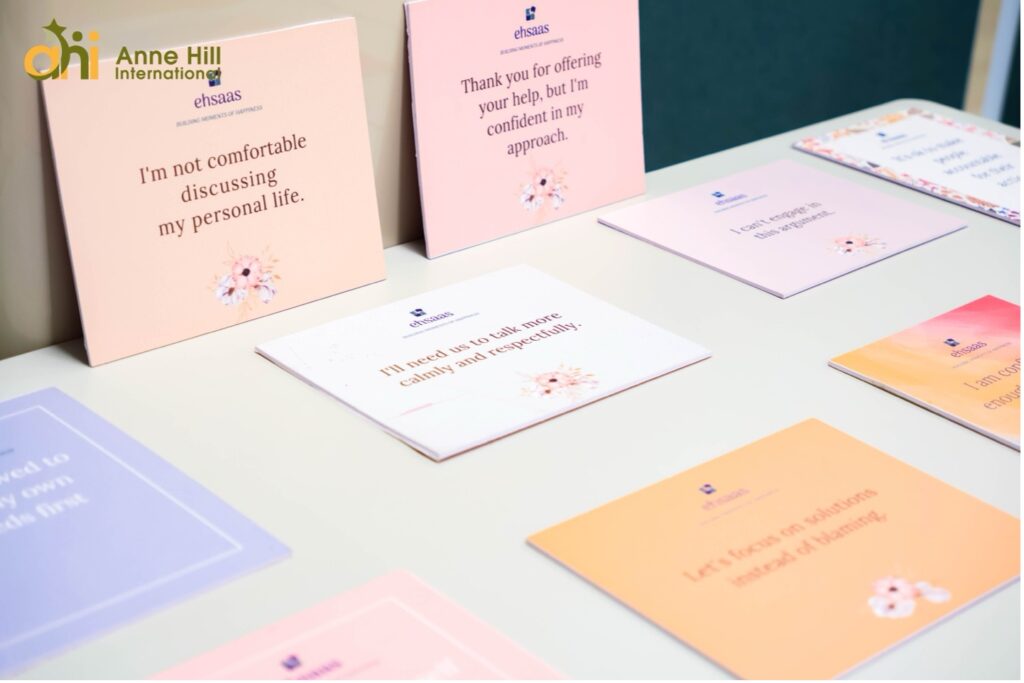
Photo: Practical phrases for setting limits, expressing discomfort and responding calmly.
The S.M.I.L.E. Framework: The Art of Receiving a “No”
Setting boundaries with children goes both ways. While parents teach their children to communicate their needs, they must also model how to respect the boundaries of others. Receiving a “No” gracefully encourages children to practice empathy, develop self-awareness and communicate respectfully. These skills can support their mental health and strengthen relationships both at home and beyond.
The S.M.I.L.E framework is a practical guide to receiving a “No” with understanding and respect, helping parents navigate responding without sounding defensive.
- S – Stop: Pause and take a breath before reacting emotionally.
Example: “I’m feeling upset, so I’ll take a moment before responding.” - M – Message: Separate the rejection from your self-worth. A “No” is not necessarily a reflection of your value as a person.
Example: “It may be about timing, not me.” - I – Inquire: Ask gentle questions to understand the other person’s reasons, without pressuring them to change their answer.
Example: “Is it because you don’t have the time right now?” - L – Learn: Reflect on the situation and consider what you can take away from it.
Example: “I could have asked earlier.” - E – Evolve: Accept the response and move forward without dwelling on it.
Example: “Thank you for letting me know.”
Learning to say “No” and accept it in return takes practice, but are crucial to building stronger relationships and setting boundaries with children. By setting a good example, parents can teach their children to express themselves honestly and let others do the same.
As Ms Mili reminded parents, “No is not rejection, it’s redirection.”
Sometimes, accepting a “No” simply means recognising that another path may be worth exploring.

Photo: Modelling healthy boundaries at home helps children build respectful relationships with others, including their peers at school.
Putting Boundaries into Practice
Setting boundaries is a skill that extends beyond parenting. The B.A.L.L. and S.M.I.L.E. frameworks can assist in conversations with friends, colleagues and other family members, allowing us to express our needs while respecting those of others.
Start by being intentional with how you communicate your needs in everyday life. Express them before frustration builds, take time to rest without feeling guilty, and be clear and respectful when explaining your limits rather than expecting others to guess how you feel.
A strong bond between parents and children is built on trust, understanding and respect for each other’s needs.
Remember that building healthy boundaries takes time and practice. Parents can begin with one situation at a time, focusing on what feels manageable and following through consistently, even when it feels uncomfortable. As these habits become more familiar, mutual respect will become a more natural part of family life.
Book a School Tour to discover AHI’s Nurturing Learning Environment:

References
- Raypole, C. (2022, October 27). 5 steps to creating and maintaining healthy boundaries. Psychology Today.
https://www.psychologytoday.com/us/blog/the-addiction-connection/202210/5-steps-to-creating-and-maintaining-healthy-boundaries


